 e-rcps.com
Pasta Plus and home cooking, since 2000
Chewy vanilla caramels are a cozy little kitchen magic trick: a short ingredient list, careful heat, and one very important tool, a candy thermometer. This guide walks through the key temperature milestones so your caramels set up sliceable, pliable, and perfectly chewy.
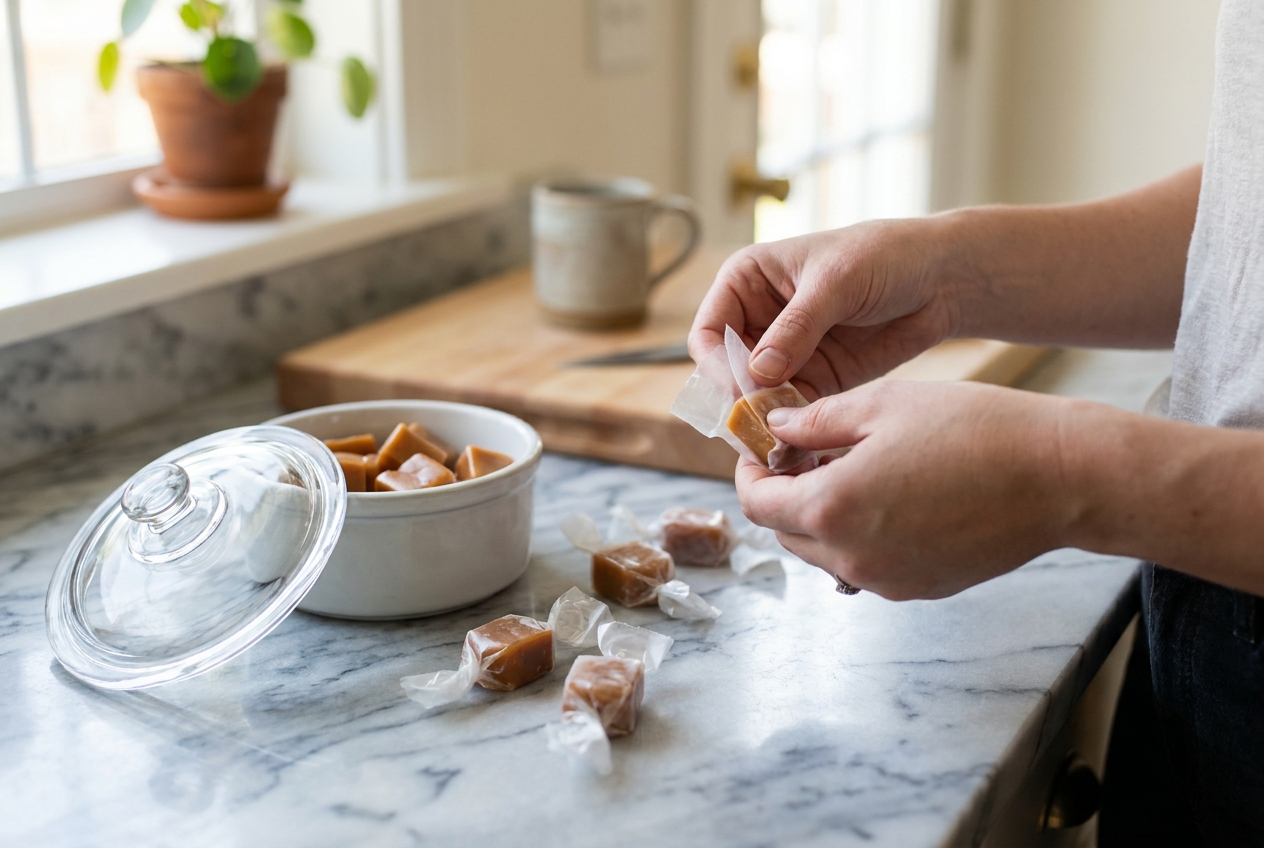
What makes a caramel chewy
Caramels turn chewy when the sugar syrup is cooked to the right temperature, then cooled into a firm but flexible candy. That final temperature controls how much water remains in the syrup.
- Lower final temp means more water left, which makes a softer caramel that may slump or stick.
- Higher final temp means less water left, which makes a firmer caramel that can turn tough or brittle.
For classic chewy caramels, most home recipes aim for firm ball stage, usually around 245 to 250°F.
Equipment checklist
Caramels are friendly, but they are precise. A few tools make the process smooth and safe.
- Candy thermometer (clip-on is easiest)
- Heavy-bottomed saucepan (3 to 4 quart helps prevent boil-overs)
- Heatproof spatula (silicone is great)
- 8-inch square pan (or similar, lined)
- Parchment paper plus a little neutral oil or butter for greasing
- Sharp knife or bench scraper for cutting
If you want more candy temperature confidence for other sweets too, the temperature milestones in Foolproof Chocolate Fudge: Temperature Guide are a helpful companion read.
Chewy vanilla caramel formula (reliable ratios)
Here is a classic ratio that produces a traditional buttery caramel flavor and a chewy set when cooked to the right temperature. Measure carefully.
- Granulated sugar: 2 cups (400 g)
- Light corn syrup: 1/2 cup (170 g)
- Unsalted butter: 1 cup, cut into pieces (226 g)
- Heavy cream: 1 cup (240 g)
- Fine salt: 1/2 teaspoon (or 1 teaspoon for salted-vanilla)
- Vanilla extract: 2 teaspoons
Why corn syrup? It helps prevent crystallization, which keeps the caramel smooth instead of grainy.
Step-by-step: candy thermometer method
1) Prep the pan first
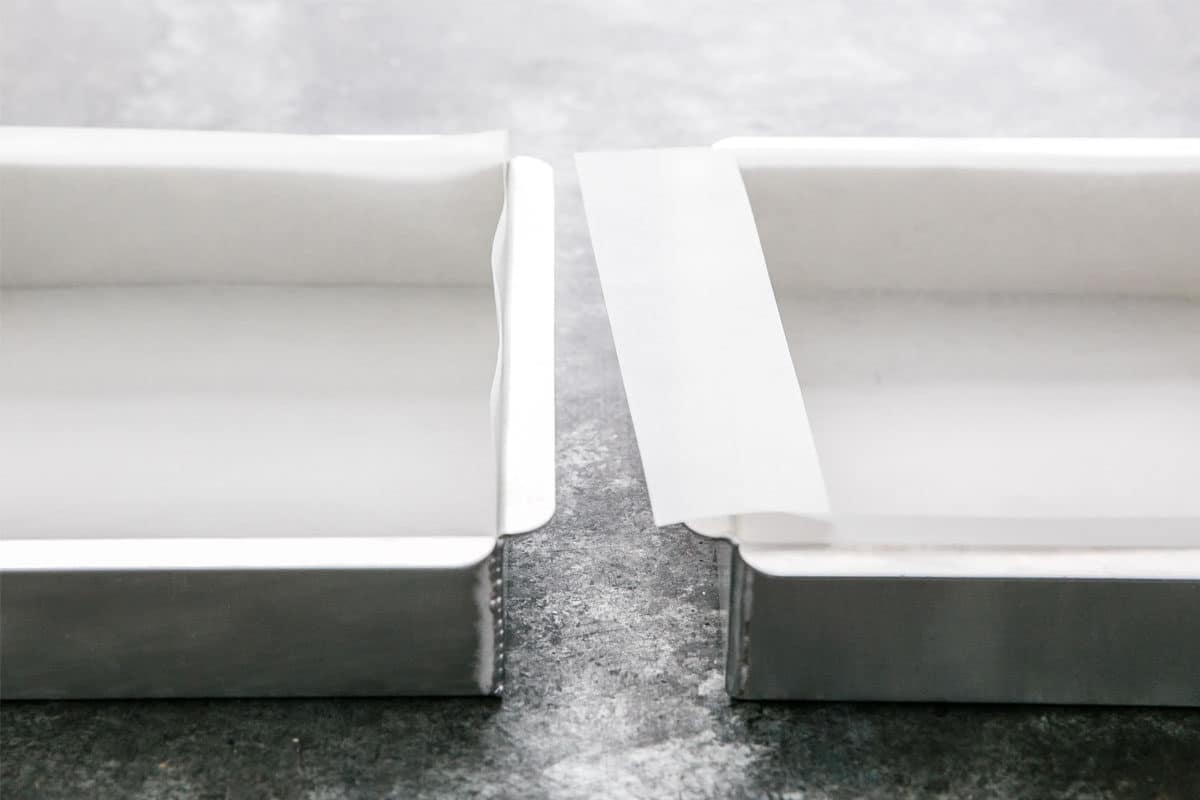
Line an 8-inch square pan with parchment, leaving overhang so you can lift the slab out later. Lightly grease the parchment (a thin wipe of butter or neutral oil). Set the pan on a heatproof surface.
2) Attach and position the thermometer correctly
Clip the thermometer to the side of the saucepan so the tip sits in the syrup but does not touch the bottom. If it touches the pot, it can read too hot.
3) Start the syrup
Add sugar, corn syrup, heavy cream, butter, and salt to the saucepan. Place over medium heat and stir gently until the mixture is melted and uniform.
Once it is simmering steadily, reduce stirring. Occasional slow stirs are fine, but constant vigorous stirring can splash sugar crystals onto the sides of the pot.
4) Cook to the key milestones
As the mixture boils, it will foam and rise. This is normal. Keep the heat at a steady boil, adjusting the burner so it does not threaten to overflow.
- 230°F to 235°F: The caramel is still quite thin and pale.
- 238°F to 242°F: Color deepens slightly, bubbles look thicker and slower.
- 245°F: Soft, very chewy set point. Great if you like tender caramels.
- 248°F to 250°F: Classic chewy set point with cleaner slicing.
- Above 252°F: Firmer caramel that can lean tough as it cools.
Target for most kitchens: Pull the pan at 248°F, then immediately go to the next step.
5) Finish with vanilla off the heat
When the thermometer reads your target temperature, remove the pan from heat. Wait about 10 to 20 seconds for bubbling to calm, then stir in vanilla.
Why off heat? Vanilla is aromatic and can taste harsh if cooked too long at high temperatures.
6) Pour and cool
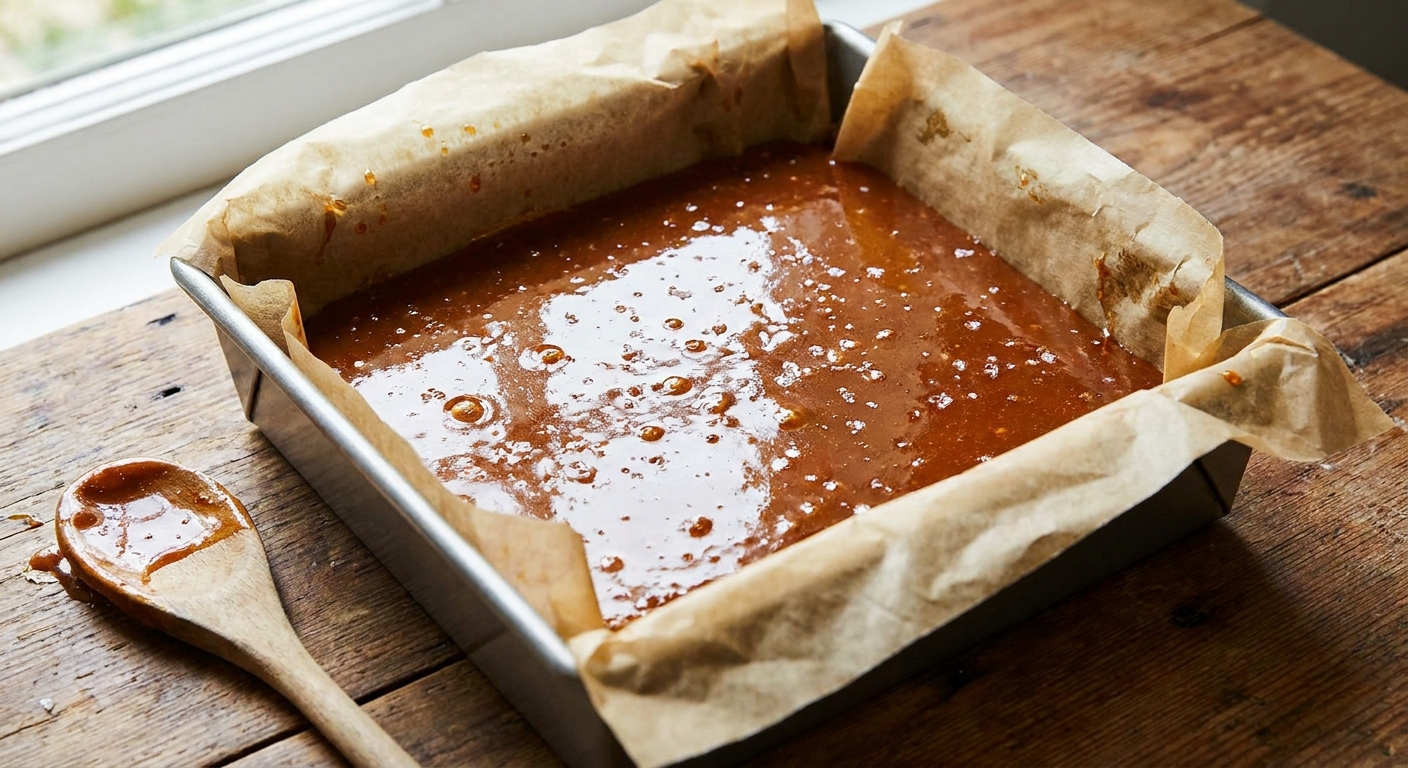
Carefully pour the caramel into the prepared pan. Do not scrape the pot aggressively if there are any suspicious sugary bits clinging to the sides.
Cool at room temperature until fully set, typically at least 4 hours, and often overnight for the cleanest cuts.
How to calibrate a candy thermometer
Thermometers can be a few degrees off, and caramels care about a few degrees.
- Bring a pot of water to a full rolling boil.
- Insert the thermometer tip without touching the pot bottom.
- It should read 212°F at sea level, lower at higher elevations.
If it reads 210°F in boiling water, your thermometer is 2°F low (it reads 2 degrees cooler than the truth). That means when the caramel is truly 248°F, your thermometer will read about 246°F. In that case, you would cook to 246°F on your thermometer to hit a true 248°F target.
Cutting caramels without sticking
Lift and portion
When fully cool, lift the caramel slab out using the parchment overhang. Peel parchment away.
- For neat squares: Lightly butter the knife or wipe it with a neutral oil, then cut straight down.
- For super tidy edges: Use a bench scraper, lightly greased, and press down firmly.
- For consistent size: Trim a thin edge all around first, then cut strips, then squares.
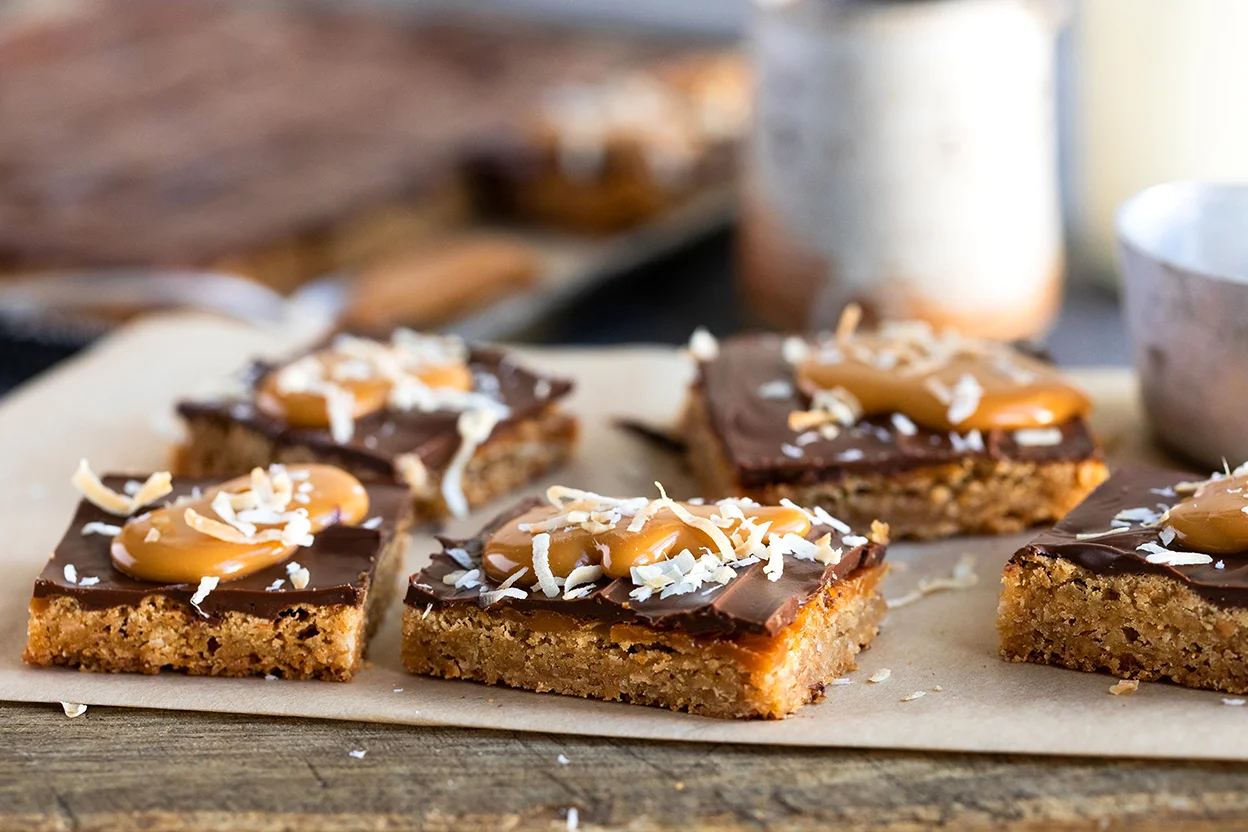
Optional chill trick
If your kitchen is warm, chill the slab 10 to 15 minutes before cutting. Do not freeze. Freezing can create condensation later, which makes wrappers stickier.
Wrapping caramels so they stay neat
Wrap each piece to keep it from drying out and to prevent a sticky candy pile.
- Best wrapper: wax paper or parchment squares.
- How: Place caramel in the center, roll, then twist ends.
- If sticking happens: Lightly oil fingertips or dust the outside very lightly with powdered sugar, then wrap. Keep the dusting minimal so the flavor stays clean and buttery.
Storage: Keep wrapped caramels in an airtight container at cool room temperature for about 2 weeks. For longer storage, refrigerate, but let pieces come to room temperature before eating for the best chew.
Troubleshooting: common caramel problems
Grainy caramels
- Cause: Sugar crystallization from stray crystals or too much agitation.
- Fix next time: Use corn syrup as written, avoid brushing down the pot with water unless you see crystals, and keep stirring gentle once boiling.
Caramels are too soft and oozy
- Cause: Final temperature was too low, or thermometer reads high.
- Fix: Calibrate thermometer. Next batch, cook 2 to 4°F higher. Also be sure you cooled long enough before judging the final texture.
Caramels are too hard
- Cause: Final temperature was too high.
- Fix: Next batch, pull 2 to 4°F earlier and consider slightly lower heat near the end so temperature does not climb too fast.
Burnt or bitter flavor
- Cause: Hot spots from a thin pan or too-high heat, or caramel overshot while you were distracted.
- Fix: Use a heavy-bottomed pan and lower the heat slightly as you approach 240°F.
Butter looks separated or greasy
- Cause: Very rapid boiling or big temperature swings.
- Fix: Keep the boil steady. Stir gently if you see a greasy ring forming, and avoid blasting high heat to “get there faster.”
Safety notes for sugar work
Caramel is delicious and also extremely hot.
- Keep sleeves snug and use a long utensil.
- Pour away from yourself and keep kids and pets out of the kitchen pathway.
- Never taste until fully cooled. Hot sugar clings and burns.
Sweet variations that still set well
- Salted vanilla: Increase salt to 1 teaspoon, or sprinkle flaky salt on top right after pouring.
- Vanilla bean: Add seeds from 1 vanilla bean with the vanilla extract off heat.
- Maple: Replace 1/4 cup sugar with 1/4 cup maple syrup. Keep the same final temperature target.
- Chocolate dip: Dip cooled caramel squares in melted chocolate and let set. (If chocolate tempering is new, the temperature focus in our fudge guide is a gentle warmup.)
More cozy dessert ideas
If you are in a classic candy and cake mood, these are right at home in the same recipe box:
- Old-Fashioned Peanut Brittle
- Old-Fashioned Buttermilk Pound Cake
- Homemade Vanilla Buttercream Frosting
Or peek at the full Desserts collection for more sweet comfort.