 e-rcps.com
Pasta Plus and home cooking, since 2000
Is your pound cake coming out dry, heavy, or stuck in the pan, when what you really wanted was that fine, tight crumb and a crackly golden top?
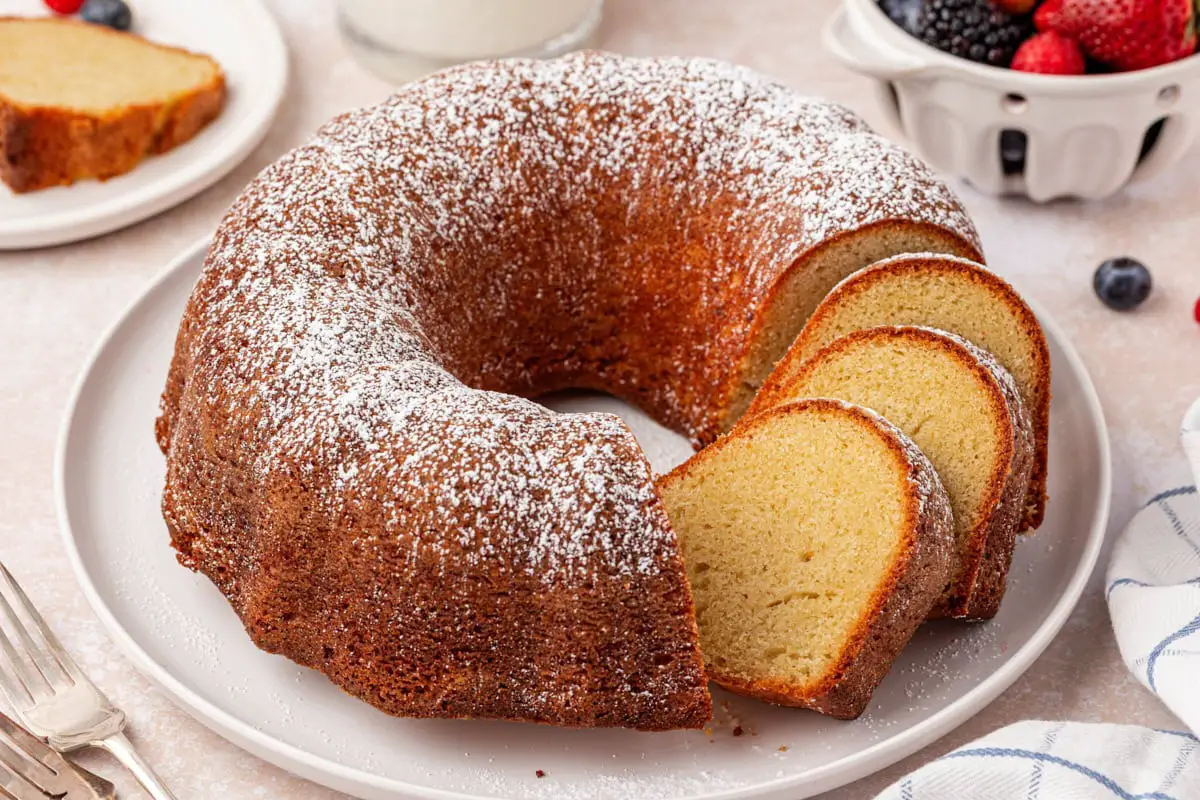
Good news. Old-fashioned buttermilk pound cake is wonderfully dependable when you line up a few small details: truly room-temperature ingredients, patient creaming, a properly greased and floured tube or Bundt pan, and a slow bake until the center is set.
At a glance
- What it usually is: A butter-rich cake leavened mostly by eggs, with tang from buttermilk and a fine, tender crumb.
- What it means: Texture depends on temperature, creaming, and gentle mixing more than on fancy ingredients.
- Do first: Bring butter, eggs, and buttermilk to room temperature, then prep the pan like it matters.
- Do second: Cream butter and sugar until pale and fluffy, add eggs slowly, then alternate dry and buttermilk.
- When to worry: A wet line or sinking center usually means underbaked or overmixed, not “bad luck.”
What is going on
Why buttermilk makes pound cake special
Buttermilk adds gentle tang and helps create a tender crumb. Its acidity also plays nicely with baking soda (if used), giving a little lift while keeping the cake rich and tight-grained, not airy like a sponge cake.
In a classic pound cake style, structure comes mainly from:
- Eggs setting into a sturdy crumb
- Flour forming just enough gluten to hold shape
- Butter and sugar trapping air during creaming
What creates the crackly top
That signature crack is a good sign. It usually happens when the outside sets first, then the center continues rising and splits the top. Proper oven heat and a batter with enough butter and sugar encourage that crust.
Why room-temperature ingredients are not optional
Cold butter will not cream properly. Cold eggs can make the batter look curdled. Cold buttermilk can tighten the butter and ruin the smooth emulsion. When everything is around 65 to 70°F (18 to 21°C), the batter stays stable and bakes evenly.
The common causes
Dry or crumbly cake
Dry pound cake is usually about baking and measuring, not about “needing more glaze.” Common culprits include:
- Too much flour from scooping the measuring cup into the bag
- Baking too long or baking in a too-hot oven
- Not enough fat because butter was partially melted or measured short
- Cutting while still warm, which releases steam and dries slices
Heavy, tight, or gummy texture
Pound cake should be fine-crumbed, but it should not be gummy. This often comes from:
- Under-creaming the butter and sugar (not enough air)
- Adding eggs too fast (batter breaks)
- Overmixing after flour goes in (too much gluten)
- Underbaking the center
Cake sticking to the tube or Bundt pan
A stuck pound cake is heartbreak, but it is preventable. Usually the issue is one of these:
- Grease missed a corner or the center tube seam
- Flour coating was patchy or too thin
- Pan had old baked-on residue
- Cake cooled too long in the pan and “glued” itself on
Cracks, tunnels, or a sunken middle
Cracks on top are normal. Big tunnels and sinkholes are not. Look for:
- Overmixing once flour is added
- Too much leavening
- Opening the oven early, especially in the first 45 minutes
- Underbaking, which collapses as it cools
How to tell this problem from the ones it gets confused with
“My batter looks curdled” vs a truly ruined batter
A slightly curdled look after adding eggs can happen if ingredients were cool. It is often rescued once flour is added. A truly broken batter looks oily, with liquid fat separating and pooling.
- Usually fine: small curd-like bits that smooth out as you continue
- Needs help: shiny grease slicks and a batter that will not come together
“It is dense” vs pound cake density
Pound cake is meant to slice cleanly and feel substantial. The goal is fine and tender, not fluffy. A good slice holds together but is not rubbery.
- Good: tight crumb, moist feel, clean slice
- Problem: gumminess, wet streak at the bottom, chewy texture
“It tested clean, but it sank” vs carryover baking
A toothpick test can be tricky with buttery cakes. The center can look clean while still being under-set. A better doneness cue is a mix of tests:
- Toothpick has a few moist crumbs, not wet batter
- Top is deeply golden
- Center springs back when lightly pressed
- Cake starts to pull slightly from the pan edges
The fixes or steps
Step 1: Set up for room-temperature success
Plan on 60 to 90 minutes for ingredients to warm up on the counter.
- Butter: softened but still cool, about 65 to 70°F (18 to 21°C)
- Eggs: not cold to the touch
- Buttermilk: cool room temp, not icy
Quick shortcut: Put eggs (in shells) in a bowl of warm water for 10 minutes. Do not microwave eggs in shells.
Step 2: Prepare the pan so the cake releases
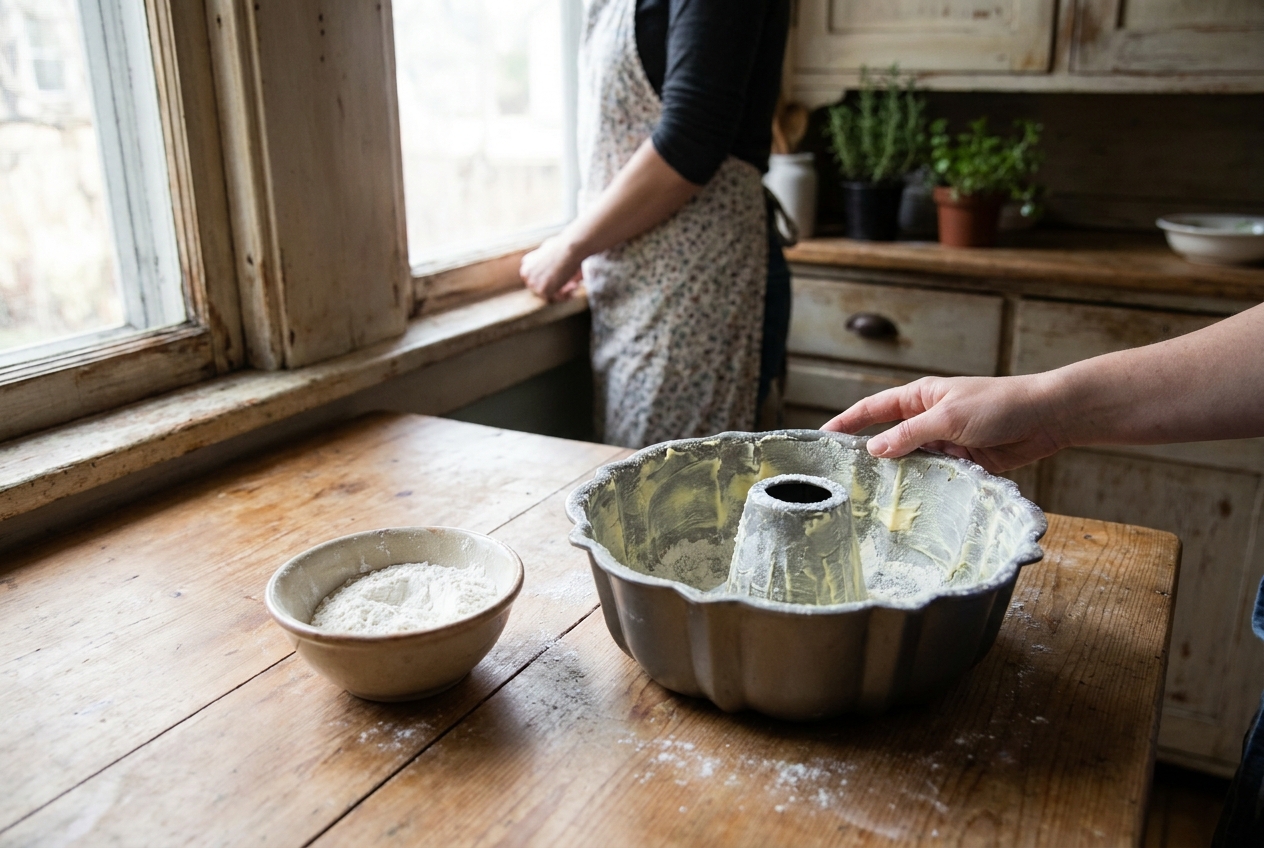
Use a 10-inch tube pan or a 12-cup Bundt pan. Coat every curve.
- Grease with softened butter or shortening, reaching into creases
- Dust with flour, then tap out excess
- Optional for extra insurance: line the bottom of a tube pan with a round of parchment (Bundt pans are usually not lined)
This step takes about 3 to 5 minutes and prevents the most common pound cake disaster.
Step 3: Cream butter and sugar until it is truly fluffy
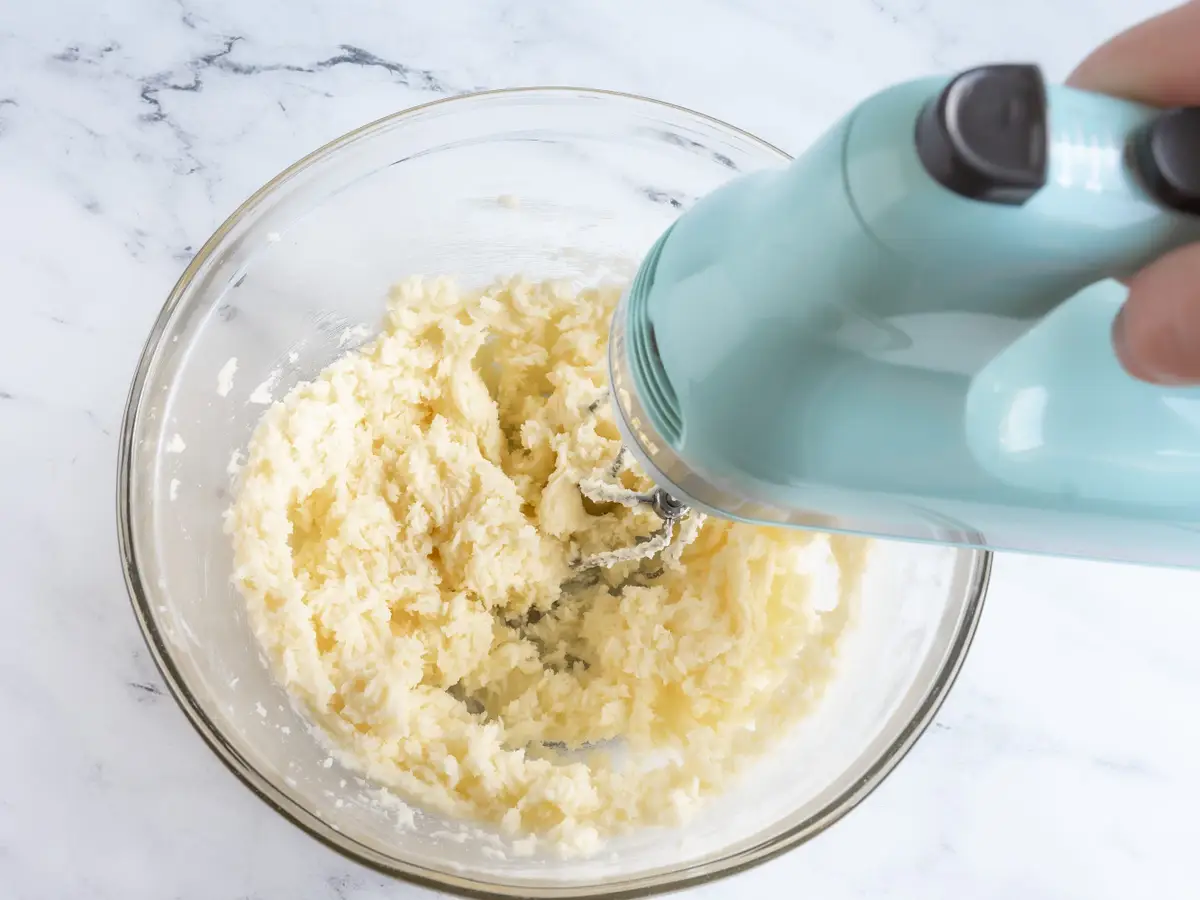
Creaming is not just combining. It is building the cake’s lift. Beat butter and sugar on medium speed until pale, thick, and fluffy.
- Time: about 4 to 6 minutes with a stand mixer, 6 to 8 minutes with a hand mixer
- Scrape the bowl a few times so no dense butter clings to the sides
Step 4: Add eggs slowly to keep a smooth batter
Add eggs one at a time, beating well after each addition. If the batter looks a bit curdled, keep going and make sure you scrape the bowl. A tablespoon of the measured flour added with the eggs can help keep the batter stable.
Step 5: Alternate dry ingredients and buttermilk
Whisk dry ingredients together first so salt and leavening distribute evenly. Then add to the batter in thirds, alternating with buttermilk in two additions.
- Start and end with dry ingredients
- Mix on low speed and stop as soon as the flour disappears
- Finish with a few gentle folds with a spatula
Step 6: Bake low and steady, then use better doneness cues
Bake at 325°F (163°C) for a steady rise and an even crumb. Most cakes in a tube or 12-cup Bundt pan bake in about 70 to 85 minutes.
- Avoid opening the oven for the first 60 minutes
- Start checking at 70 minutes
- Look for a deep golden top and a toothpick with moist crumbs
If the top browns too quickly, tent loosely with foil for the last 15 to 25 minutes.
Step 7: Cool, unmold, and glaze at the right time
Let the cake cool in the pan for 10 to 15 minutes. Then invert onto a rack. Waiting too long can make it stick.
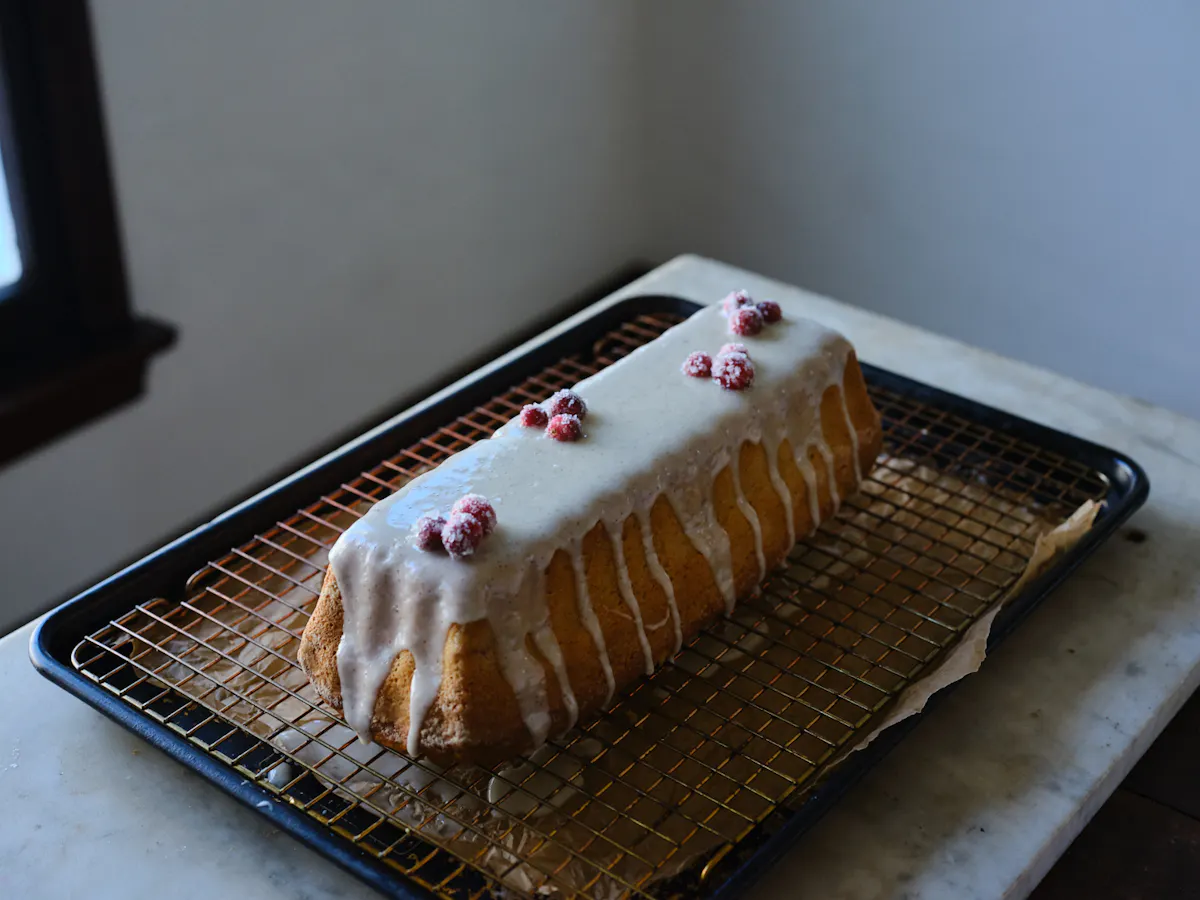
For a simple vanilla glaze, wait until the cake is fully cool so the glaze sets nicely instead of melting into the crust.
What not to do
- Do not scoop flour straight from the bag. Spoon into the cup and level, or weigh it.
- Do not crank the mixer once flour is added. Low speed only, and stop early.
- Do not “fix” a thick batter by adding extra liquid. Pound cake batter is supposed to be plush and thick.
- Do not yank the cake out immediately or leave it in the pan for an hour. Aim for that 10 to 15 minute window.
Quick decision guide
If your cake is dry, then do this next time
Measure flour correctly, bake at 325°F (163°C), and start checking doneness earlier. Pull the cake when the toothpick shows moist crumbs, not when it is bone-dry.
If your cake is heavy or gummy, then do this next time
Cream butter and sugar longer, add eggs one at a time, and mix gently after flour goes in. Also confirm the cake is baked through before removing from the oven.
If your cake sticks, then do this next time
Grease every crevice and flour well, then unmold after 10 to 15 minutes of cooling. Use a clean, well-maintained Bundt pan and do not skip the flour step.
FAQ
Can I use regular milk instead of buttermilk?
Buttermilk gives the best flavor and tenderness here. If you do not have it, a common substitute is milk mixed with an acid (like lemon juice or vinegar) and rested briefly, but the cake will taste a bit different and may be slightly less tender.
How do I know when pound cake is done without drying it out?
Use a combination of cues: deep golden color, slight pull from the sides, a springy center, and a toothpick that comes out with a few moist crumbs. If you wait for a perfectly dry toothpick, you can overbake this style of cake.
Why did my cake crack a lot on top?
A crack is normal for pound cake and is often a sign the batter rose well. Very large, jagged cracking can come from an oven running hot or from baking too high in the oven.
Can I freeze buttermilk pound cake?
Yes. Freeze the cooled cake well wrapped, then thaw still wrapped at room temperature. For best texture, glaze after thawing so the finish stays neat and not sticky.
The bottom line
Old-fashioned buttermilk pound cake is all about steady basics: room-temperature ingredients, patient creaming, gentle mixing, a well-prepped pan, and a slow bake. Get those right, and you will have a golden cake with a fine, tender crumb and that proud crackly top, ready for a simple vanilla glaze or a plain slice with coffee.
Template cheat sheet
- Room temp: Butter, eggs, and buttermilk should be 65 to 70°F (18 to 21°C) before mixing.
- Pan prep: Grease every crevice, flour thoroughly, tap out excess; unmold after 10 to 15 minutes.
- Creaming: Beat butter and sugar until pale and fluffy, about 4 to 6 minutes.
- Mixing: Add eggs one at a time; alternate dry and buttermilk; stop mixing as soon as flour disappears.
- Bake: 325°F (163°C), about 70 to 85 minutes; start checking at 70 minutes.
- Doneness: Deep golden top, springy center, toothpick with moist crumbs, not wet batter.
- Storage: Wrap airtight; freeze slices or whole cake tightly wrapped and glaze after thawing.
Why this cake works
- Buttermilk tenderness: The gentle acidity helps keep the crumb soft and fine while adding classic tang.
- Proper creaming: Beating butter and sugar until fluffy builds lift without making the cake airy.
- Egg-built structure: Multiple eggs set into a sturdy, sliceable crumb that stays rich.
- Low, steady heat: Baking at 325°F (163°C) cooks the center through before the crust overbrowns.
- Pan insurance: Grease plus flour helps the cake release cleanly from Bundt and tube pans.
Ingredient notes
This is a classic US pantry cake. Measuring carefully matters more than specialty brands.
- Unsalted butter: Use softened butter, not melted. If using salted butter, reduce added salt slightly.
- Granulated sugar: Provides sweetness and the signature crisp top. Do not cut it drastically or texture will suffer.
- Eggs: Bring to room temperature for a smooth batter. Add one at a time.
- Buttermilk: Full-fat is best for flavor and tenderness. Shake before measuring.
- All-purpose flour: Spoon and level, or weigh for accuracy. Too much flour is a top cause of dryness.
- Vanilla extract: Classic flavor. Add with the last egg or with the buttermilk.
- Leavening and salt: A small amount helps with lift and balance. Make sure baking powder or soda is fresh.
Equipment
- Pan: 10-inch tube pan or 12-cup Bundt pan
- Mixer: Stand mixer or hand mixer (creaming is much easier with a mixer)
- Bowls: 1 large mixing bowl, 1 medium bowl for dry ingredients
- Measuring tools: Measuring cups and spoons, plus a kitchen scale if you have one
- Spatula: For scraping the bowl and folding the last streaks of flour
- Wire rack: For cooling and glazing
- Skewer or toothpick: For doneness testing
Pro tips for a fine, tender crumb
- Use the right butter softness: Press a fingertip into butter and it should leave an indent, but butter should not look shiny or greasy.
- Scrape the bowl often: Dense butter clinging to the bowl wall can create heavy streaks in the baked cake.
- Alternate additions: Dry, buttermilk, dry, buttermilk, dry keeps the batter smooth and prevents overmixing.
- Position the rack: Bake on the center rack so the cake cooks evenly.
- Check the oven temp: If you bake often, an inexpensive oven thermometer can reveal hot spots and temperature drift.
- Glaze when fully cool: A cool cake gives you a neat, set glaze instead of a sticky soak-in.
Substitutes
- No buttermilk: Use 1 cup (240 ml) milk plus 1 tablespoon lemon juice or vinegar, rested 5 minutes, for each cup of buttermilk. The flavor will be slightly different.
- Cake flour: If swapping for all-purpose, expect a softer crumb. Do not add extra liquid.
- Vanilla: Almond extract is strong, so use a small amount alongside vanilla, not as a full replacement.
- Pan size: A 9x13-inch pan can work, but bake time will change and the crust-to-crumb ratio will be different. The tube or Bundt shape is the classic choice.
Variations
- Lemon buttermilk pound cake: Add 1 to 2 tablespoons lemon zest to the sugar before creaming, and swap part of the vanilla glaze liquid for lemon juice.
- Vanilla bean look: Add vanilla bean paste in place of some extract for visible specks.
- Buttered pecan: Fold in 1 cup (120 g) toasted chopped pecans at the very end, mixing gently.
- Warm spice: Add 1 teaspoon ground cinnamon for a cozy flavor, especially nice in fall.
Serving ideas
- Simple slice: Serve plain with coffee or tea to enjoy the crackly crust.
- With berries: Spoon on strawberries or blueberries and a little whipped cream.
- Ice cream: A warm slice with vanilla ice cream makes an easy dessert plate.
- Brunch board: Add to a spread with fruit, yogurt, and a pot of coffee.
For more sweets, peek at our Desserts collection.
Cooling, storing, and freezing
Cooling
Cool in the pan 10 to 15 minutes, then turn out onto a rack and cool completely before glazing or wrapping. Cutting warm pound cake can lead to a dry texture later.
Storing at room temperature
Wrap airtight and keep at room temperature for 3 to 4 days. A cake dome or tightly wrapped foil works well.
Freezing
Freeze whole or in slices. Wrap tightly in plastic wrap, then add a layer of foil. Freeze up to 2 to 3 months for best flavor and texture. Thaw still wrapped at room temperature, then glaze if desired.
Common mistakes to avoid
- Flour packed into the cup: This can add extra flour and dry out the cake. Spoon and level or weigh.
- Rushing the creaming: Under-creamed butter and sugar makes a heavy cake with less rise.
- Overmixing after flour: This can create tunnels and a tough crumb. Mix low and briefly.
- Opening the oven too early: The center can sink if the structure has not set yet.
- Skipping flour on the pan: Grease alone often is not enough for Bundt details.
More questions
Should I glaze a pound cake while it is warm?
For a neat, classic glaze that sits on the crust, wait until the cake is fully cool. If you want the glaze to soak in more like a syrup, a slightly warm cake will absorb it, but the finish will look less defined.
Why is there a wet line at the bottom of my cake?
A damp, dense line usually points to underbaking or to a batter that was overmixed after flour was added. Next time, check doneness with multiple cues and mix gently once the flour goes in.
Can I make this cake a day ahead?
Yes, pound cake is a great make-ahead dessert. Wrap it well once fully cool and glaze the day you serve, or glaze ahead and let the glaze set before covering.
Do I need a stand mixer for pound cake?
No, but a mixer helps a lot with creaming. A hand mixer works well, just allow a little extra time and scrape the bowl often.