 e-rcps.com
Pasta Plus and home cooking, since 2000
Your peanut brittle came out sticky, chewy, or oddly soft. Or maybe it tasted a little burned before it ever snapped. It’s a common candy problem, and it can feel mysterious because sugar looks calm right up until it suddenly is not.
The reassuring answer is simple: peanut brittle is about reaching the hard-crack stage and getting the foamy syrup out of the pot and into a thin layer on the pan before it starts to set. With the right setup, a steady hand near the finish line, and baking soda added at the very end, you can get that clean, old-fashioned snap.
At a glance
- What it usually is: Sugar syrup cooked to hard-crack, foamed with baking soda, and spread into a thin layer.
- What it means: A clean snap signals the syrup cooked hot enough to drive off water and stayed dry while cooling and storing.
- Prep focus: Tools and pan ready before cooking. After baking soda, the workable window is short.
- Cooking target: Hard-crack is around 300°F, typically 300 to 310°F (149 to 154°C), confirmed by thermometer or a cold-water snap test.
- When to worry: Sticky or chewy brittle is almost always undercooked syrup or humidity, not “bad peanuts.”
What is going on
Peanut brittle is sugar glass, not a cookie
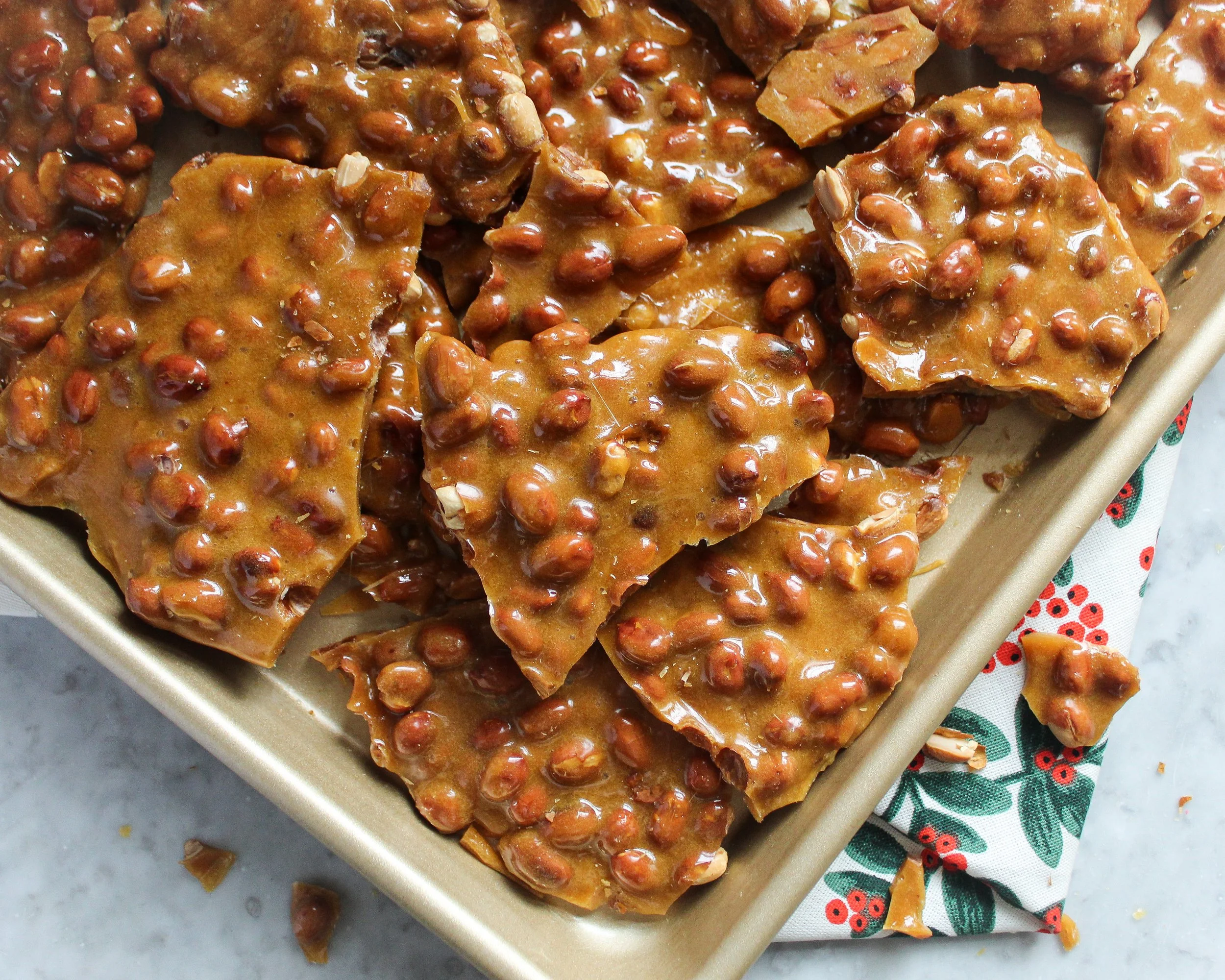
Traditional peanut brittle is basically a thin layer of cooked sugar that sets into a glassy sheet. The peanuts are suspended in that candy glass. To get a clean snap, the syrup has to cook hot enough to drive off water.
That target is the hard-crack stage, roughly 300 to 310°F (149 to 154°C). Below that range, the candy can set but stay bendy or chewy because too much water remains in the syrup.
Why baking soda goes in last
Baking soda is the magic trick. When it hits the hot syrup, it reacts and releases tiny bubbles, giving brittle that classic candy-counter texture that is lighter and easier to bite.
- Add it too early and the foam can fade while the syrup continues cooking.
- Stirring is not the goal at this point. The goal is fast, even distribution so the foam sets in place.
- Minimal mixing and quick spreading help trap bubbles before they level out.
Hard-crack with and without a thermometer
A candy thermometer is the easiest way to stay calm. But peanut brittle is old enough to predate thermometers in home kitchens, so the cold-water test works, too.
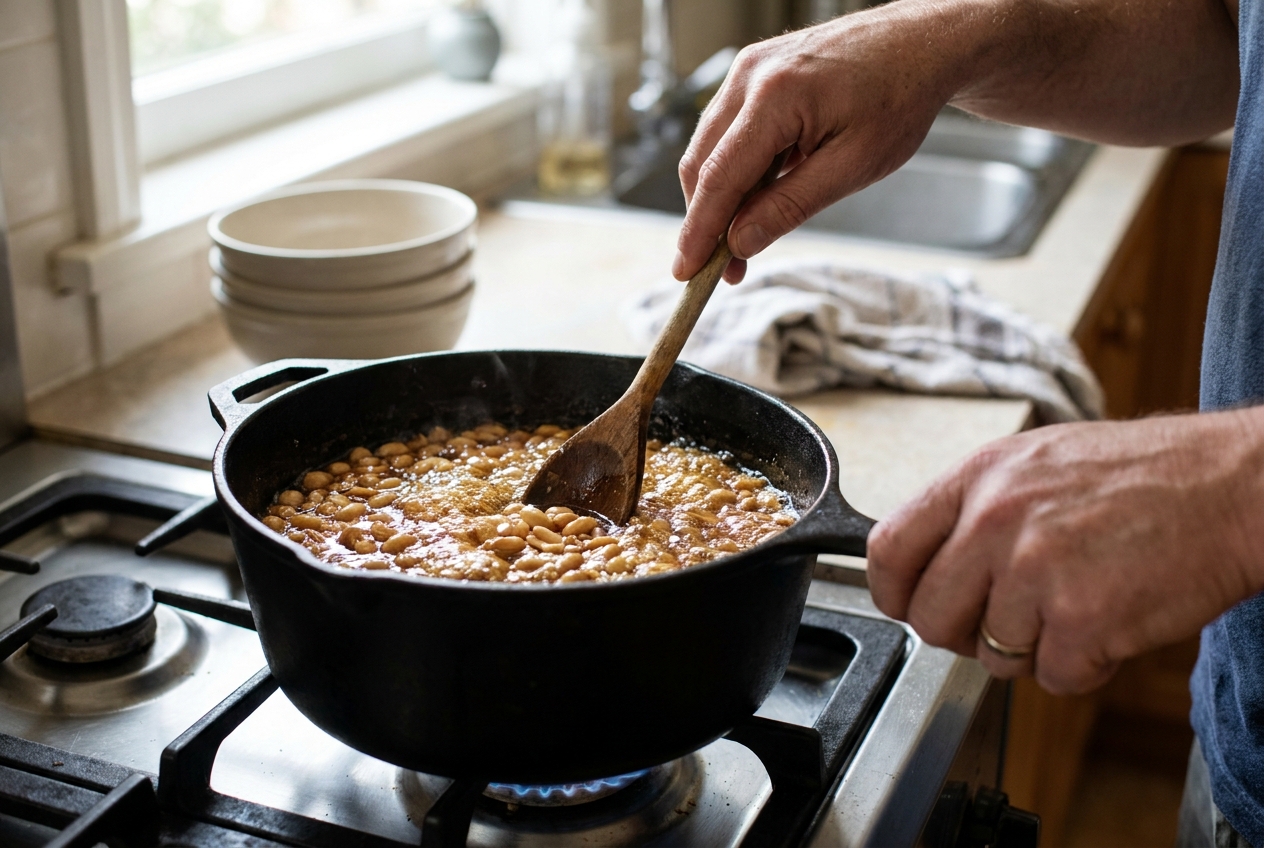
- With a thermometer: Clip it to the pan so the tip sits in syrup but does not touch the bottom. Use around 300°F, typically 300 to 310°F (149 to 154°C), as your hard-crack target range.
- Without a thermometer: Drop a little syrup into a glass of ice water. It should form brittle threads or a hard piece that hardens instantly and snaps cleanly when bent. If it bends or feels taffy-like, it is not there yet.
One more calm-making detail: altitude matters. If you live high above sea level, water boils at a lower temperature, so thermometer calibration and the cold-water snap test become even more useful when you are troubleshooting a “but I hit 300°F” batch.
Common causes
It did not reach hard-crack
This is the biggest reason brittle turns out chewy. A few degrees matter in candy making. Stopping below hard-crack can look done but still cool soft.
- Heat was too low or the cook stopped early.
- The thermometer was off, placed poorly, or touching the pot bottom.
- Late additions (butter, vanilla, peanut butter) can drop the syrup temperature briefly, so the finish line is still the hard-crack reading or snap test.
Humidity pulled moisture back in
Sugar is hygroscopic. That means it loves to grab water out of the air. On humid days, brittle can turn tacky even when cooked correctly.
- Cooking on a rainy day or in a very humid kitchen.
- Letting the brittle sit uncovered on the counter for hours, especially near steam zones like the stove or dishwasher.
- Storing it in a container that is not truly airtight.
It was spread too thick
Thickness does not change the chemistry of hard-crack, but it can change how the brittle cools and how it feels when you bite it. A thicker pour cools more slowly and can seem less snappy, especially in the center.
Scorching and hot spots
If the pan has hot spots or the heat is too aggressive near the end, the sugar can darken fast at the edges while the center is still climbing toward hard-crack. That can lead to brittle that tastes bitter and still ends up tacky.
How to spot the cause
Undercooked vs humidity
- Undercooked: The brittle feels bendy or tooth-sticking right after cooling, even in a dry kitchen. Pieces may flex instead of snap.
- Humidity: It snapped at first, then turned tacky after sitting out. The surface gets shiny or slightly damp-feeling.
Chewy vs overcooked
- Chewy: Pale to medium amber, but soft bite and no clean break.
- Overcooked: Very dark amber to brown, bitter edge, sometimes with a burnt smell. Overcooked brittle is usually hard, but unpleasant.
Grainy vs sticky
Grainy brittle happens when sugar crystals form. It feels sandy and looks cloudy rather than clear.
- Grainy: Cloudy, crumbly, sandy texture.
- Sticky: Shiny, tacky, bendy pieces.
Techniques for a clean snap
Setup matters more than speed
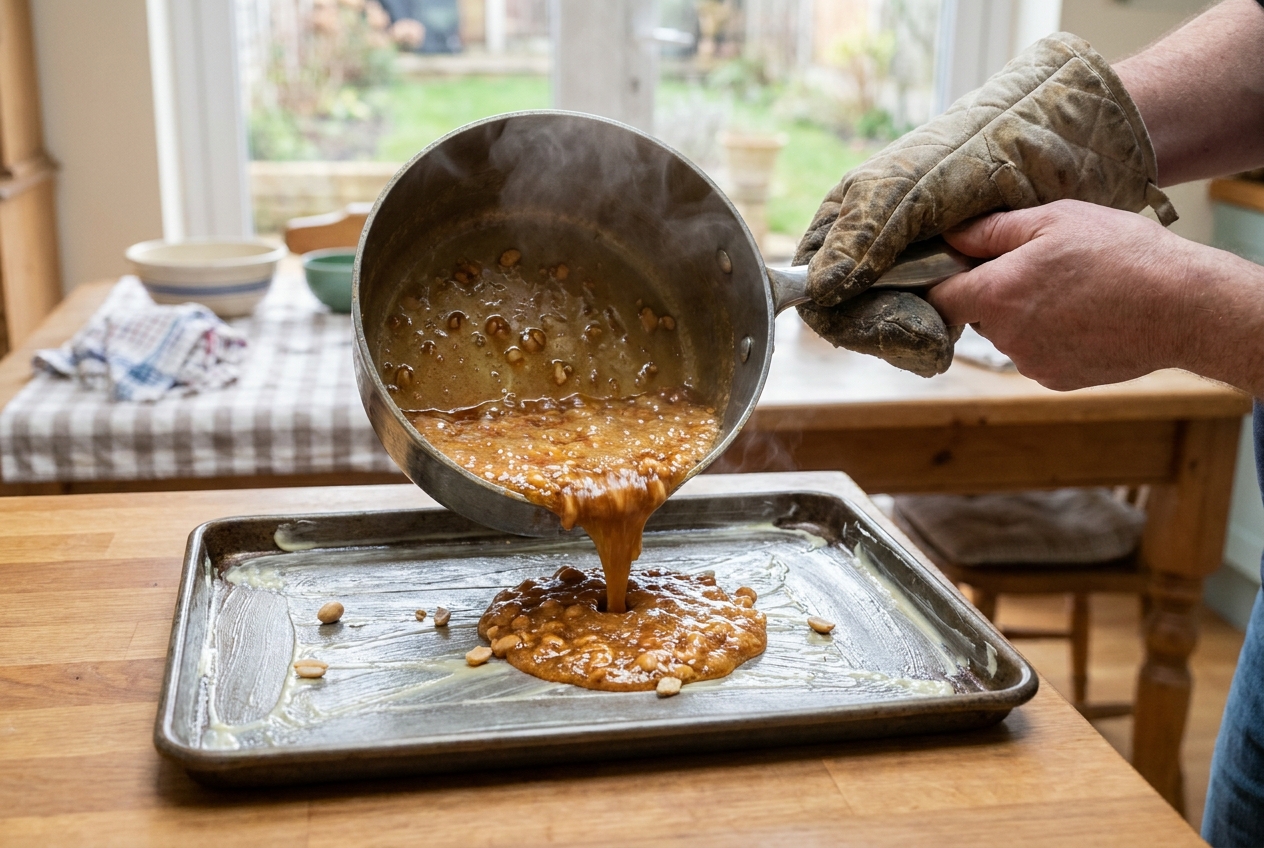
Brittle is forgiving right up until baking soda goes in. After that, the workable window is short. Having the pan, spatula, and add-ins ready is how you get an even, thin layer instead of thick patches.
- Use a large, rimmed sheet pan and grease it well.
- Grease your spatula or spoon so it can glide.
- Pre-measure baking soda, salt, and vanilla so they can be added quickly and evenly.
Use the right pot
A heavy, light-colored pot makes it easier to read color and reduces hot spots. Also, give yourself enough headroom. Baking soda can make the syrup surge up fast.
Temperature is the real finish line
One batch can hit hard-crack quickly, another can crawl there depending on pan shape and burner strength. If brittle keeps coming out sticky, trust the hard-crack range and the snap test more than the clock.
Minimal mixing after baking soda
Once baking soda is added, think “fold in” rather than “beat.” A brief stir to distribute it is enough. Overworking it encourages the foam to level out before it sets.
Thin layer, even thickness
A thin, even spread cools into a cleaner snap. Thick ridges and puddles stay warm longer and are the first spots to feel chewy.
Store dry and airtight
Brittle that snaps beautifully can still turn sticky on the counter, especially in humid weather. Airtight storage is part of the recipe, whether you call it one or not.
Safety basics
Hot sugar is dangerously hot and sticky. Keep kids and pets out of the kitchen during the stovetop portion, and avoid splashing by stirring carefully. If a burn happens, cool the area under cool running water and seek medical advice for anything serious.
Quick decision guide
Chewy right after cooling
The most likely culprit is temperature. Brittle that never really snaps is usually syrup that did not reach hard-crack, or a thermometer reading that was thrown off by placement. A correctly placed thermometer tip sits in the syrup without touching the pot.
Snapped at first, then turned sticky
That points to humidity. Brittle should be stored promptly in a truly airtight container and kept away from steam. In very humid weather, it may simply behave better on a drier day.
Bitter or burnt flavor
This usually comes down to heat management and hot spots. A heavier pot and slightly gentler heat near the end give you more control as color develops.
FAQ
Can I make peanut brittle without a candy thermometer?
Yes. Use the cold-water test. A small drop of syrup in ice water should harden immediately into brittle threads or a hard piece that snaps cleanly. If it bends, keep cooking and test again a little later.
Why does my brittle get grainy?
Graininess is sugar crystallization. Start with a clean pot. Once the syrup reaches a full boil, avoid stirring and avoid scraping down the sides, especially late in cooking. Those two habits help keep the syrup clear.
Is there a way to save sticky brittle?
Sometimes. It can be re-melted carefully with a small splash of water, cooked again to hard-crack, and re-spread. It will not always return to perfect texture, but it often improves if the original issue was undercooking.
Is peanut brittle safe for kids to help make?
Hot sugar can cause serious burns. Kids can help measure peanuts and baking soda, or help break fully cooled brittle, but the stovetop portion should be handled by an adult.
The bottom line
Old-fashioned peanut brittle is simple, but it is precise. Reach hard-crack, add baking soda at the end, spread into an even thin layer, and keep it dry in storage. Do that, and you get the classic snap that makes brittle worth making.
Cheat sheet
- Target temp: Hard-crack is around 300°F, typically 300 to 310°F (149 to 154°C).
- No thermometer: Cold-water test must snap, not bend.
- Prep first: Butter the sheet pan and spatula before turning on heat.
- Baking soda timing: Add at the end, mix briefly to distribute, and spread before the foam levels out.
- Even thickness: Aim for a thin, consistent layer for the cleanest snap.
- Humidity control: Cool completely, store airtight, and separate layers with parchment or wax paper.
- Thermometer tip: In boiling water it should read about 212°F (100°C) at sea level, with small variations by altitude.
Why it works
- The recipe cooks the syrup to the hard-crack stage, which is what makes brittle brittle.
- Baking soda is added last so the foam is trapped as the candy sets.
- A large, buttered sheet pan makes it easier to spread the candy into an even, thin layer.
- Salt and vanilla deepen flavor so the brittle tastes nutty, not just sweet.
Ingredient notes
- Granulated sugar: Standard white sugar gives the cleanest, snappiest brittle.
- Light corn syrup: Helps prevent crystallization and keeps the texture glassy. Do not swap for pancake syrup.
- Water: Just enough to dissolve sugar at the start.
- Unsalted butter: Adds flavor and helps the hot candy spread. If using salted butter, reduce added salt slightly.
- Raw peanuts: Traditional brittle often uses raw peanuts that toast as the syrup cooks. If using roasted peanuts, add them later to avoid scorching.
- Baking soda: The final-step foaming agent. Measure accurately.
- Vanilla and salt: Added off heat for the best flavor.
Equipment
- Heavy-bottom 3-quart saucepan
- Candy thermometer (helpful but optional)
- Heatproof silicone spatula or wooden spoon, buttered
- 13 x 18 inch rimmed baking sheet (half-sheet)
- Measuring cups and spoons
- Small bowls for pre-measured add-ins
Pro tips
- Calibrate your thermometer: In boiling water it should read about 212°F (100°C) at sea level, with small variations by altitude.
- Watch the last minutes: Above about 280°F (138°C), stay close. Color and temperature rise quickly.
- Spread gently: Once poured out, quick, gentle spreading helps keep the foam airy.
- Work dry: A steamy kitchen makes candy sticky. Avoid running a dishwasher or simmering pots while candy cools.
Substitutes
- Peanuts: Swap for almonds, cashews, or mixed nuts by weight, 1 1/2 cups (about 225 g). Watch for faster browning with some nuts.
- Light corn syrup: Golden syrup can work similarly, but flavor will change. Avoid honey for this style because it can darken fast and shift texture.
- Vanilla: Use 1/2 teaspoon almond extract for a different aroma.
Variations
- Chocolate drizzle: Once fully cool, drizzle melted semisweet chocolate over the top and let set before storing.
- Spicy brittle: Add 1/4 teaspoon cayenne with the baking soda for a gentle heat.
- Sesame-peanut: Replace 2 tablespoons of peanuts with toasted sesame seeds for extra crunch.
- Extra-salty: Sprinkle flaky salt lightly over the warm brittle right after spreading.
Serving ideas
- Set out with cookies and fudge on a dessert tray.
- Break into small shards and use as an ice cream topping.
- Dip one edge of each shard in chocolate for gift-worthy pieces.
Storage
Room temperature (best)
Store peanut brittle in an airtight container at cool room temperature for up to 2 weeks. Separate layers with parchment or wax paper to reduce sticking.
Humidity control
In humid climates, brittle benefits from truly airtight storage and minimal time on the counter. If you already have a food-safe desiccant packet from packaged foods, it can help in the container. Do not use anything that can leak or dissolve into the candy.
Freezing
Freezing can work if wrapped tightly and sealed very well, but condensation during thawing can make it sticky. If freezing, thaw while still sealed, then open once it reaches room temperature.
Common mistakes
- Stopping early: Pulling the syrup before hard-crack leads to chewy, sticky brittle.
- Adding baking soda too soon: The foam fades and the brittle sets dense and heavy.
- Using a small pot: The mixture can foam up and overflow when baking soda is added.
- Uneven thickness: Thick patches cool more slowly and can seem less snappy.
- Leaving it out uncovered: Brittle absorbs moisture and turns tacky.
More questions
Should I use raw or roasted peanuts?
Either works. Raw peanuts toast as the syrup cooks and give a classic flavor. If using roasted peanuts, adding them late helps avoid scorching.
Can I double the batch?
It is possible, but the foamy stage is harder to manage in a bigger volume. For best results, two separate batches are more predictable.
Why did my brittle stick to the pan?
The pan likely was not buttered well enough, or the candy cooled into thin cracks that grabbed the surface. Butter the sheet generously, or use a buttered piece of parchment on the pan for easier lift-off.
How do I clean the pot?
Fill the pot with water and bring it to a gentle boil to dissolve hardened sugar, then wash as usual. Avoid scraping brittle sugar off a dry pot with force.