 e-rcps.com
Pasta Plus and home cooking, since 2000

Thin soup happens to the best of us. The good news is that thickening is not mystery magic. It is a few repeatable techniques that match different soup styles. This guide focuses on three kitchen staples that rescue broths, stews, and creamy soups: roux, slurries, and purées.
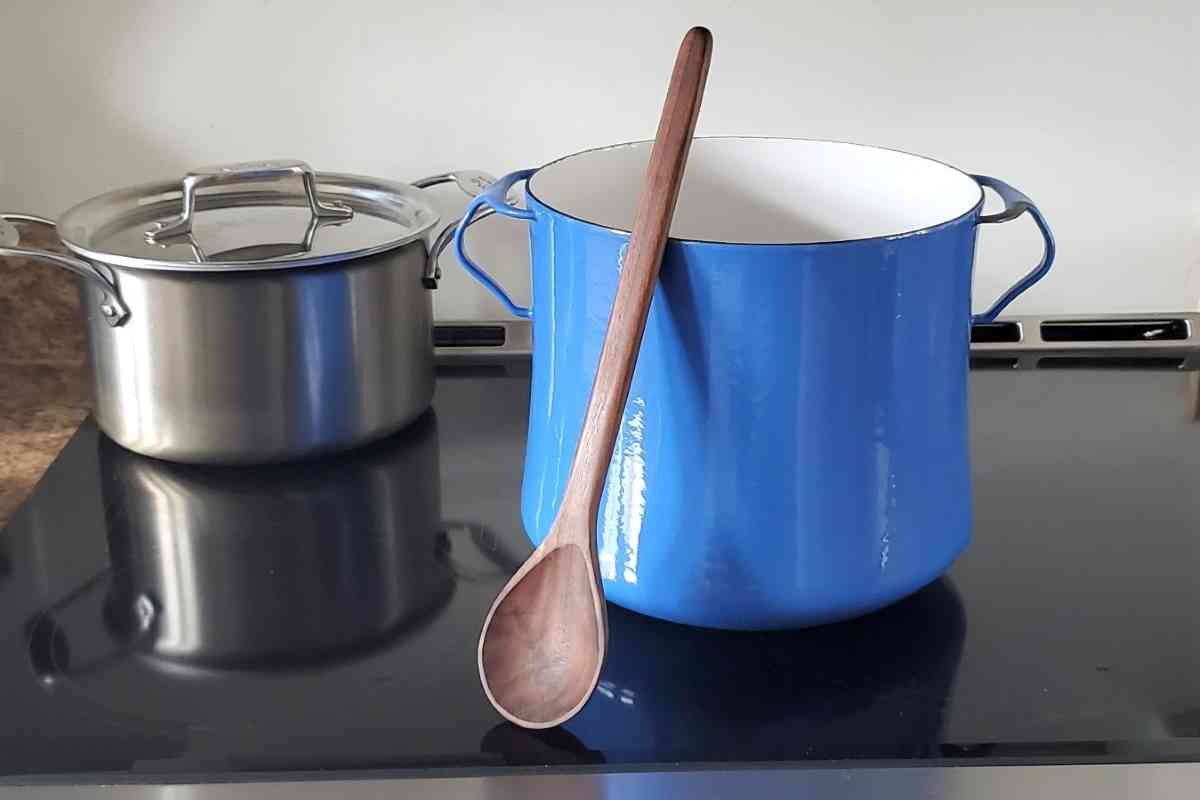
Pick the right thickener
If you choose a thickener that fits the soup, everything gets easier. Use this quick match-up:
- Roux (butter plus flour): best for creamy soups, chowders, and gravy-like stews. It adds body and a smooth, velvety finish.
- Cornstarch slurry: best for quick thickening at the end, especially for clear broths and gluten-free needs.
- Vegetable purée: best for rustic soups, bean soups, lentil soups, and vegetable-forward stews. It thickens while boosting flavor.
One more helpful thought: reducing (simmering uncovered to evaporate water) is always an option, but it changes saltiness and takes time. Thickeners are faster and more controlled.
Method 1: Roux
A roux is equal parts fat and flour cooked together, then loosened with liquid. The flour starch granules swell and thicken as the soup simmers.
Basic ratio
- Per 1 cup (240 ml) soup: start with 1 1/2 teaspoons butter plus 1 1/2 teaspoons flour for a gently spoon-coating soup
- Per 1 quart (4 cups) soup: start with 2 tablespoons butter plus 2 tablespoons flour for a classic creamy thickness
- For a stew-like finish: aim for 3 to 4 tablespoons butter plus 3 to 4 tablespoons flour per quart. Three tablespoons is a medium-thick, ladleable stew; four gets you closer to that cozy, gravy-coated spoon.
These are cozy starting points, not a law of physics. Different flours, fats, and soup bases thicken a little differently, so add, simmer, then decide if you want more.
How to add roux to soup
- Melt the fat in a small pan over medium heat (butter is classic, but oil works too).
- Whisk in flour until smooth. Cook 1 to 2 minutes for a pale roux. This helps avoid a raw flour taste.
- Temper the roux: whisk in a ladle of hot soup a little at a time until it becomes a smooth paste that can pour.
- Whisk into the pot in a slow stream while whisking constantly, then bring back to a gentle simmer.
- Simmer 5 to 10 minutes, stirring now and then, until the texture settles in.
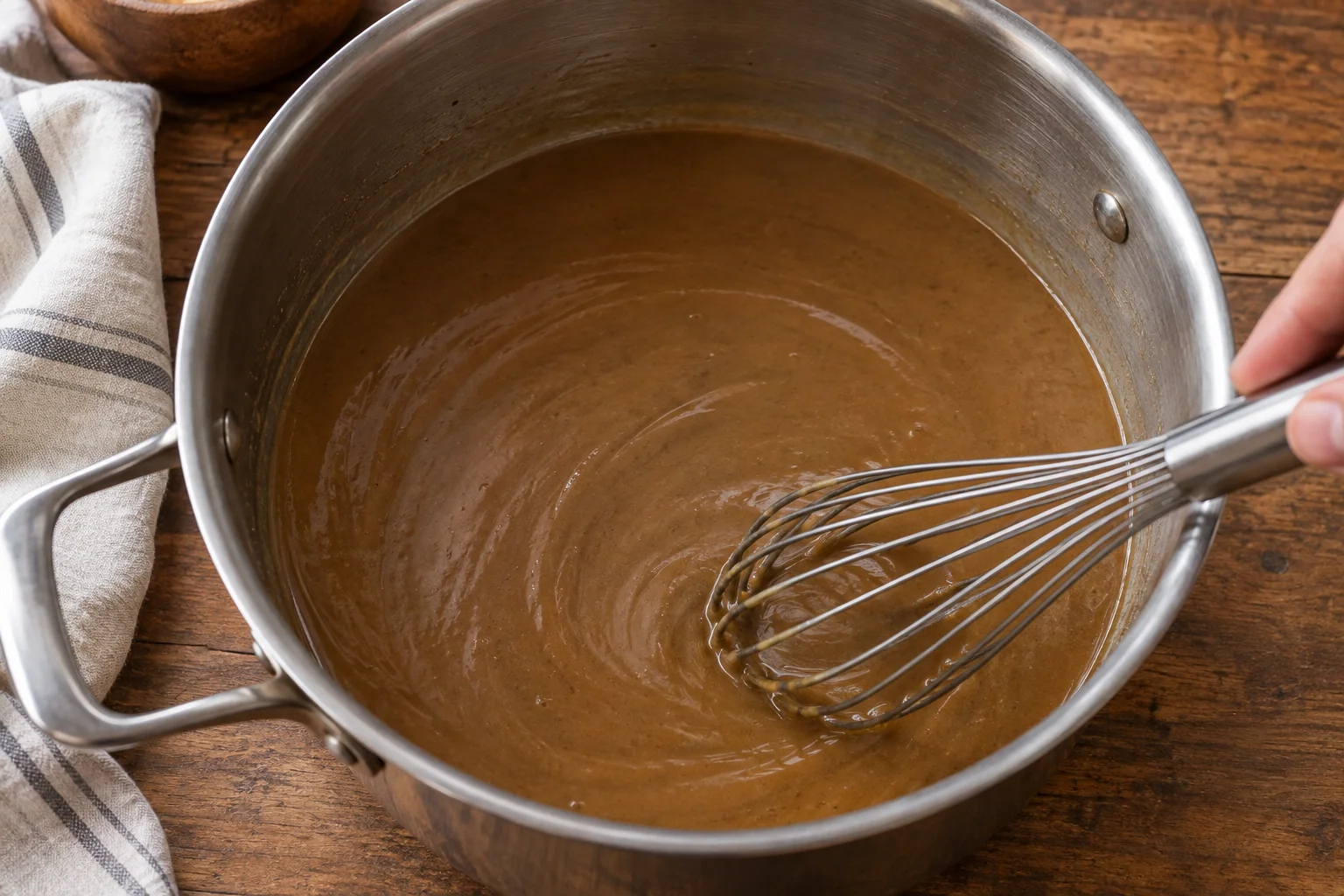
Roux tips
- Keep it at a simmer. A steady simmer thickens smoothly without stressing dairy-based soups.
- Whisk early and well. Most lumps begin in the pan when the flour is not fully smoothed into the fat.
When roux is not ideal
- Very clear broths where you want a clean, glossy look
- Very acidic soups where thickening can weaken a bit (tomato and vinegar-heavy pots may need slightly more roux and a longer simmer to reach the same body)
- Soups you want to keep gluten-free, unless using a suitable gluten-free flour blend designed for roux
For tomato-based soups, a different approach can be perfect. See Creamy Tomato Basil Soup: Fresh vs Canned Tomatoes for tomato flavor and texture ideas.
Method 2: Cornstarch slurry
A slurry is starch mixed with cold liquid, then whisked into hot soup. Cornstarch thickens quickly and gives a glossy finish.
Basic ratio
- Start small: 1 tablespoon cornstarch mixed with 1 tablespoon cold water (or cool broth) thickens about 1 to 2 cups of liquid to a light, silky thickness.
- For 1 quart (4 cups) soup: try 2 tablespoons cornstarch plus 2 tablespoons cold water, added gradually until it looks right.
Always mix the slurry in cold liquid. Hot liquid will clump the starch before it can disperse.
How to thicken soup with a slurry
- Scoop out a little cold water (or cool broth) into a small bowl.
- Whisk in cornstarch until completely smooth.
- Bring the soup to a simmer. Not a rolling boil, just active bubbles.
- Whisk in the slurry slowly, stirring constantly.
- Simmer 1 to 2 minutes. Cornstarch thickens fast and reaches peak thickness quickly.
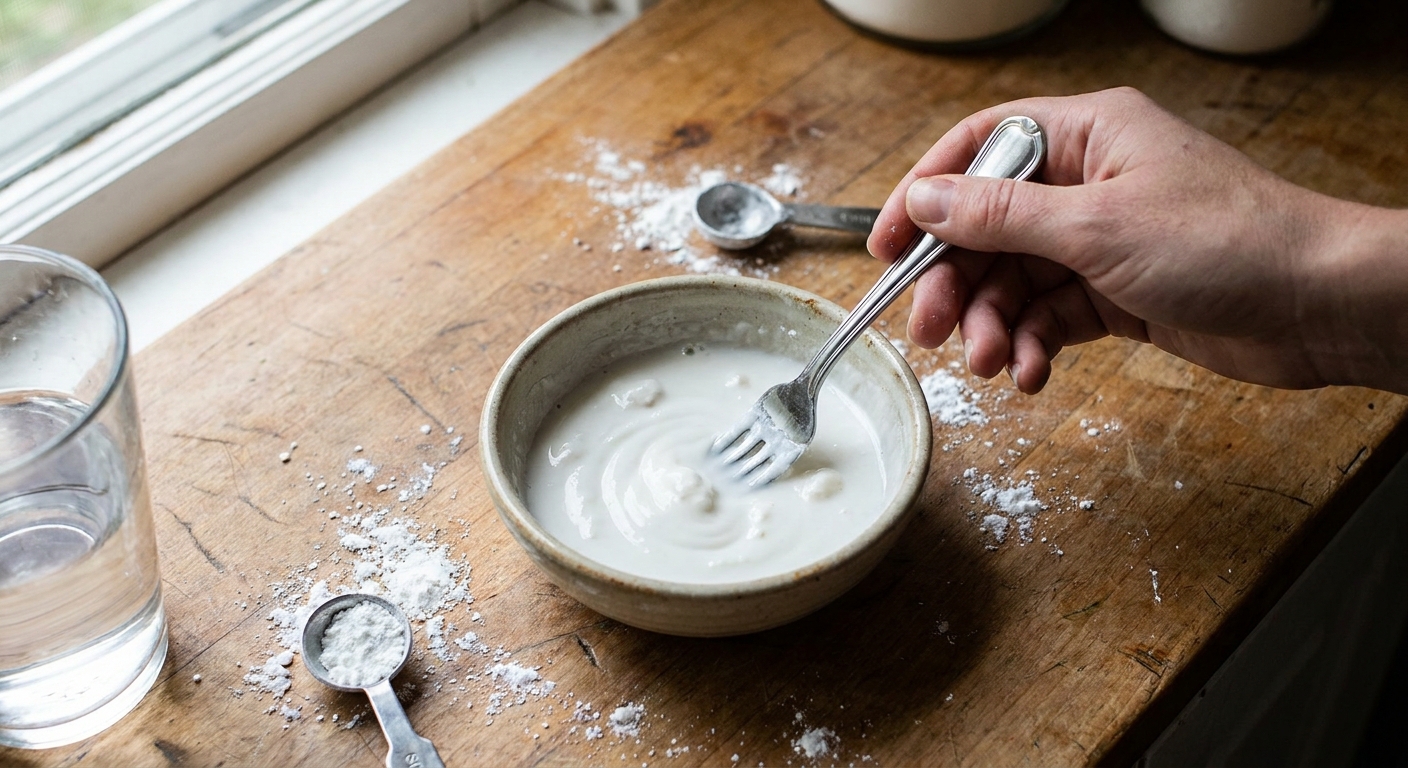
Slurry rules
- Do not dump dry cornstarch into soup. That is the fastest path to stubborn lumps.
- Avoid extended hard boiling after thickening. Over time, high heat (especially with acid) can loosen the thickening power.
- Add in stages. You can always add more slurry, but it is harder to undo an overly gelled pot.
Good uses for slurry thickening
- Chicken and noodle style soups that need a little more body (add after noodles are cooked)
- Quick weeknight vegetable soups
- Stews where you like a glossy, saucy finish
If noodles are in the pot, timing matters for texture and thickness. This pairs nicely with Chicken Noodle Soup: Noodles and Timing.
Method 3: Vegetable purées
Purée thickening is cozy and forgiving. Instead of adding starch, you blend part of the soup or blend in a soft cooked vegetable. The result is thicker, more satisfying, and often naturally creamy without extra dairy.
Great purée thickeners
- Potatoes: classic, neutral, and very effective
- White beans or chickpeas: creamy body with a gentle, savory flavor
- Winter squash or sweet potato: silky, sweet-leaning richness
- Cauliflower: mild, smooth, and light
- Cooked rice: a traditional trick for creamy texture
How much to use
- Blend-the-soup method: start by blending 1 to 2 cups per quart, then simmer and reassess.
- Purée booster method: start with 1/2 cup smooth purée per quart (beans, potato, squash), stir in, simmer, then add more if you want a thicker bowl.
Two easy ways to purée-thicken
Option A: Blend part of the soup
- Ladle 1 to 2 cups of soup into a blender (or use an immersion blender carefully in the pot).
- Blend until smooth, then stir back into the pot.
- Simmer 2 to 5 minutes to unify the texture.
Hot blender safety: let the soup cool a minute or two, do not fill the blender more than halfway, and vent the lid (or crack it slightly) with a towel held firmly on top. Start on low, then increase slowly.
Option B: Add a purée booster
- Cook your thickener until very soft (a microwaved potato, simmered cauliflower florets, or canned beans rinsed and warmed).
- Blend with a little broth until perfectly smooth.
- Stir into the soup and simmer briefly.
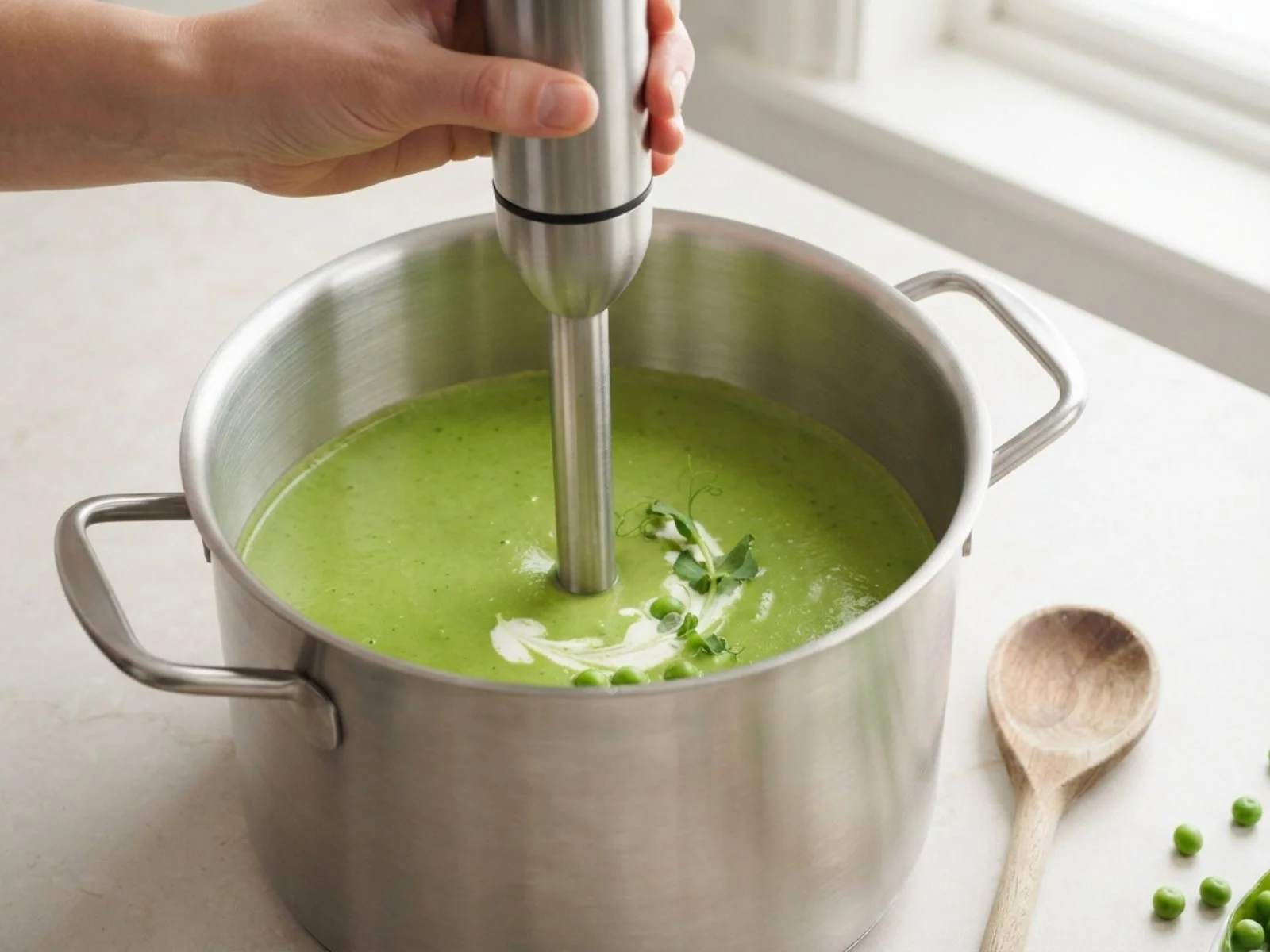
Purée tips
- Blend smooth for elegance. Leave a little chunky for rustic charm. Either way thickens.
- Watch the salt. Beans and potatoes absorb seasoning. Taste after the soup thickens, then adjust.
- Go easy on starchy potatoes in high-speed blenders. Overblending can make potatoes a little gluey. Short pulses help.
For a soup where purée thickening feels right at home, take a look at Classic Italian Minestrone, Layer by Layer.
Other easy thickeners
Reduce and concentrate
Simmer uncovered until the soup looks slightly thicker than you want, then turn off the heat. Soups continue to thicken a bit as they cool. Taste as you go because flavors concentrate too.
Add dairy gently
Cream, half-and-half, or evaporated milk add body. Keep the heat gentle to prevent curdling. If the soup is very acidic (tomatoes, lots of wine, or lemon), add dairy at the end and avoid boiling.
Breadcrumbs or bread
Old-fashioned and delicious in some styles. Stir in a small handful of fine breadcrumbs, or simmer a piece of bread and blend it in. This works especially well with rustic Italian soups. If bread soups are your happy place, wander through our soups collection for more ideas.
Flour slurry (a fallback)
If you are out of butter for a roux, you can whisk flour with cold water and add it to a simmering soup, a little at a time. It works, but it is more prone to tasting floury and forming lumps than a proper roux, so simmer it a bit longer and whisk like you mean it.
Common problems
My soup is lumpy
- Roux lumps: whisk vigorously at a gentle simmer, or use an immersion blender to smooth things out. If it is truly stubborn, strain the soup. Next time, temper the roux with hot soup and whisk constantly as you pour it into the pot.
- Slurry lumps: blend briefly with an immersion blender, or strain.
- Flour added directly: blend or strain, then simmer a few minutes to cook out the raw flour taste.
It tastes starchy or flat
- Simmer longer (especially for roux) to cook out any raw flour taste.
- Balance the flavor with a pinch of salt, a squeeze of lemon, a splash of vinegar, or fresh herbs, depending on the soup style.
- Add aroma with sautéed onion or garlic stirred in, if it fits the recipe.
It is too thick now
- Thin with warm broth or water, a little at a time.
- Recheck seasoning after thinning.
- For creamy soups: thin with warm milk or stock to keep the texture plush.
It was thick, then got thin again
- With cornstarch: extended hard boiling (and high acid) can slowly break down the thickening. Keep it at a gentle simmer once it is where you want it.
- After freezing: freeze-thaw can change texture in different ways. Potato-heavy soups can turn a bit grainy, dairy can separate, and cornstarch-thickened soups can weep. In general, bean and vegetable purées tend to reheat more smoothly than cornstarch-thickened soups.
Quick decision guide
- Creamy chowder: choose roux.
- Clear broth that needs a little body: choose a cornstarch slurry.
- Lentil or bean soup: choose a vegetable purée.
- You have time and want deeper flavor: reduce first, then thicken only if needed.
Soups are gentle like that. Choose a method, add a little at a time, and let the pot simmer into its cozy best self.