 e-rcps.com
Pasta Plus and home cooking, since 2000
Classic Italian minestrone is not just a list of vegetables. It is a gentle, practical timing game: the sturdy ingredients start first, the quick-cooking ones join later, and tender greens and herbs finish at the end so nothing turns to mush. This guide walks through that traditional layering method so your beans stay creamy, your carrots stay sweet, and your greens stay green.
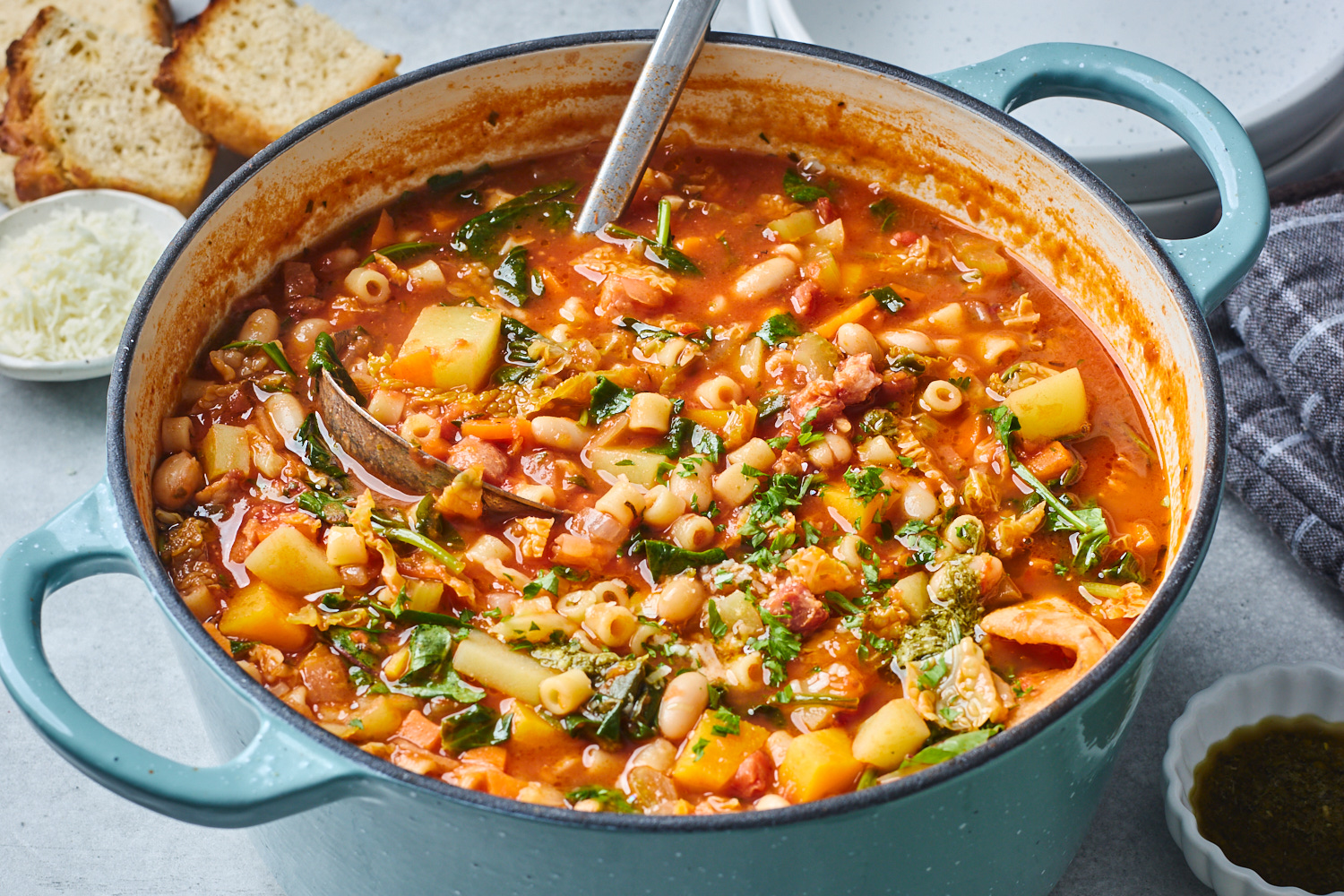
What makes minestrone classic
Minestrone is a vegetable soup that shifts with the season and the pantry, and “classic” can look a little different from region to region. Some bowls lean more tomato-forward, some are lighter and finish with pesto, and many sit happily somewhere in between. What stays steady is the method.
- A soffritto base (onion, celery, carrot) for sweetness and depth.
- Beans for body and protein, sometimes with a portion mashed to thicken.
- Layered vegetables added by cook time, not all at once.
- Tomato optional, but common in many versions, especially with summer vegetables. Use less for a lighter, pesto-leaning soup, and more for a deeper, redder pot.
- Pasta or rice added near the end so it stays pleasantly al dente.
- Finish with olive oil and herbs for fragrance.
If you want a reference point for a more recipe-style minestrone page, see our minestrone collection here: /pasta/rcp/soup/minestrone/.
Set up ingredients by timing
The easiest way to nail the finish is to group ingredients into bowls by how long they need. That way, you are cooking by rhythm, not scrambling with a cutting board mid-simmer.
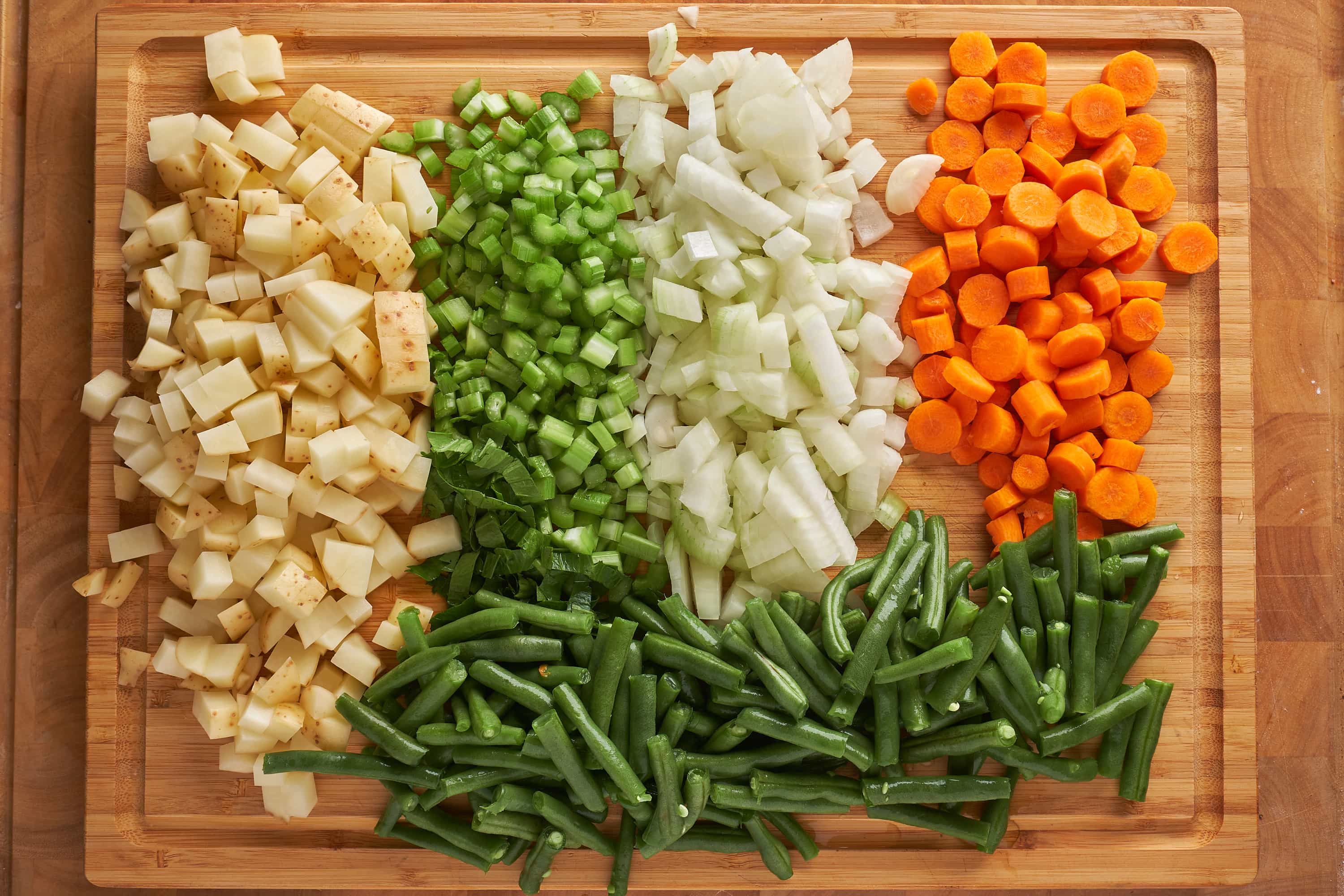
First: Soffritto vegetables (8 to 10 minutes)
- Diced onion
- Diced celery
- Diced carrot
Note: these vegetables mostly do their work in the soffritto step. They do not need a full 15 to 30 minutes on their own. After that, they become the background flavor that makes the whole pot taste “finished.”
Group A: Long-cook vegetables (15 to 30 minutes)
- Potato or sweet potato (if using)
- Winter squash
- Cabbage (especially if cut thicker)
- Parsnip or turnip (optional)
Why they go early: they need time for their starches and fibers to soften and for their sweetness to bloom.
Group B: Medium vegetables (8 to 15 minutes)
- Green beans
- Zucchini (firmer varieties)
- Cauliflower florets
- Broccoli stems (sliced thin)
- Fennel (sliced)
Why they go mid-pot: they soften fairly quickly but still benefit from a steady simmer to absorb broth.
Group C: Quick vegetables and tender add-ins (2 to 8 minutes)
- Zucchini (soft summer zucchini)
- Broccoli florets
- Frozen peas
- Canned beans (already cooked, just warming through)
- Fresh tomatoes (diced)
About fresh tomatoes: adding them late keeps the flavor bright and fresh. If you want a deeper, rounder tomato backbone, add them earlier with the broth and let them simmer longer.
Group D: Delicate greens and fresh flavor (30 to 90 seconds)
- Baby spinach
- Chard leaves (thinly sliced)
- Escarole (shredded)
- Parsley or basil stirred in at the end
- Grated cheese at serving
- A final drizzle of olive oil
Why they go last: the goal is wilted, not gray, and fragrant, not boiled away.
The layering method
The times below assume a calm simmer, not a hard boil. Minestrone likes gentle heat.
Step 1: Build the base (8 to 10 minutes)
In a heavy pot, warm olive oil and cook onion, celery, and carrot with a pinch of salt until softened and sweet-smelling.
- Keep the heat moderate: you want the vegetables glossy and tender, not browned.
- Salt early: it helps the soffritto release moisture and flavor the whole soup.
Step 2: Add garlic and tomato paste (30 to 60 seconds)
Stir in minced garlic. If using tomato paste, let it cook briefly in the oil so it tastes rounded, not raw.
Step 3: Add broth and Group A vegetables (10 to 15 minutes)
Pour in broth or water and bring everything up to a simmer. Add the longest-cooking vegetables (potato, thicker cabbage, squash). Simmer until they are starting to soften, not fully tender.
Want a simple vegetable broth direction for soup cooking? Our basics page is here: /pasta/veg/vegetable_stock/.
Step 4: Add beans (and use them for body)
Beans can do two jobs in minestrone: they add hearty bites, and they thicken the broth.
- Good choices: cannellini, borlotti (cranberry beans), chickpeas, or a mix.
- For a brothy soup: add drained, rinsed beans now and let them warm through as the vegetables finish.
- For a thicker, rustic soup: mash about 1 cup of beans with a ladle of broth, then stir that back in. Add the remaining whole beans now or a little later.
Timing note: if you are using dried beans cooked from scratch, cook them until tender before they ever meet the soup. Also, acidic ingredients (tomatoes, wine, lemon) can slow bean softening, which is another reason minestrone is easier when your beans are already cooked.
Step 5: Add Group B vegetables (8 to 12 minutes)
Once the long-cook vegetables are about halfway there, add medium vegetables like green beans and firmer zucchini. Keep the heat low enough that the soup simmers steadily without thrashing the vegetables around.
Step 6: Add pasta or rice late (6 to 10 minutes)
Stir in small pasta (ditalini, small shells, tubetti) or rice when the vegetables are almost done. Cook just until al dente.
- Rule of thumb: pasta swells a lot. Start with about 1/2 cup small pasta per 6 cups of broth, then add more next time if you want it heartier.
- If you want great leftovers: cook pasta separately and add it to each bowl. Pasta keeps drinking broth as it sits.
- If pasta is cooking in the pot: plan for extra broth, and stop cooking while it is still slightly firm.
Step 7: Add Group C quick vegetables (2 to 5 minutes)
Now add quick-cooking vegetables like peas, tender zucchini, and any extra canned beans you held back. Simmer only until heated through and bright.
Step 8: Finish with greens and final seasoning (30 to 90 seconds)
Turn off the heat, stir in greens, and let residual heat wilt them. Taste and adjust salt. Add black pepper and a splash of olive oil.
Serve with grated cheese if you like, and keep the bowl simple and cozy.
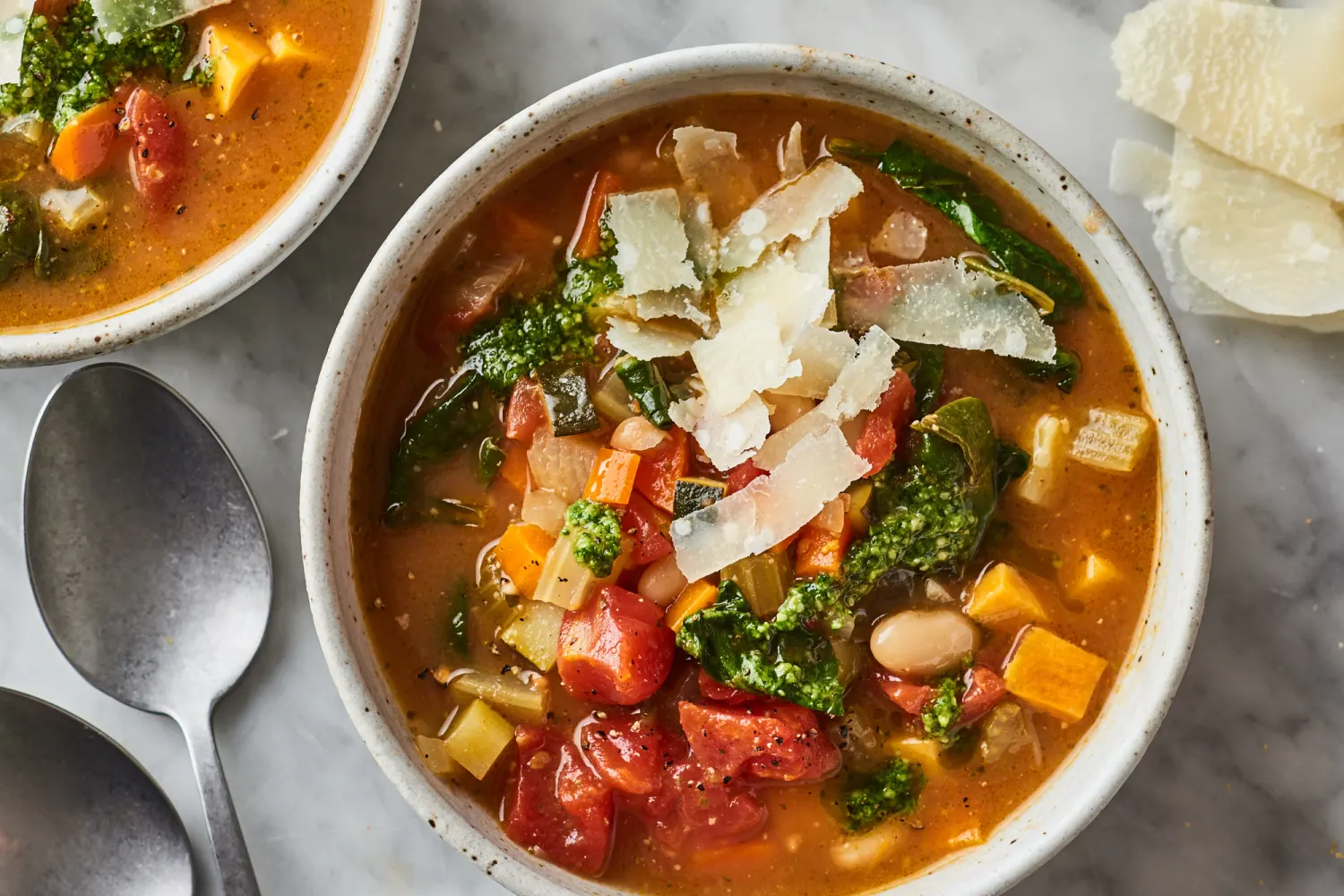
A timing map
Use this as a practical schedule. Adjust by cutting size and by how lively your simmer is.
| Minute marker | What to add | What to look for |
|---|---|---|
| 0 | Soffritto (onion, celery, carrot) | Soft, glossy, sweet-smelling |
| 10 | Broth + Group A long-cook vegetables | Simmer begins, vegetables start to soften |
| 20 | Beans (plus optional mashed-bean thickener) | Broth looks a bit creamier |
| 25 | Group B medium vegetables | Vegetables tender but not collapsing |
| 35 | Pasta or rice | Stir often, keep it at a gentle simmer |
| 42 | Group C quick vegetables | Bright color, just cooked |
| 45 | Greens + olive oil finish | Greens wilted, soup tastes lively |
Seasonal tweaks
Summer
Lean into zucchini, green beans, fresh tomatoes, and basil. Keep the cooking time shorter and finish with a generous olive oil drizzle.
Fall and winter
Use potatoes, cabbage, kale, or squash. Consider the mashed-bean trick for a thicker, comforting bowl. A parmesan rind simmered in the broth adds a savory backbone if you have one.
Spring
Add peas and tender greens late. Keep herbs bright and fresh. Aim for a lighter broth.
Common problems and fixes
Mushy vegetables
- Cut vegetables a little larger.
- Lower the heat to a calm simmer.
- Add quick vegetables and greens later than you think you should.
Flat flavor
- Add salt in small steps, then taste again.
- Add a little tomato paste early, even in a mostly brothy version.
- Finish with olive oil, black pepper, and fresh herbs.
Pasta drank all the broth
- Cook pasta separately and add per bowl.
- Or, keep extra hot broth nearby and thin leftovers when reheating.
Beans breaking apart
- Stir gently after adding beans.
- Keep the simmer steady, not rolling.
- If using canned beans, add them later so they warm without overcooking.
Serving and storing
Minestrone is happiest with something simple on the side and a little finishing touch at the bowl.
- Serve with: crusty bread, a spoonful of pesto, or grated cheese.
- Store: cool, cover, and refrigerate. If pasta is in the soup, expect it to drink broth overnight.
- Reheat: low and slow, adding a splash of water or broth to loosen.
More soup comfort is always waiting over in our Soups section.