 e-rcps.com
Pasta Plus and home cooking, since 2000

Creamy tomato basil soup looks simple, but your tomato choice quietly shapes the whole pot: how long it takes, how sweet it tastes, how bright the acidity feels, and whether the soup turns silky or a little thin. This guide walks through two excellent paths: peak-season fresh tomatoes and high-quality canned whole peeled tomatoes (including San Marzano if you love them or have access).
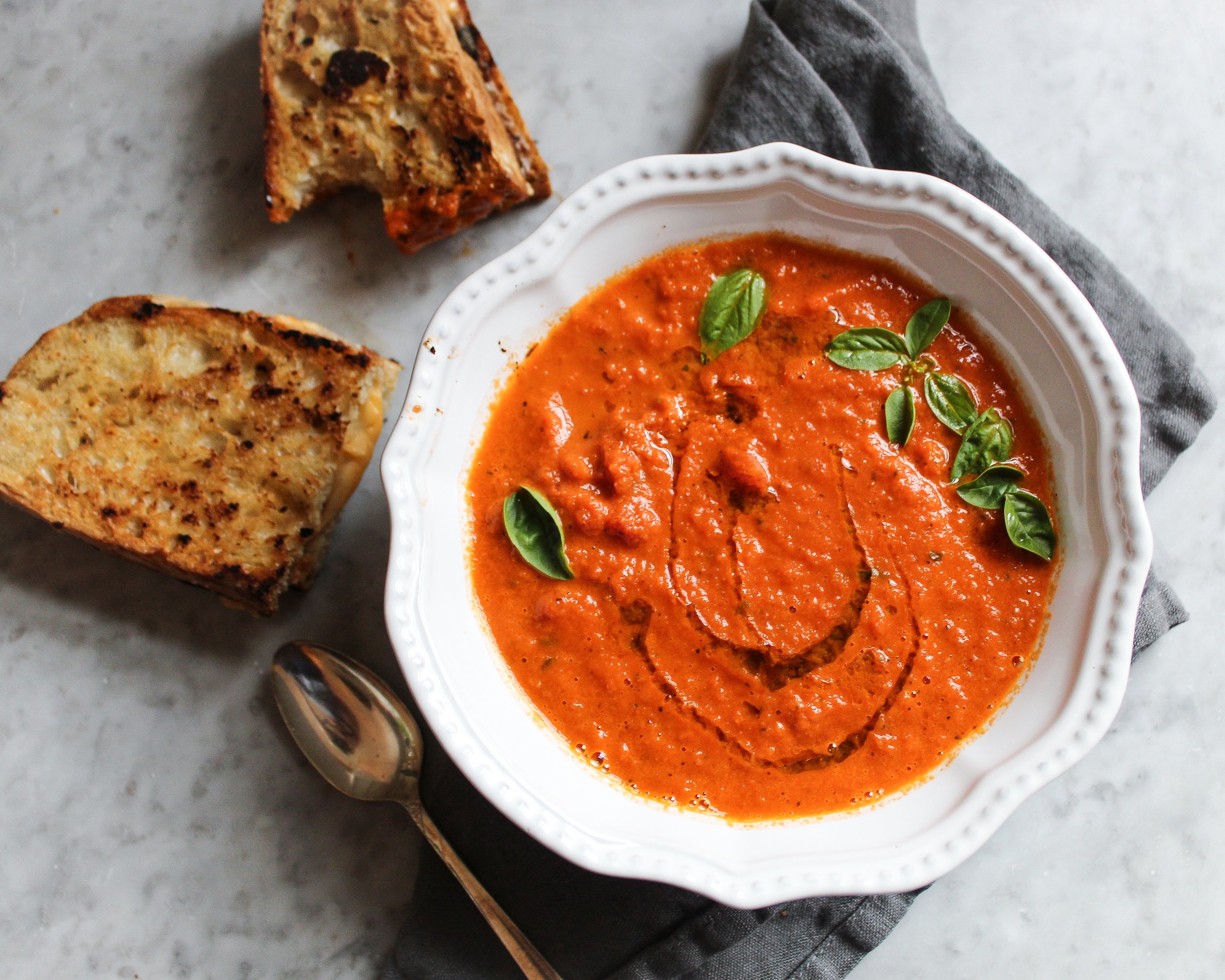
Fresh vs. canned: what changes
Both versions can be cozy, creamy, and deeply tomato-forward. The big differences are water content, acidity, and how quickly flavor concentrates.
| Factor | Peak-season fresh tomatoes | Canned whole peeled tomatoes |
|---|---|---|
| Flavor | Often fresher and lighter, with more “garden” aroma when perfectly ripe | Often deeper and rounder, with a consistent cooked-tomato richness |
| Acidity | Can vary a lot by variety and ripeness | Usually predictable, though some brands taste brighter than others |
| Water and body | Typically needs more reduction to avoid a thin, watery soup | Even though canned tomatoes come with juice or purée, they usually concentrate faster and blend into a thicker-feeling soup |
| Cooking time | Longer, because you must drive off water and build body | Shorter, because tomatoes are already peeled and softened by processing |
| Texture | Can be a bit more fibrous unless strained | Typically blends very smoothly, with fewer skin and seed issues |
| Best use | Late summer and early fall, when tomatoes are truly sweet | Year-round comfort soup with reliable results |
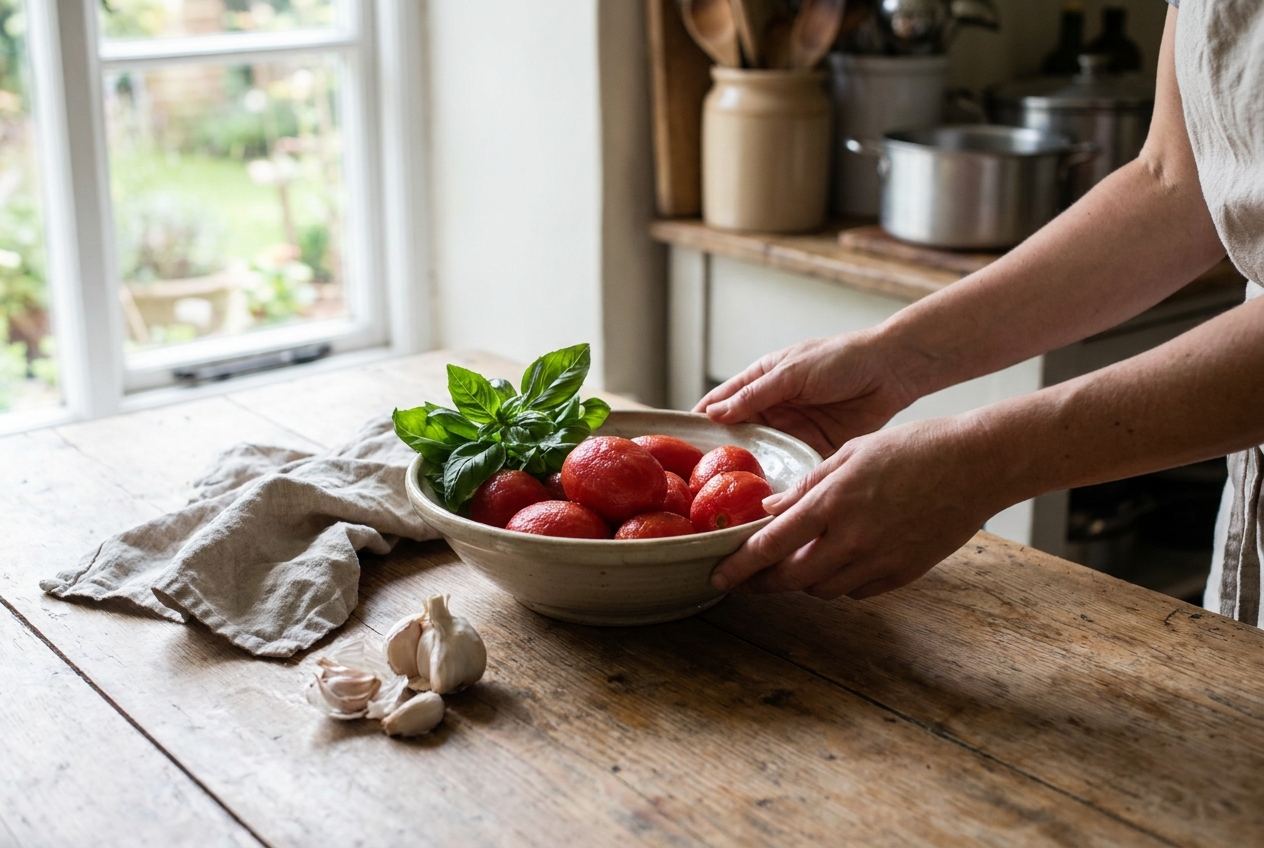
Tomato picking
If using fresh tomatoes
- Best varieties for soup: Roma, paste tomatoes, or any meaty plum tomato. Large slicers work too, but they bring more water.
- Ripeness matters: a tomato that smells fragrant at the stem end and gives slightly to pressure will usually make a sweeter soup.
- Plan for shrinkage: fresh tomatoes cook down dramatically. For a 4-serving pot, expect to start with about 3 to 3 1/2 pounds fresh tomatoes.
If using canned tomatoes
- Choose whole peeled tomatoes when you can. They often taste cleaner than some crushed or purée products, and you control the texture by crushing or blending.
- Look for fewer additives: ideally tomatoes, juice or purée, salt, and maybe basil. (Calcium chloride is safe, but it can keep tomatoes a bit firmer.)
- San Marzano note: true San Marzano dell’Agro Sarnese-Nocerino (DOP) is a specific protected product. “San Marzano style” is more of a label cue than a guarantee. Either can be delicious, so go by flavor and a brand you trust.
The base recipe
This is a classic creamy tomato basil soup structure: aromatic vegetables, tomatoes, broth, gentle simmer, blend, then finish with dairy and basil. The tomato prep is the main difference.
Ingredients (about 4 servings)
- 2 tbsp olive oil or butter
- 1 medium yellow onion, diced
- 2 cloves garlic, minced
- 1 tbsp tomato paste (optional but helpful for body)
- Choose one: 3 to 3 1/2 lb ripe fresh tomatoes (see prep below) or 1 (28 oz) can whole peeled tomatoes
- 2 cups chicken stock or vegetable stock
- 1 tsp kosher salt, plus more to taste
- 1/4 tsp black pepper
- Pinch of sugar (only if needed)
- 1/2 cup heavy cream (or 1/3 cup for a lighter finish)
- 1/2 cup packed fresh basil leaves, plus extra for topping
- 1 tsp balsamic vinegar or a squeeze of lemon (optional, for lift)
If you want a reliable homemade stock option, our vegetable stock guide is a friendly helper.
Version 1: fresh tomatoes
Fresh tomato prep options
Fastest: core tomatoes, cut into wedges, and cook them down. You can blend and then strain later if you want extra smoothness.
Smoothest: peel and seed first (more work, but a silkier soup).
Quick peel method (optional)
- Bring a pot of water to a boil. Cut a small X on the bottom of each tomato.
- Boil 30 to 60 seconds, then transfer to ice water.
- Slip off skins, core, and roughly chop.
Cook time target
Fresh tomatoes need time to lose excess water and concentrate flavor. Expect 30 to 45 minutes of simmering depending on juiciness.
Fresh tomato soup steps
- In a Dutch oven, warm oil or butter. Add onion with a pinch of salt and cook 8 to 10 minutes until soft and sweet, not browned.
- Add garlic and cook 30 seconds.
- Stir in tomato paste (if using) and cook 1 minute.
- Add chopped fresh tomatoes, stock, salt, and pepper.
- Simmer uncovered 30 to 45 minutes, stirring occasionally, until reduced and the flavor tastes rounded, not watery.
- Blend until smooth (see blending notes below). For extra-silky soup, strain through a fine mesh sieve.
- Return to low heat. If you worry about curdling, temper the cream by stirring a ladle of hot soup into the cream first, then pour it back into the pot.
- Stir in cream and basil, and warm gently 2 to 3 minutes. Keep it just below a simmer.
- Taste and adjust. If the tomatoes are sharp, add a pinch of sugar. If they taste a little sleepy, add a tiny splash of balsamic or lemon.
Flavor profile to expect: lighter tomato aroma with a clear basil finish. If tomatoes are not truly peak, the soup can taste thin or overly tart.
Optional tip: if your fresh tomatoes are watery, roast them first (halved, cut-side up, 425 F until collapsed and lightly browned), then proceed with the recipe. Roasting trades some “garden” brightness for a deeper, sweeter tomato flavor.
Version 2: canned tomatoes
Canned whole peeled tomatoes are already peeled and heat-processed, which helps them soften quickly and blend smoothly. They can also bring consistent sweetness and color year-round.
Cook time target
Expect 15 to 25 minutes of simmering for a full-flavored pot.
Canned tomato soup steps
- In a Dutch oven, warm oil or butter. Add onion with a pinch of salt and cook 8 to 10 minutes until very soft.
- Add garlic and cook 30 seconds.
- Stir in tomato paste (optional) and cook 1 to 2 minutes, letting it darken slightly for a deeper, caramelized base.
- Add the canned tomatoes and their juice, crushing them with a spoon as they go in.
- Add stock, salt, and pepper. Simmer uncovered 15 to 25 minutes.
- Blend until smooth.
- Return to low heat. Temper the cream if you like (especially with a bright, acidic brand), then stir in cream and basil. Warm gently 2 to 3 minutes.
- Taste and adjust with salt. Add a tiny splash of balsamic or lemon if you want a brighter finish.
Flavor profile to expect: deeper “tomato stew” richness with a smooth, velvety body. Basil tends to taste a little sweeter against the cooked-tomato base.
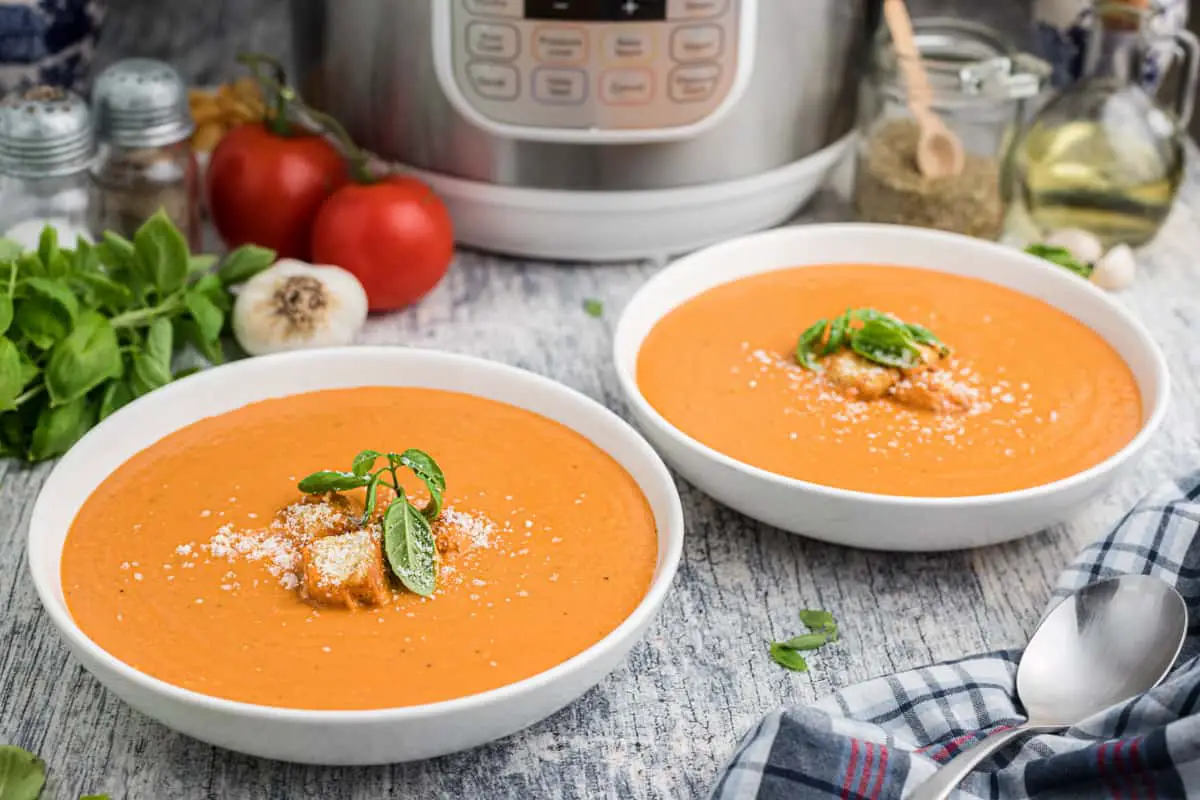
Blending and cream
Blending options
- Immersion blender: easiest and least mess. Blend directly in the pot.
- Stand blender: very smooth, but treat hot soup carefully. Blend in batches, fill the jar only halfway, and hold the lid down with a towel while you pulse to start.
When to add basil
For a greener, fresher basil flavor, stir basil in after blending and warm briefly. For a more mellow basil note, simmer a few basil stems in the soup earlier, then remove before blending.
When to add cream
Add cream at the end over low heat. A hard boil after adding dairy can dull flavor, and very acidic soup can sometimes make cream look slightly grainy. Gentle heat and tempering keep things smooth.
Acidity: how to fix it
Tomato soup should taste lively, not harsh. Fresh tomatoes can be sharp if they are underripe. Some canned tomatoes also run bright depending on brand.
- First fix: salt. Proper salting reduces perceived acidity.
- Second fix: time. A longer simmer rounds out sharp edges.
- Third fix: a pinch of sugar. Add 1/8 tsp at a time. This is not to make it sweet, just balanced.
- Finish fix: a splash of fat. A touch more cream or a pat of butter can soften acidity.
- Optional brightness: if the soup tastes flat rather than sharp, add a few drops of lemon or a small splash of balsamic to wake it up.
Make it a meal
Creamy tomato basil soup loves something to dunk. If the soup is the main course, pair it with a crisp salad or warm bread.
- Serve with a simple salad from our salads collection.
- Plan a cozy bread night from bread and pizza.
- For another slow, comfort-forward classic, visit classic French onion soup.
Storage and reheating
- Refrigerate: cool, cover, and store 3 to 4 days.
- Freeze: freeze without cream for best texture, then add cream after reheating.
- Reheat gently: low heat, stirring often. Avoid a hard boil, especially once dairy is in.
Quick FAQ
Do fresh tomatoes always taste better?
No. Fresh is only “better” when tomatoes are truly ripe and flavorful. In many seasons, a good can of whole tomatoes will give you a deeper, more dependable soup than pale, watery fresh tomatoes.
Can this be made dairy-free?
Yes. Skip the cream and finish with extra olive oil for richness. The soup will be lighter, but still satisfying.
Why does my soup taste watery?
Fresh tomatoes may need a longer uncovered simmer. You can also add a spoonful of tomato paste and simmer 5 to 10 more minutes.
Why is it bitter?
Overcooked garlic or too much basil simmered for too long can read bitter. Add basil near the end and keep garlic gentle.