 e-rcps.com
Pasta Plus and home cooking, since 2000
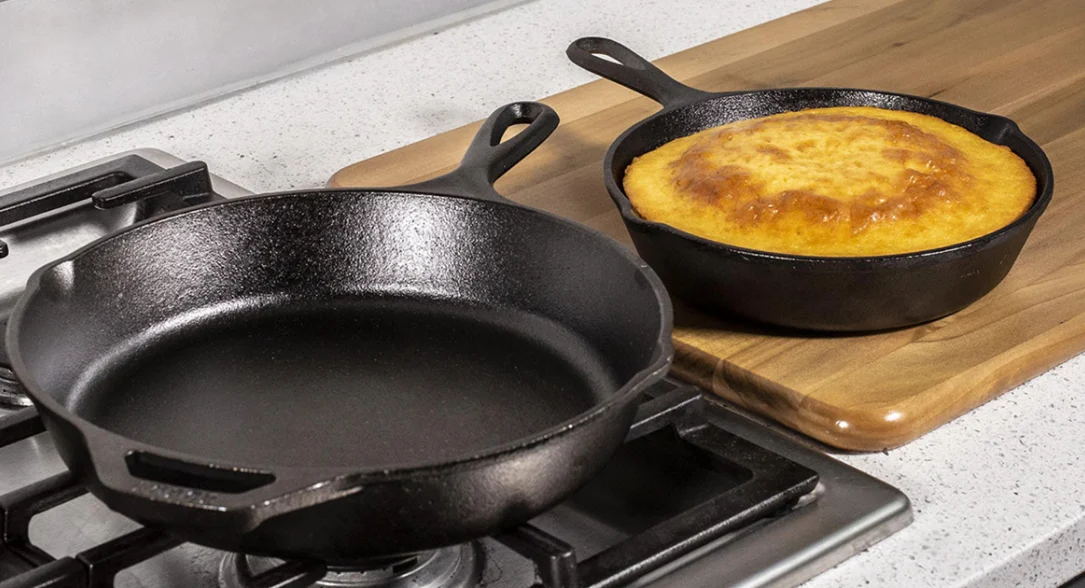
A cast iron skillet is one of the coziest tools in the kitchen: it browns beautifully, goes from stovetop to oven, and gets better when you treat it kindly. The goal is simple: keep a thin, baked-on layer of oil on the pan’s surface. That layer is called seasoning, and it is what helps cast iron release food and resist rust.
What seasoning is
Seasoning is not salt and pepper. It is a very thin film of oil that has been heated until it polymerizes into a hard finish that clings to the iron (and grips the pan’s microscopic texture). Over time, repeated thin coats make a darker, smoother cooking surface that acts increasingly nonstick.
- Good seasoning looks satiny or matte-black and feels smooth to the touch.
- Weak seasoning can look patchy, gray, or dry, and food tends to stick.
- Too much oil can turn into a sticky or gummy layer instead of a hard finish.
Safety and setup
Cast iron holds heat for a long time. Use dry oven mitts, and set hot pans on a trivet or heat-safe surface. If a handle is bare iron, it will be just as hot as the pan.
Everyday cleaning
The best cast iron cleaning routine is short, gentle, and focused on getting it dry right away. Soap is not the villain. Soaking and leftover moisture are.
Cleaning steps
- Cool slightly. Let the skillet cool until it is warm, not blazing hot. Avoid running cold water onto a very hot pan since the sudden temperature change can, in rare cases, stress cast iron.
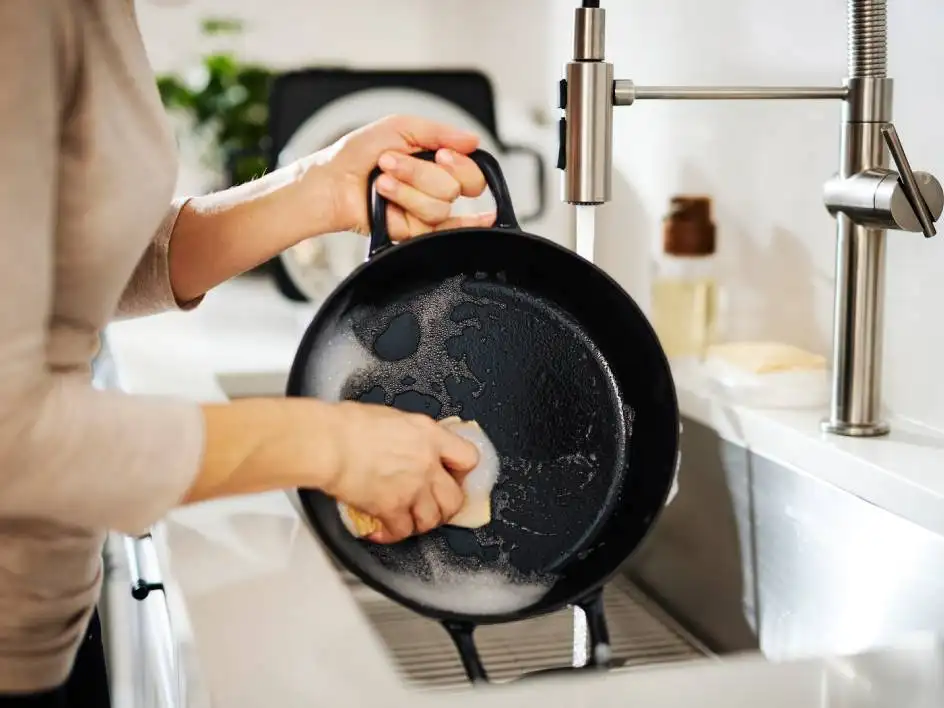
- Rinse with warm water. Use a soft brush, sponge, or a non-metal scrubber. For stuck-on bits, add a spoonful of coarse salt and scrub as a mild abrasive.
- Use a drop of dish soap if needed. Modern dish soap is fine in small amounts, especially after greasy cooking. Keep it brief and rinse well.
- Dry immediately. Towel-dry first, then place the pan over low heat for 2 to 5 minutes to evaporate hidden water.
- Oil lightly. While warm, rub in a few drops of oil, then wipe until the surface looks nearly dry.
Skip the soak
A short rinse is great. A long soak invites rust and can soften seasoning. If something is truly glued on, simmer a little water in the skillet for 2 to 3 minutes, then scrape gently with a wooden spatula and clean as usual.
What about chainmail scrubbers?
A chainmail scrubber can be a handy cast iron tool. Used with warm water and light pressure, it helps lift stuck-on food without taking off healthy seasoning. It is not meant for aggressive grinding. If you see bare gray metal, back off and switch to gentler scrubbing.
Oven re-seasoning
If your skillet looks dull, food is sticking, or you see patchy areas, an oven re-seasoning refresh can bring it back. This method is also helpful for a new pan, a pan that was scrubbed aggressively, or one that has started to rust.
Before you start
- Not for enameled cast iron: This guide is for bare cast iron. Enameled pans have a glassy coating and do not get seasoned the same way. Clean enameled cast iron like other enamel cookware and avoid high-heat empty heating.
- Expect some odor and a little smoke: Seasoning at 450 to 500 F can be smoky depending on the oil and your oven. Use your range hood if you have one, and crack a window if needed.
What you need
- Neutral oil with a higher smoke point (grapeseed, canola, vegetable, avocado)
- Paper towels or a lint-free cloth
- Aluminum foil or a baking sheet (to catch drips)
Step-by-step
- Wash and dry. Clean the pan, then dry thoroughly and warm it briefly on the stove.
- Heat the oven. Set to 450 to 500 F.
- Apply a very thin coat of oil. Rub oil over the inside, outside, and handle. Then wipe again until it looks almost like you removed it. Thin is the secret.
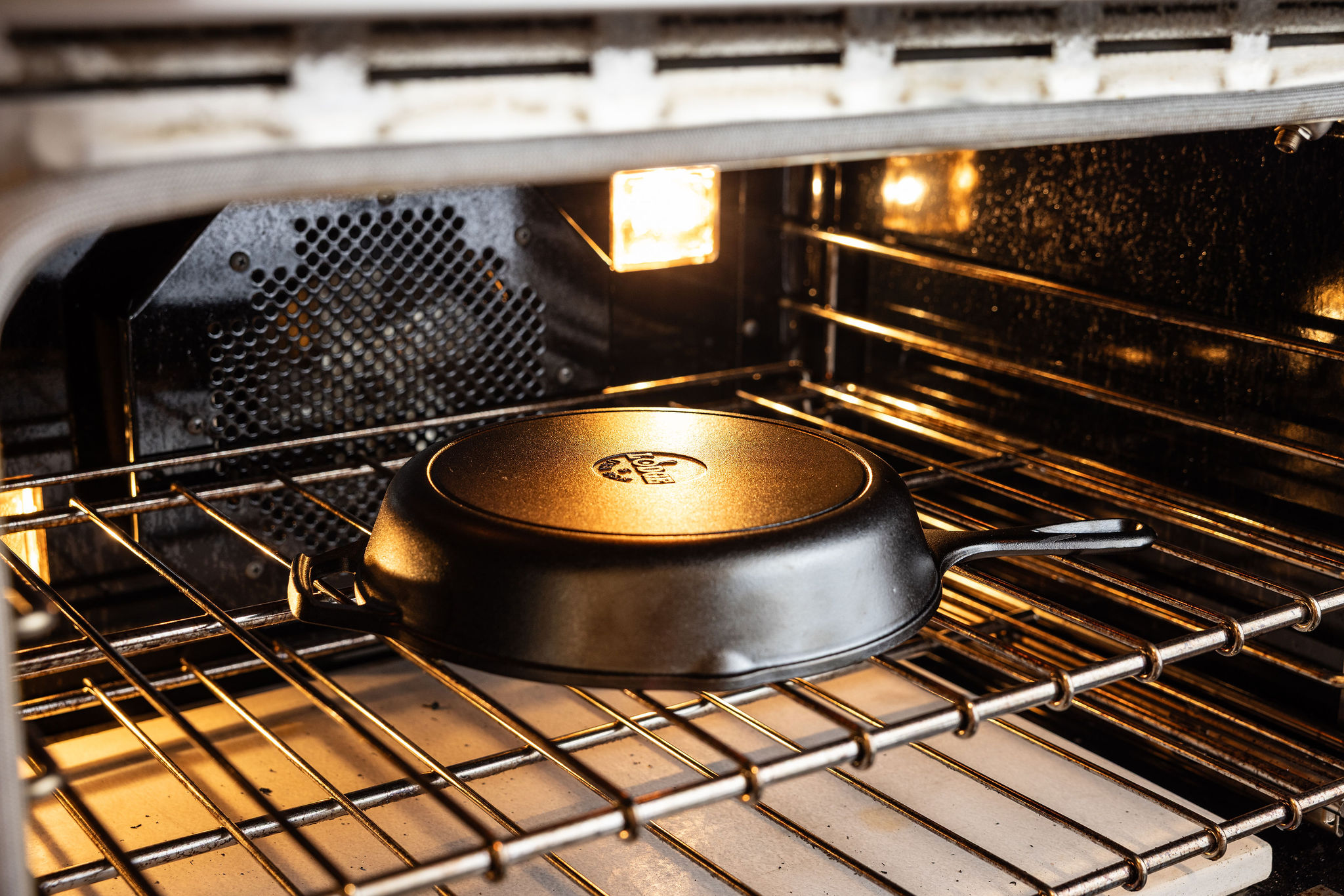
- Bake upside down. Place the skillet upside down on the oven rack. Put foil or a sheet pan on the rack below to catch any drips.
- Bake 1 hour. Then turn off the oven and let the pan cool inside until safe to handle.
- Repeat if needed. Two to three thin coats are better than one thick coat.
Quick reminder: If the pan comes out tacky, that usually means too much oil. Wipe the surface down firmly with a clean paper towel to remove excess oil, then bake again for 30 to 60 minutes at 450 F. If it is still tacky after that, scrub lightly with hot water and a bit of soap, dry completely, and restart with a much thinner coat.
Rust removal
Rust looks scary, but it is usually a surface issue. The fix is a scrub, a full dry, and a fresh seasoning coat.
Light rust
- Scrub with a non-metal scrubber and a little dish soap.
- Rinse quickly and dry completely.
- Warm the pan on the stove, then oil lightly.
- If the surface looks bare, do one oven-seasoning cycle.
Heavier rust or flaking seasoning
- Scrub more firmly (steel wool is okay for this job).
- Wash, rinse, and dry thoroughly.
- Re-season in the oven with 1 to 3 very thin coats.
Daily habits
- Preheat patiently. Cast iron likes a few minutes of preheating, especially for eggs and pancakes. Medium heat is often enough.
- Cook with a little fat. Even a well-seasoned skillet appreciates a thin film of butter or oil for delicate foods.
- Avoid long acidic simmers. Tomato sauce, wine reductions, and lots of vinegar can dull or strip seasoning if simmered for a long time, especially in newer pans. Quick deglazing is usually fine. For pan sauces, see how to deglaze a pan and make a classic pan sauce.
- Dry with heat. A brief warm-up after washing is one of the simplest rust-proofing tricks.
- Oil and wipe. A few drops, rubbed in and wiped nearly dry, is plenty.
Storage
Airflow and dryness matter most.
- Store in a dry spot. Avoid damp cabinets or stacking a wet lid on top.
- If stacking pans, add a barrier. Place a paper towel or cloth between pans to protect the seasoning and absorb moisture.
- Do not store food in the skillet. Leftovers can hold moisture and acids against the seasoning and lead to metallic flavors or dull spots.
Common problems
My pan is sticky
- Cause: Too much oil during seasoning or oil not heated long enough to fully set.
- Fix: Wipe off any excess oil first, then bake at 450 F for 30 to 60 minutes and let it cool. If it is still sticky, scrub lightly and re-season with a thinner coat.
Food sticks, especially eggs
- Cause: Not enough preheating, heat too high, or seasoning still developing.
- Fix: Preheat on medium for several minutes, add a little fat, and keep eggs at moderate heat. Build seasoning with regular use.
Black residue wipes off on my towel
- Cause: Carbon buildup from cooking or oil that did not fully polymerize.
- Fix: Scrub with warm water and a brush, dry with heat, and do a thin oil wipe. If it continues, do one oven seasoning cycle.
Gray, dull patches
- Cause: Seasoning worn thin, often from scrubbing or acidic foods.
- Fix: Keep cooking, oil lightly after cleaning, or re-season once in the oven.
What to cook for better seasoning
The happiest seasoning comes from regular cooking. Foods that help build and smooth seasoning include:
- Sautéed vegetables in a bit of oil
- Cornbread or skillet breads
- Pan-fried potatoes
- Bacon (fine occasionally, but it can leave sticky residue if it is very sugary or cooked too cool)
If you want a cozy weeknight pairing for cast iron, browse Comfort Food Classics for skillet-friendly ideas.
Cast iron FAQ
Can cast iron go in the dishwasher?
No. Dishwasher detergent, long cycles, and trapped moisture are a perfect recipe for rust and stripped seasoning.
Is soap always forbidden?
No. A small amount of mild dish soap is fine when you need it. The bigger priorities are: do not soak, and dry thoroughly.
Can I use metal utensils?
Yes, in normal use. A metal spatula is common with cast iron and can even help keep the surface smooth. Avoid aggressively gouging at stuck-on food. Loosen it with heat and water instead.
How often should I re-season?
Many skillets only need occasional touch-ups. Re-season when food starts sticking more than usual, the surface looks dry or patchy, or rust appears.