 e-rcps.com
Pasta Plus and home cooking, since 2000
When a good sear leaves a pan speckled with deep brown bits, that is not mess. It is flavor waiting to be melted, whisked, and spooned over dinner. This is deglazing, and it is one of the quickest ways to make a classic pan sauce from scratch.
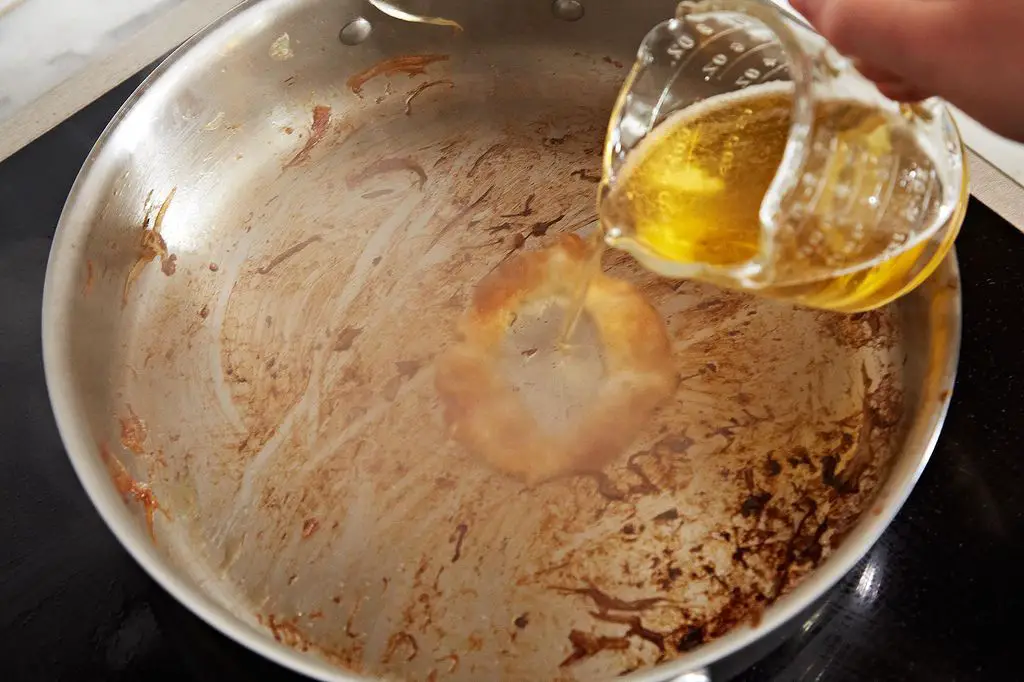
What deglazing is (and why it matters)
Deglazing means adding liquid to a hot pan after browning meat, then scraping to dissolve the browned bits stuck to the bottom. Those bits are called fond, and they are packed with concentrated roasted flavor. A pan sauce is what you get when you reduce that deglazing liquid and finish it into something smooth and spoonable.
- Fond gives depth without long simmering.
- Reduction gives body by evaporating water and concentrating taste.
- Butter at the end gives shine and a silky texture.
Tools and ingredients you need
Tools
- A skillet or sauté pan (stainless steel and cast iron are excellent)
- A wooden spoon or sturdy spatula for scraping
- A whisk (helpful for a smooth finish)
- Measuring cup
Core ingredients (the classic trio)
- Wine (or another flavorful deglazing liquid)
- Broth or stock (chicken, beef, or vegetable)
- Butter (added at the end for a glossy finish)
Helpful extras (optional, but common)
- Shallot or onion, minced
- Garlic
- A sprig of thyme or rosemary
- Mustard (a small spoonful adds zip and can help the sauce stay emulsified)
- A squeeze of lemon juice or a dash of vinegar for brightness
For homemade flavor foundations, browse Kitchen Basics and the broader Italian cooking basics section.
The step-by-step method
This method assumes you just cooked meat in the pan (chicken cutlets, pork chops, steak, sausages). The same idea works after sautéing mushrooms or vegetables too.
Step 1: Remove the meat, keep the pan hot
Move the browned meat to a plate to rest. Keep the pan on the burner. You want the pan hot enough to sizzle, but not so hot that the fond turns black.
- Good sign: the fond is deep golden to dark brown.
- Not good: black bits that smell acrid. That will make the sauce bitter.
Step 2: Pour off excess fat (but not all)
If there is a lot of rendered fat, carefully pour off most of it, leaving about 1 to 2 teaspoons in the pan. Too much fat can make the sauce greasy and heavy, and it can dull the flavor.
Step 3: Add aromatics (optional but classic)
If using shallot or onion, add it now and cook until softened. Shallot usually takes 30 to 90 seconds; onion often needs 2 to 3 minutes. A small pinch of salt helps it release moisture.
Step 4: Deglaze with wine (or another liquid)
Take the pan off the heat for a moment if it is aggressively hot, then add your deglazing liquid. For a typical skillet serving 2 to 4 people:
- Wine: 1/4 to 1/2 cup
Return to heat and scrape firmly as it bubbles. The goal is to dissolve the fond into the liquid.
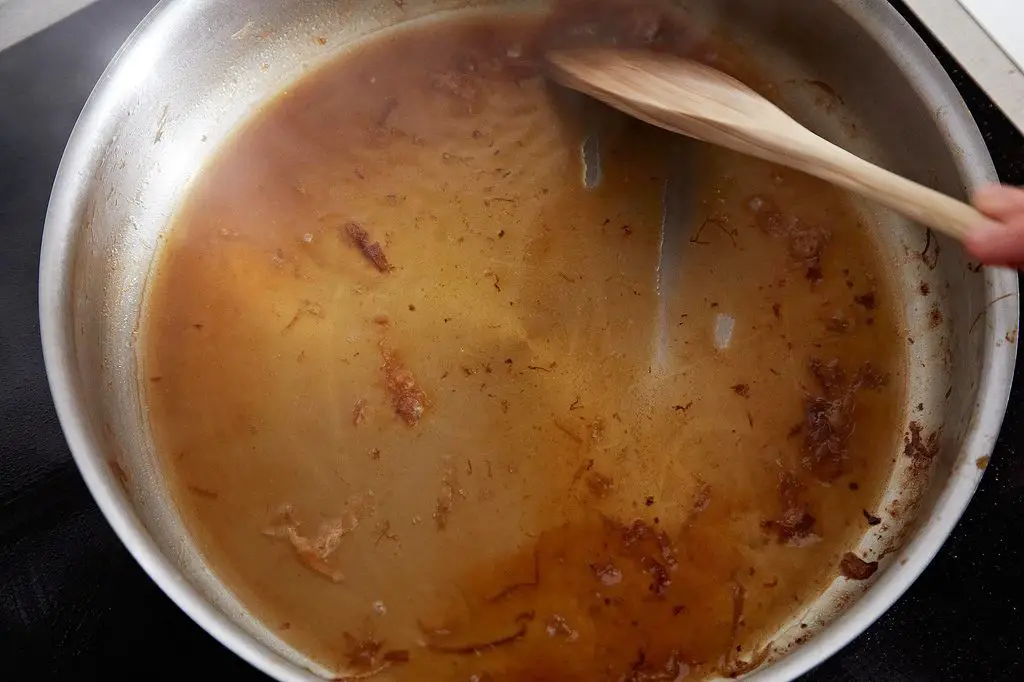
Step 5: Reduce until it smells mellow and looks slightly thicker
Simmer until the sharp alcohol smell softens and the liquid reduces by about half. This typically takes a few minutes, often about 2 to 5 minutes, depending on heat and pan size.
Step 6: Add broth and reduce again
Add:
- Broth or stock: 1/2 to 1 cup
Simmer to reduce until the sauce lightly coats a spoon. For most weeknight pans, reducing to about 1/2 cup finished sauce is a good target. Keep in mind it will thicken a touch more off heat, especially after you whisk in the butter.
Step 7: Turn off heat and whisk in cold butter
With the heat off (or very low), whisk in 1 to 2 tablespoons cold butter, one piece at a time, until glossy. This makes the sauce look smooth and taste rich without feeling heavy.
Step 8: Taste and adjust
Now season with:
- Salt and black pepper
- Optional lemon juice or vinegar (a few drops at a time)
- Optional herbs
Pour over the rested meat or serve alongside.
Choosing the right deglazing liquid
Different liquids pull different flavors out of the pan. Choose what matches your main dish.
- Dry white wine: great with chicken, pork, fish, mushrooms, and cream finishing options.
- Dry red wine: great with steak, lamb, and hearty roasts.
- Broth only: a good alcohol-free option. Use a splash of lemon or vinegar at the end for lift.
- Apple cider or juice (unsweetened): lovely with pork. Start with a smaller splash and reduce well so it does not taste sugary.
- Vermouth: a classic pantry bottle for bright, herby sauces.
A practical rule: use a liquid you would enjoy as a beverage, because reduction concentrates flavors, including unpleasant ones.
How to know when the sauce is reduced enough
Reduction is what turns a thin pan liquid into something spoon-worthy.
- Visual cue: bubbles get slightly larger and slower as water evaporates.
- Spoon test: dip a spoon, then run a finger across the back. If it leaves a clean line, the sauce is close.
- Volume cue: if you started with about 1 to 1 1/2 cups total liquid, aiming for 1/2 to 2/3 cup finished sauce is typical.
If you want a thicker, gravy-like pan sauce, the same thickening ideas used for soup can help. See How to Thicken Any Soup for quick, practical options that translate well to sauces.
Common problems (and easy fixes)
The fond will not come up
- Cause: not enough liquid or not enough heat.
- Fix: add 1 to 2 tablespoons more liquid and bring back to a brisk simmer while scraping.
The sauce tastes bitter
- Cause: fond was burnt (black) or garlic scorched.
- Fix: sadly, bitterness is hard to hide. Start over if it is truly burnt. Next time, lower heat before deglazing and watch aromatics closely.
The sauce is greasy
- Cause: too much fat left in the pan, or butter added while boiling.
- Fix: skim fat with a spoon, or blot with the corner of a paper towel. Then whisk in a tiny splash of broth to rebalance. Always add finishing butter off heat.
The sauce is too thin
- Fix 1: keep reducing. Time and evaporation are the classic solution.
- Fix 2: whisk in a small pat of butter to add body.
- Fix 3: for a more structured sauce, whisk in a slurry of 1/2 teaspoon cornstarch with 1 tablespoon cold water, then simmer 30 seconds.
The sauce is too salty
- Fix: add more unsalted broth or a splash of water and reduce again. A squeeze of lemon can help distract the palate, but dilution is the real fix.
Pan choice matters
- Stainless steel: the easiest for building fond and deglazing cleanly.
- Cast iron: works well, and a quick deglaze is generally fine. The caution is with long simmering or strong, acidic reductions, especially if your pan is newly seasoned.
- Enameled cast iron: behaves more like stainless for deglazing, and it is comfortable with acidic liquids.
- Nonstick: usually builds less fond, so sauces tend to be lighter. It can still work, just with less intensity.
Three classic pan sauce variations
Lemon butter pan sauce
- Deglaze with white wine or broth
- Finish with butter, lemon juice, and chopped parsley
Mushroom pan sauce
- Sauté sliced mushrooms after removing meat
- Deglaze with white wine or dry sherry (if using)
- Add broth, reduce, finish with butter
If mushrooms are your favorite comfort note, there is a full soup version at Homemade Cream of Mushroom Soup.
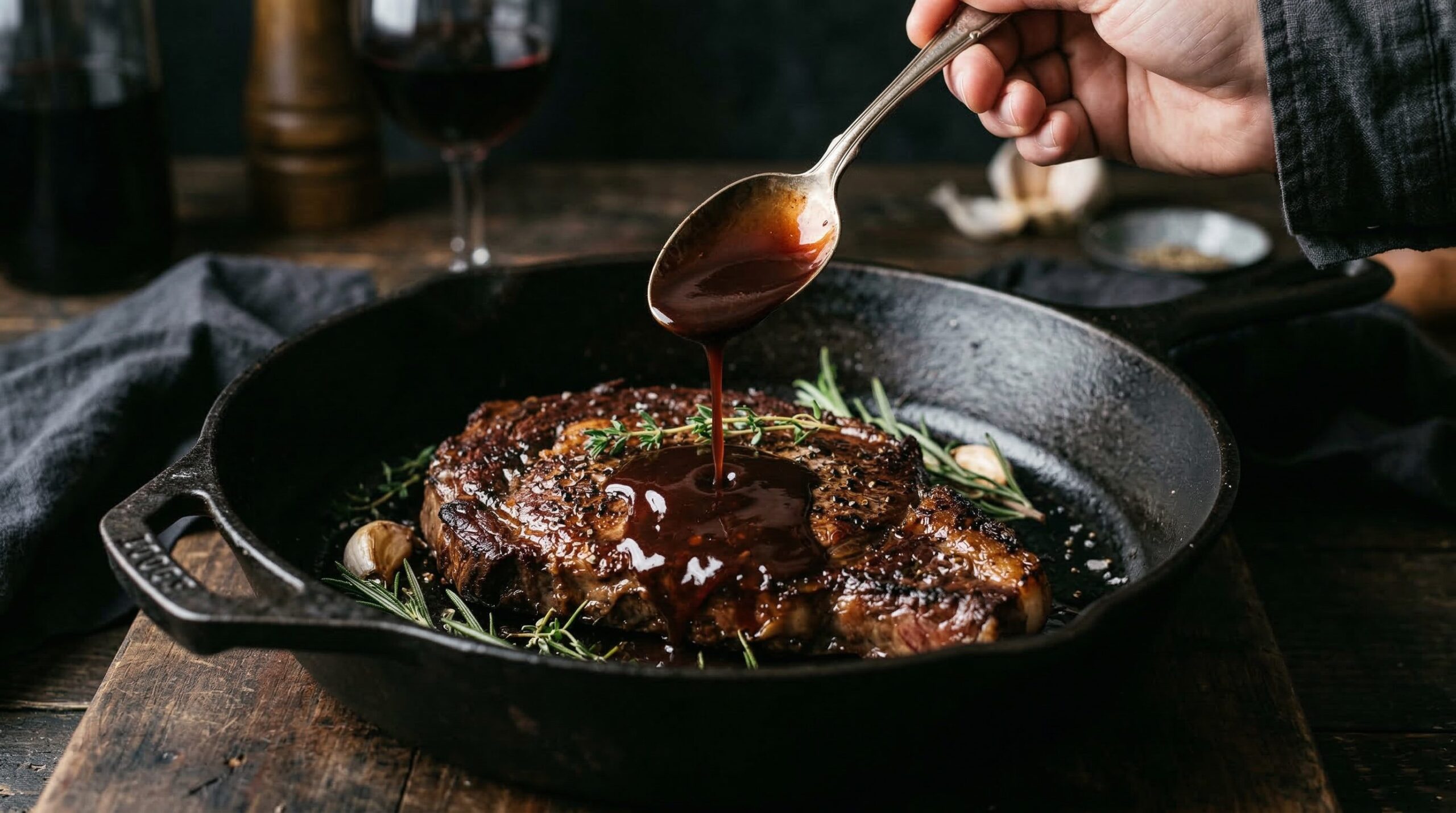
Red wine pan sauce
- Deglaze with red wine, reduce well
- Add beef broth, reduce to spoon-coating
- Finish with butter and black pepper
If you want to add cream
Cream turns a pan sauce into something softer and more luxurious, but it likes gentle heat. Reduce the wine first, then add broth and reduce a bit. Stir in a splash of cream and simmer very gently until it thickens slightly. Then turn off the heat and finish with butter. If the sauce boils hard after cream or butter go in, it can look grainy or oily.
Quick safety and timing notes
- Watch the heat: deglazing creates steam. Add liquid carefully to avoid splatter.
- Resting meat matters: make the sauce while the meat rests, then serve right away.
- Skip the boiling butter: boiling after adding butter can break the sauce and look oily.
FAQ
Can a pan sauce be made without wine?
Yes. Use broth, then brighten with a small splash of lemon juice or vinegar at the end. The sauce will still be flavorful because the fond is doing a lot of work.
Why does my sauce taste flat?
Flatness usually means it needs either salt or acid. Add a pinch of salt, taste, then add just a few drops of lemon or vinegar and taste again.
Do you need flour for pan sauce?
No. Reduction plus butter can be enough. Flour is optional if you want a thicker, gravy-like texture.