 e-rcps.com
Pasta Plus and home cooking, since 2000
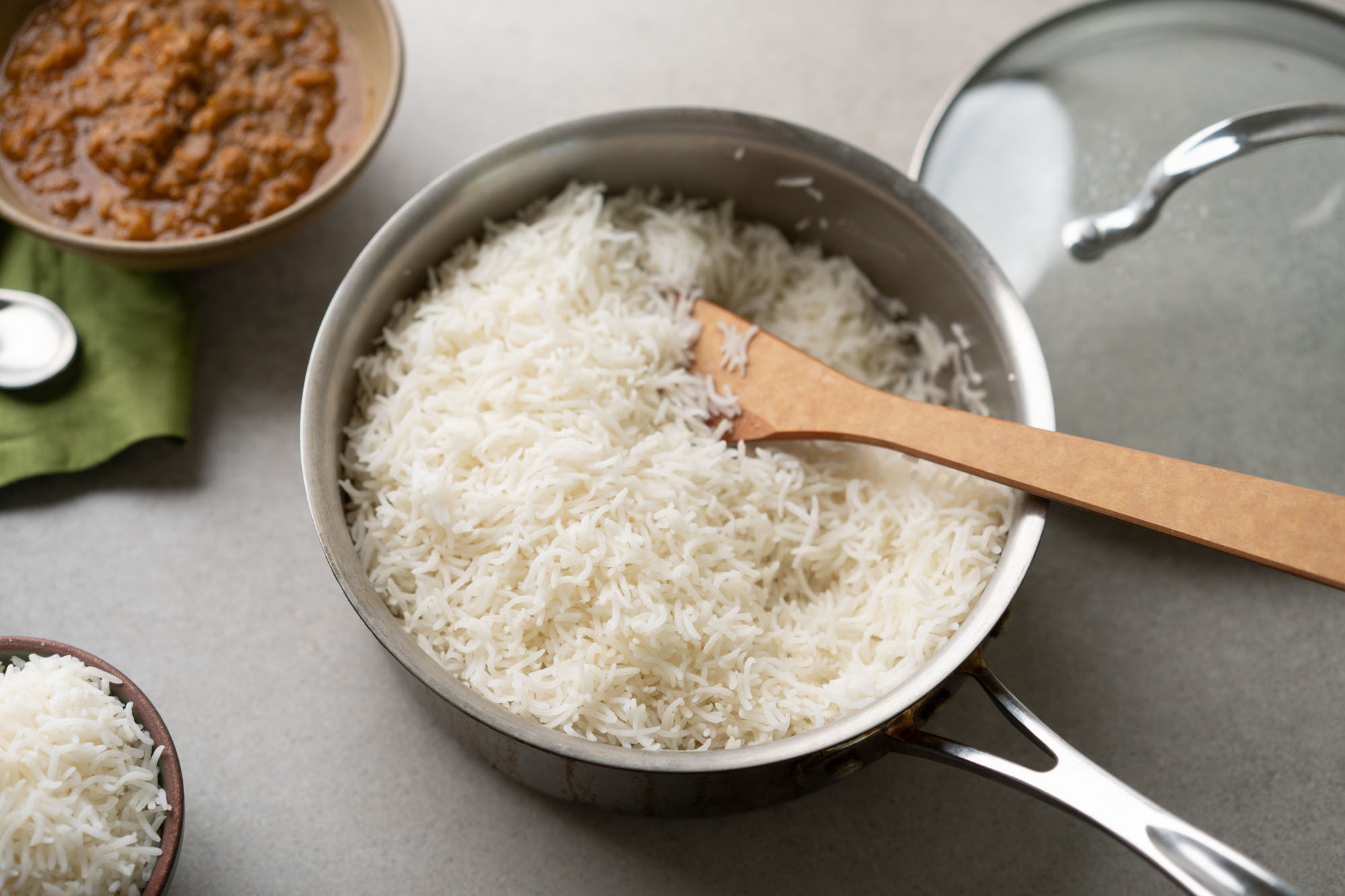
Perfect white rice is not about luck. It is about three steady little habits: measure the right ratio, manage the heat, and let the rice rest. This guide focuses on long-grain white rice (like standard long-grain, jasmine, or basmati) cooked on the stovetop for fluffy, separate grains.
What you need
- Long-grain white rice
- Water (or broth)
- Salt
- Optional: 1 to 2 teaspoons butter or oil for extra aroma and slightly less sticking
- A saucepan with a tight-fitting lid (this matters more than fancy cookware)
- Tip: for 1 cup dry rice, a 2 to 3 quart pot helps prevent boil-overs
- A fine-mesh strainer for rinsing (recommended)
- A fork for fluffing
The best ratio
For most supermarket long-grain white rice, a dependable starting stovetop ratio is:
- 1 cup long-grain white rice
- 1 1/2 cups water
- 1/2 teaspoon kosher salt (or 1/4 to 1/3 teaspoon fine salt), to taste
This makes about 3 cups cooked rice.
Important note: some brands prefer more water on the stovetop, sometimes closer to 1 3/4 to 2 cups per cup of rice. If your bag gives a ratio, follow that first, then use the heat and timing rules below for better texture.
When to adjust the ratio
- Rinsed or unrinsed: this 1:1.5 starting ratio works either way for long-grain. Rinsing removes surface starch but does not require extra water.
- If your lid is not tight: you may lose steam. Consider 1 2/3 cups water per 1 cup rice, or use a tighter lid.
- If you want slightly softer rice (for bowls or saucy dishes): increase to 1 2/3 cups water.
- If you want firmer, very separate grains (for fried rice later): reduce to 1 1/3 cups water and be strict about the rest time.
Tip: once you find your sweet spot for your pot and your brand, write it on the bag with a marker. Future you will be grateful.
Rinsing
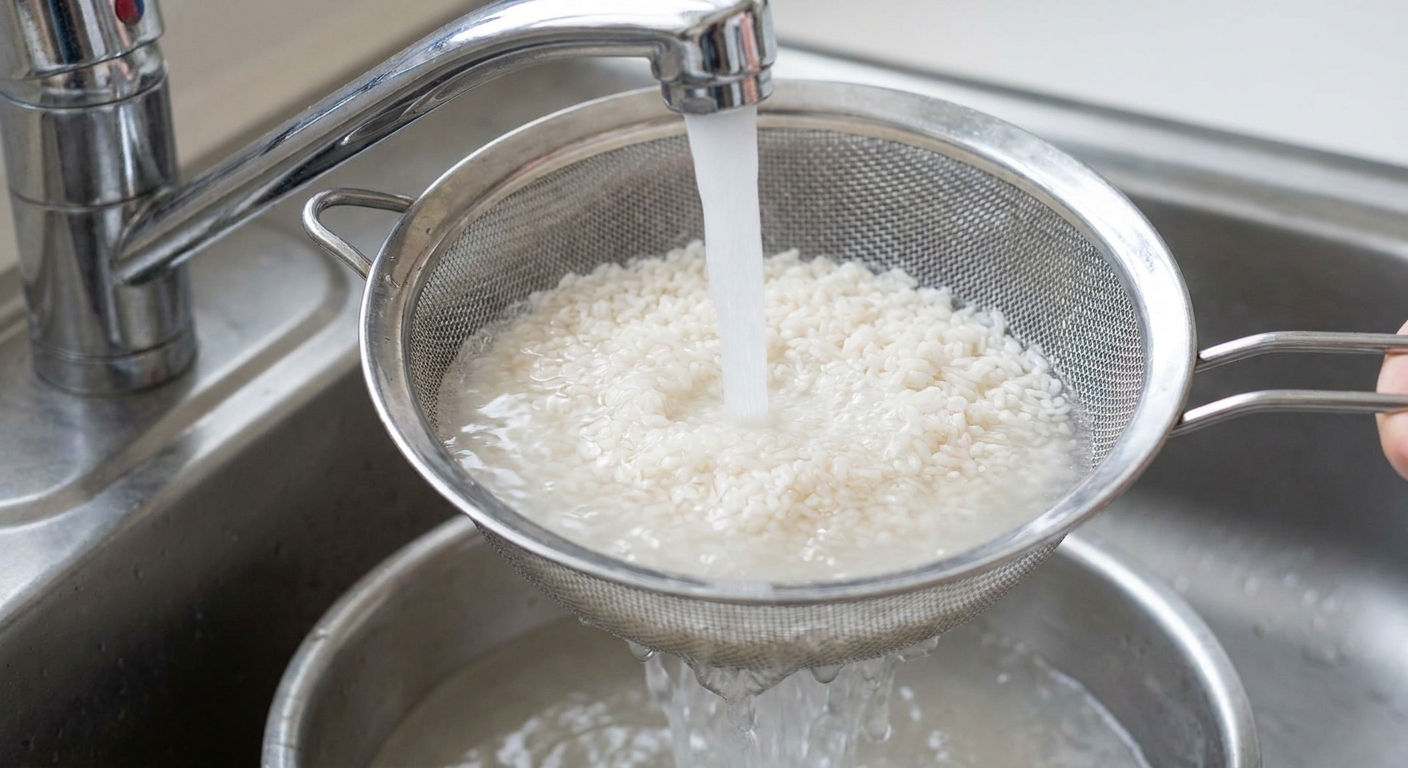
Rinsing is the simplest way to prevent gummy rice. It removes excess surface starch that can glue grains together.
How to rinse rice
- Place rice in a fine-mesh strainer.
- Run cool water over it, swishing the rice with your fingers.
- Rinse for 20 to 40 seconds, until the water runs less milky. It does not need to be perfectly clear.
- Let it drain well for a moment while you measure water.
Stovetop method
This method is built for consistency. The two big goals are steady simmer and no peeking.
Step by step
- Combine drained rice, water, salt, and optional butter or oil in a saucepan.
- Bring to a boil over medium-high heat, uncovered. Watch closely so it does not boil over.
- As soon as it reaches a boil, stir once, then reduce heat to low so it holds a gentle simmer.
- Cover tightly. Start your timer.
- Simmer 15 minutes for most long-grain white rice.
- Turn off heat and keep the lid on.
- Rest 10 minutes (no peeking). This finishes steaming the center of each grain and redistributes moisture so the pot bottom does not turn soggy and heavy.
- Fluff with a fork, lifting and loosening instead of stirring in circles.
Timing by type
- Standard long-grain white rice: 15 minutes simmer, 10 minutes rest
- Jasmine: 12 to 15 minutes simmer, 10 minutes rest
- Basmati: 12 to 14 minutes simmer, 10 minutes rest
If your rice is consistently a little underdone at 15 minutes, keep the ratio the same and add 2 more minutes of simmer next time, then rest.
High altitude note
If you cook at higher elevations, you may need a little more time and sometimes a splash more water, since water boils at a lower temperature. Keep the simmer gentle and extend the cook time by a few minutes as needed, then let the rest do its work.
Heat control
Low heat should be just enough to maintain a quiet simmer. If the pot is bubbling hard, the water can evaporate too fast and the rice can cook unevenly. If there is no simmer at all, it may take too long and turn heavy.
- Too high: scorched bottom, dry top, or foamy boil-over
- Too low: watery, overly soft rice, or uneven doneness
Stovetops vary a lot. If low is too weak, use low-medium but keep the simmer gentle.
Common problems
My rice is sticky or gummy
- Cause: too much starch on the surface, too much water, or too much stirring.
- Fix: rinse rice, use the starting 1:1.5 ratio, stir only once at the boil, and always rest 10 minutes.
My rice is crunchy
- Cause: not enough water, lid leaking steam, or simmer too short.
- Fix now: sprinkle 2 to 3 tablespoons hot water over the rice, cover, and steam on very low for 5 minutes, then rest 5 minutes.
- Fix next time: check lid fit, or increase water slightly to 1 2/3 cups per 1 cup rice.
My rice is mushy
- Cause: too much water, simmer too long, or heat too low for too long.
- Fix: reduce to 1 1/3 to 1 1/2 cups water per 1 cup rice, and keep simmer to 12 to 15 minutes.
The bottom is browned or burned
- Cause: heat too high, thin pot, or simmering too hard.
- Fix: lower heat further and make sure the rice is at a gentle simmer, not a boil. Consider using a slightly heavier saucepan.
My rice boils over
- Cause: heat too high during the initial boil, pot too small, or a lid that is not seated well.
- Fix: use a bigger pot, and turn down the heat as soon as bubbles become active across the surface. Make sure the lid fits snugly once covered.
Measuring tips
Use the same cup
A standard measuring cup is easiest, but the real rule is consistency. If you use a mug for rice, use the same mug for water.
Level the rice
A heaping cup can throw off the ratio and make rice dry. Level it off for repeatable results.
Salt to taste
Rice tastes flat without salt. Add it to the water so the grains season evenly, then adjust next time based on your preference and your salt brand.
Storage and reheating
Cooling safely
If the rice is not being served right away, spread it on a plate or tray so it cools faster, then refrigerate in a covered container. For best safety, aim to refrigerate within 1 hour, and do not leave it out longer than 2 hours.
Reheating
- Microwave: add 1 tablespoon water per cup of rice, cover loosely, heat in short bursts, fluff.
- Stovetop steam: put rice in a small pot with a splash of water, cover, warm on low until steamy.
For fried rice
Chilled rice works beautifully because the grains firm up. Cook a touch on the firm side, cool, then refrigerate.
Quick FAQ
Do I have to rinse long-grain white rice?
No, but rinsing is one of the easiest ways to reduce stickiness. If you like rice that clumps a little, you can skip it.
Should I soak white rice?
Soaking is optional for long-grain white rice. A 15 to 20 minute soak can help grains cook a little more evenly, but reduce simmer time by 1 to 2 minutes and keep the ratio the same.
Can I cook rice in broth?
Yes. Use the same ratio, but watch the salt since broths vary a lot in sodium.
Can I lift the lid to check?
Try not to. Every peek releases steam that the rice needs to finish cooking. Use the timer and trust the rest period.
More Kitchen Basics
If you enjoy these steady, measured building blocks, browse more friendly how-tos in Kitchen Basics. And if you need a cozy dessert that also rewards good timing, this stovetop rice pudding guide is a sweet next stop.