 e-rcps.com
Pasta Plus and home cooking, since 2000

Lemon meringue pie is a little kitchen magic trick: bright, silky lemon under a cloud of toasted peaks. When it misbehaves, it usually does it in two ways: the meringue “weeps” (little syrupy droplets on the surface) or you get a watery layer between the meringue and the lemon. The good news is that these problems have specific causes, and that means they have specific fixes.
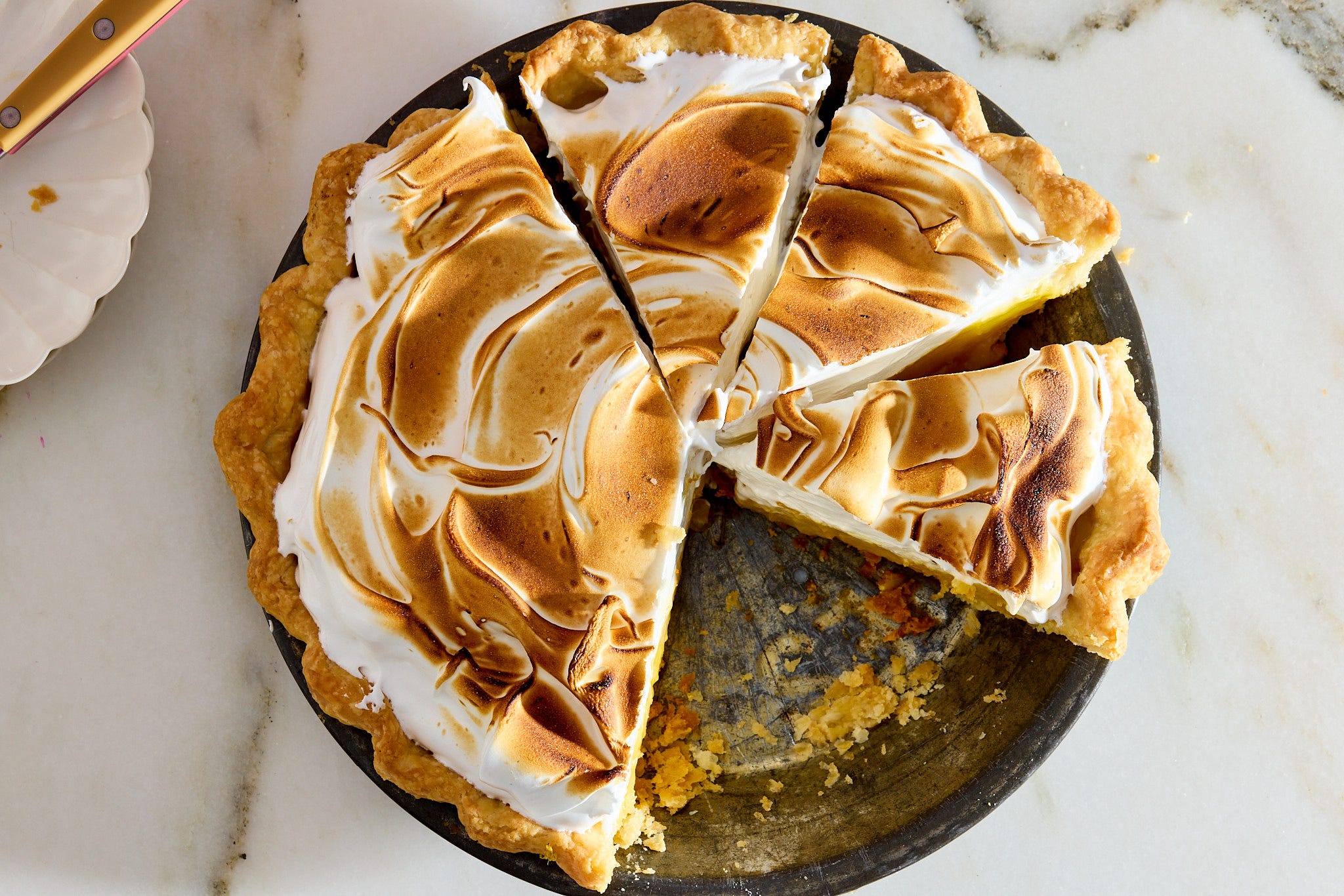
What “weeping” really is
Weeping is moisture escaping from the meringue and collecting as droplets on top, or as liquid where the meringue meets the filling. It tends to come from one or more of these issues:
- Sugar not fully dissolved in the whites (undissolved crystals attract moisture).
- Overbaking (proteins tighten and squeeze out water), or sometimes underbaking (structure never fully sets).
- Meringue spread onto filling that is not hot (the underside stays too soft, moisture collects, and the layers can separate).
- Humidity and storage (meringue is hygroscopic and pulls in water from the air).
Start with a crust that stays crisp
A soggy base makes every other problem feel worse, so give the crust a head start.
Blind bake targets
- Par-baked crust (if your filling bakes a long time): bake at 375°F until edges are lightly golden, 15 to 18 minutes, then remove weights and bake 5 to 8 minutes more.
- Fully baked crust (common for lemon meringue): bake at 375°F with weights 15 to 18 minutes, then without weights until uniformly golden, 10 to 14 minutes.
Extra crisp trick: When the crust comes out, brush the hot crust lightly with beaten egg white and return it to the oven for 2 minutes. This sets a thin barrier that helps resist moisture.
Get the lemon layer hot enough
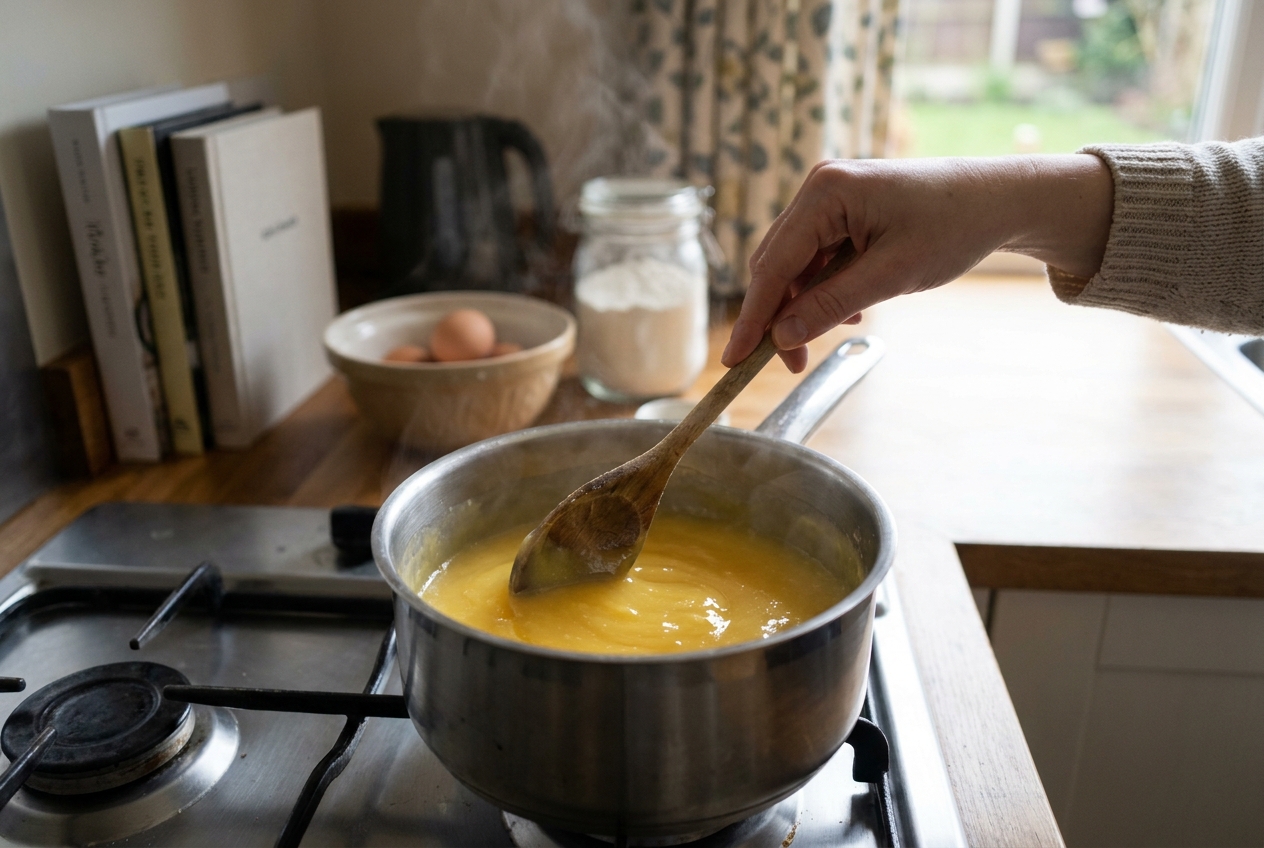
The lemon filling should be piping hot when the meringue goes on. That heat helps set the underside quickly and reduces the chance of a slippery, watery layer.
Filling doneness cues
- Cornstarch-thickened lemon filling: bring it to a true boil with bubbles breaking in the center, not just a few lazy blips at the edge. Once it reaches that full, central boil, keep it there (while whisking) for 1 to 2 minutes to fully gelatinize the starch.
- Egg-thickened lemon curd style filling: cook gently until it thickens and coats a spoon, typically around 160°F to 170°F. (If your recipe uses both egg and cornstarch, the boil still matters for the cornstarch.)
Important: Cornstarch-thickened fillings that never truly boil can “break” later and leak liquid. That liquid then looks like meringue weeping, even when the meringue was fine.
Make a stable meringue
For classic lemon meringue pie, a French meringue is traditional: egg whites whipped with sugar. It can be beautifully stable when the sugar is fully dissolved and the bake is right.
Egg white basics that matter
- No fat, no yolk: even a tiny bit of yolk can weaken foam. Use a clean metal or glass bowl.
- Room temperature whites: they whip higher and more evenly.
- Add sugar gradually: once whites reach soft peaks, add sugar 1 tablespoon at a time, beating 10 to 15 seconds between additions.
How to tell if the sugar is dissolved
Rub a little meringue between two fingers. It should feel smooth, not grainy. Grainy meringue is a top cause of weeping because the crystals pull moisture to the surface.
Helpful stabilizers (choose one)
- Cornstarch: whisk 1 tablespoon cornstarch into the sugar before adding it. This helps absorb moisture and reduces weeping.
- Cream of tartar: add 1/4 teaspoon per 3 to 4 egg whites when the whites get foamy. This strengthens the protein network and helps prevent collapse.
Skip the “beat forever” temptation: Overbeaten whites look dry and clumpy and can leak more easily after baking.
Want maximum stability?
If French meringue has broken your heart before, consider a Swiss or Italian meringue. Both involve heating (sugar dissolved with heat, or hot syrup streamed in), which makes a sturdier foam that is less prone to weeping. You still want to spread it on hot filling and bake briefly to dry the surface, but the structure is more forgiving.
Seal the meringue to the crust
This is the simplest mechanical trick that prevents shrinking, beading at the edges, and a meringue “lid” that slides off.
- Work while the filling is hot. Pour hot lemon filling into the hot or warm crust.
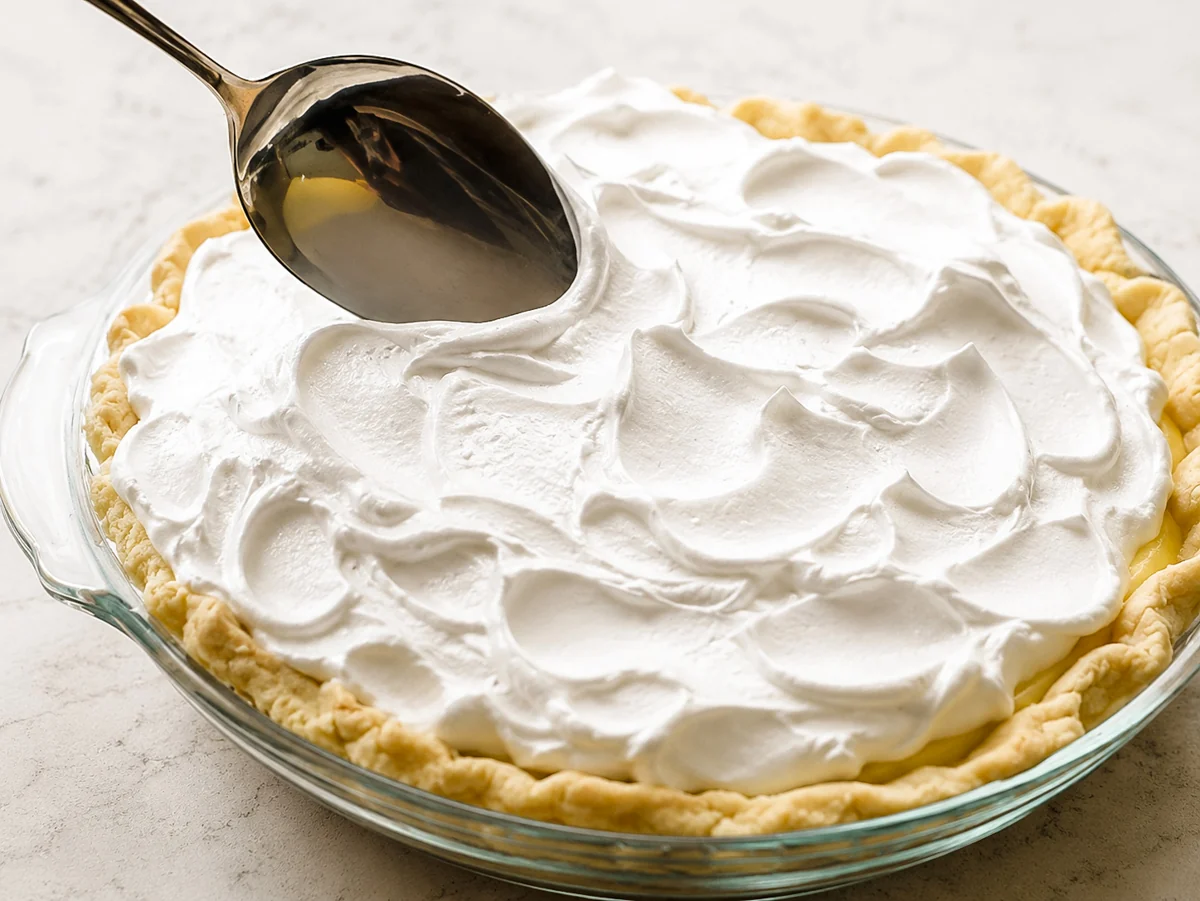
- Dollop meringue around the edge first. Place spoonfuls all the way around, touching the crust.
- Connect the edge dollops. Use a spatula to seal that ring firmly to the crust, leaving no gaps.
- Fill the center. Add the rest and spread gently so you do not deflate it.
That sealed edge acts like a gasket. It also blocks moisture from collecting at the rim, which is where separation often begins.
Reliable bake range
Classic lemon meringue pie meringue is usually baked just enough to set the structure and lightly brown the surface. Think of this as a dependable starting point, since oven accuracy, pie size, and how thick you pile the meringue all affect timing.
A dependable starting point
- Oven: 350°F
- Time: 12 to 15 minutes, until peaks are lightly golden
How to check doneness
- Surface: dry to the touch, not tacky.
- Peaks: hold their shape, with gentle browning.
- Wiggle test: the whole pie should jiggle slightly, but the meringue should not look wet or sloshy.
About high heat and broiling: Very high heat can brown the outside before the interior sets, which can lead to weeping later. If you like a deeper toast, bake at 350°F until the meringue is set first, then use a very quick broil just for color, watching it like a hawk.
One more practical note: An extra thick meringue layer can take longer to set through. If you love sky-high peaks, give it the time it needs to dry and set, and use the touch test more than the clock.
Peak tips
Those tall swoops are not just pretty. Peaks also create more surface area for gentle browning and help the meringue set evenly.
Spoon and swirl
- After spreading smooth, press the back of a spoon into the meringue and lift quickly to form peaks.
- Make sure peaks start from a well-sealed base so they do not pull meringue away from the crust edge.
Spatula swoops
- Use an offset spatula and make loose, confident curves.
- Do not overwork the surface. Too much smoothing can push air out.
Piped peaks
- Pipe onto hot filling, starting with a sealed edge ring.
- Pipe taller peaks toward the center for a classic dome shape.
Cooling and storage
Meringue and moisture have an ongoing relationship, so the finish matters.
Cooling routine
- Cool the pie on a rack at room temperature for 1 to 2 hours.
- Avoid placing the hot pie straight into the refrigerator. Rapid cooling can cause condensation, which looks like weeping.
Refrigeration and food safety
Because lemon meringue pie contains eggs, it should not sit out for long periods. Once fully cooled, refrigerate it if you are not serving it soon. Just know that refrigeration and time tend to soften the meringue and invite weeping, so it is at its very best the day it is made.
- Use a pie box or tent loosely with foil so the meringue is protected without trapping steam.
- Keep it away from strong odors.
Serving tip: Use a clean, sharp knife and wipe between slices. A wet knife can drag moisture across the cut surface.
Troubleshooting
Droplets on top (sugary tears)
- Likely cause: sugar not fully dissolved, or overbaking.
- Next time: add sugar slowly, check for smoothness, bake only until set and lightly browned.
Watery layer between meringue and lemon
- Likely cause: meringue placed on filling that was not hot enough, or a cornstarch filling that did not reach a full boil.
- Next time: spread onto piping hot filling, and if using cornstarch, make sure it boils in the center and stays there for 1 to 2 minutes.
Meringue shrinks from the crust
- Likely cause: edges not sealed, or meringue spread too thin at the rim.
- Next time: dollop and seal to crust first, then fill the middle.
Meringue beads after baking
- Likely cause: overbaking, or too much sugar for the egg white volume.
- Next time: bake at 350°F and stop at light golden, and measure sugar carefully.
Rubbery meringue
- Likely cause: overbaking, or refrigerated too long.
- Next time: shorter bake, serve same day when possible.
A few sweet links
If the baking mood continues, peek around the dessert shelf for more classic treats. The Desserts collection is a cozy place to browse. For an old fashioned candy project, Old Fashioned Peanut Brittle is all about timing and temperature, and Chewy Vanilla Caramels bring that same careful, rewarding precision.