 e-rcps.com
Pasta Plus and home cooking, since 2000
Ribollita is one of Tuscany’s coziest kitchen tricks: a humble soup that turns stale bread, cannellini beans, and a handful of sturdy, everyday vegetables into a thick, spoon-standing bowl. The name means “reboiled,” because it is famously even better after a rest and a reheat.
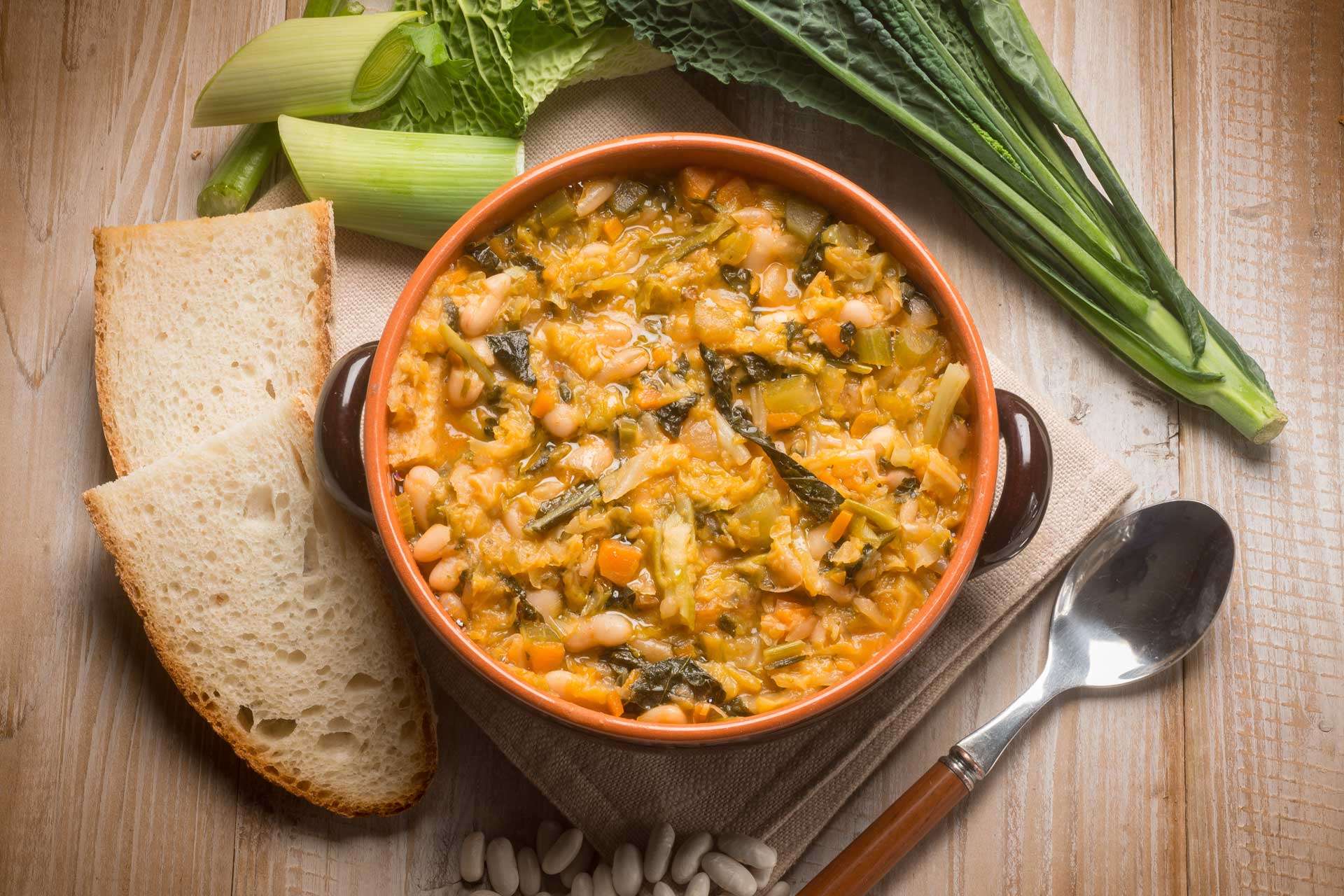
This version focuses on the signature texture. The key is a deliberate balance: enough bread to thicken, enough beans to make it creamy, and enough cavolo nero (Tuscan kale) to keep it unmistakably ribollita.
It is vegetarian as written (and easily vegan, depending on what you choose to top it with), and it is made-ahead friendly by design. In fact, the pot you warm up tomorrow is usually the one you fall hardest for.
If you love classic soups with dependable structure, peek at our Classic Italian Minestrone too. Minestrone stays brothy and bright, while ribollita settles into that comforting, porridge-like thickness.
Why it works
- Beans do double duty. Keeping some beans whole gives bite, while mashing a portion creates a naturally creamy base without dairy.
- Stale bread is the thickener. Day-old or well-dried bread absorbs broth and swells, turning the pot from soup to spoonable stew.
- Cavolo nero holds its shape. Tuscan kale stays pleasantly hearty through simmering and reheating, which is exactly what ribollita is built for.
- Resting time is part of the recipe. The bread keeps hydrating as it sits, delivering that classic thick texture the next day.
Ingredient notes
Stale bread
Use a sturdy, unsweetened loaf: country bread or a simple Italian-style loaf is ideal. Avoid soft sandwich bread, brioche, or anything very seeded, which can turn gummy or distracting. The bread should be truly stale or intentionally dried so it absorbs rather than dissolves.
Cannellini beans
Canned beans make ribollita wonderfully weeknight-friendly. Rinse and drain, then mash a portion. If using cooked dried beans, measure them cooked and include some of their cooking liquid if it is not salty.
Cavolo nero (Tuscan kale)
Strip the leaves from tough stems and slice into ribbons. If cavolo nero is hard to find, see the substitutes section for other greens.
Vegetable mix
Classic ribollita often starts with onion, carrot, and celery, then adds cabbage, potato, and tomatoes. This recipe welcomes leftover cooked vegetables too, but the thickening ratios stay the same.
Olive oil finish
A drizzle of good olive oil at the end is not just decoration. It softens bitterness from greens and makes the bowl taste rounder.
Equipment
- Large heavy pot or Dutch oven (at least 5 to 6 quarts)
- Wooden spoon
- Knife and cutting board
- Can opener (if using canned beans)
- Potato masher or fork (for mashing a portion of beans)
Pro tips
- Control the thickness at the end. Ribollita should be thick, but it should still be spoonable. Add extra broth or water a splash at a time if it tightens too much.
- Dry the bread if it is only “kinda” stale. Cube it and bake at 300°F for 10 to 15 minutes until dry, not browned. This helps it thicken instead of turning pasty.
- Mash the beans before the bread goes in. Once the bread swells, stirring gets heavier. Do the creamy base work first.
- Salt carefully if your broth is salty. Bread and beans both soak up seasoning. Taste, wait a few minutes, then taste again.
- Make it ahead on purpose. If you can, cool and chill overnight. The reheat is where ribollita becomes ribollita.
Substitutes
- No cavolo nero: Substitute curly kale, Swiss chard, or collard greens. Slice thinly and simmer until tender.
- No cannellini beans: Great Northern beans are the closest match. Navy beans also work and make an even creamier pot.
- No crushed tomatoes: Use diced tomatoes, passata, or a small amount of tomato paste loosened with broth.
- No vegetable broth: Water works, especially if you sauté the aromatics well. You can also use light chicken broth if that fits your kitchen.
Variations
- Extra-vegetable ribollita: Add leftover roasted vegetables near the end so they do not turn to mush. Our oven roasted vegetables are a natural fit for this.
- Spicy ribollita: Add a pinch of red pepper flakes with the garlic.
- More rustic texture: Tear the bread instead of cubing it and stir gently so you get bigger, soft pieces.
- Silkier texture: Mash more of the beans, or blend 1 cup of the soup (before adding bread) and stir it back in.
Serving ideas
Storage
- Refrigerate: Cool, then store covered up to 4 days. Expect it to thicken as it sits.
- Reheat: Warm gently over medium-low heat, stirring often. Add broth or water as needed to loosen.
- Freeze: Freeze up to 3 months. Texture is best if you freeze before adding bread, but fully finished ribollita can be frozen too and loosened when reheating.
Common mistakes and fixes
It is still soupy
Add a little more stale bread and simmer 5 to 10 minutes, stirring. The bread needs time to hydrate.
It turned into a bread paste
This usually comes from very soft bread or over-stirring. Next time, use a sturdier loaf and stir gently after adding bread. For now, loosen with broth and add a handful of cooked beans or vegetables for body.
The greens taste bitter
Make sure the soup has enough salt, then finish with olive oil. A small squeeze of lemon at the table can help too.
It tastes flat
Add a pinch of salt, a grind of black pepper, and a final drizzle of olive oil. If your tomatoes are very mild, a spoonful of tomato paste can boost depth.
FAQ
How much bread do I need for ribollita to get thick?
A reliable starting point is about 5 ounces (140 g) of stale bread for a pot built on 6 cups of broth plus vegetables and beans. That ratio makes a thick, spoonable ribollita after a short simmer and it thickens even more as it rests.
Do I have to use cavolo nero?
No. Cavolo nero is traditional, but curly kale, Swiss chard, or collards all work well. Keep the greens hearty so the soup can handle reheating.
Is ribollita supposed to be blended?
Not fully. Ribollita should be rustic, with visible beans, greens, and softened bread. Mashing some beans is traditional because it thickens the base without turning the whole pot smooth.
Why does ribollita taste better the next day?
The bread continues absorbing liquid and the flavors mingle as the soup rests. When reheated, it becomes thicker and more cohesive, which is the signature character of ribollita.