 e-rcps.com
Pasta Plus and home cooking, since 2000
When chicken cutlets cook unevenly, the thin end turns dry while the thick end is still catching up. A quick, careful pounding fixes that in minutes by making the thickness consistent, which helps you cook the chicken evenly and keep it juicy.
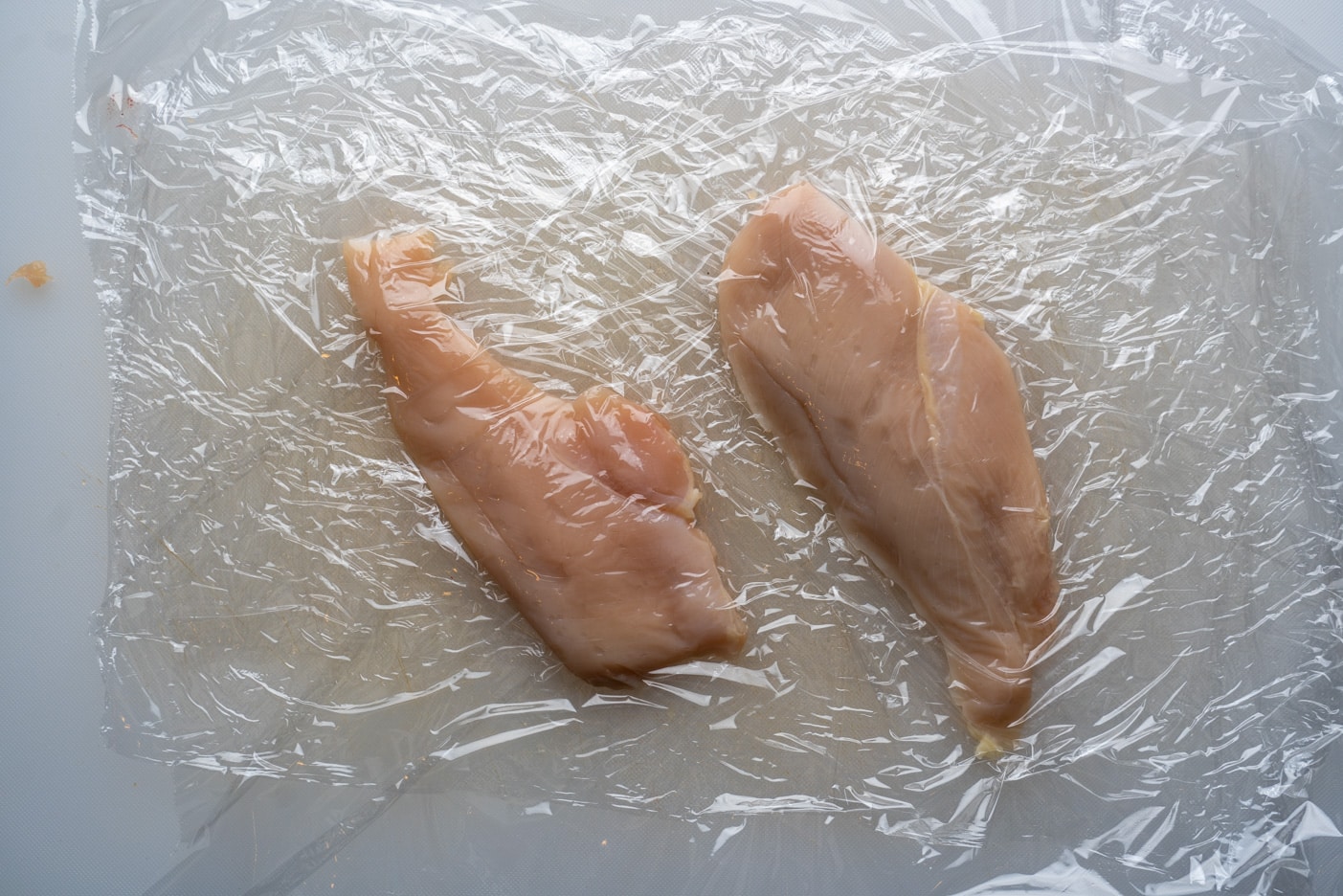
What “evenly pounded” really means
The goal is not to smash chicken as thin as paper. It is to make the thickness consistent from edge to edge, so the cutlet cooks at the same pace.
- Typical target thickness: about 1/4 to 1/2 inch, depending on your recipe.
- What to watch for: no thick “hump” anywhere, and no ragged holes at the thin end.
Tools that work best
Good news: you do not need special equipment. Choose what is sturdy and easy to control.
- Cutting board: stable and not sliding around. A damp paper towel under the board helps. If you want extra stability and mess control, set the board on a rimmed sheet pan or a folded kitchen towel.
- Plastic wrap or a zip-top bag: keeps splatters contained and helps prevent tearing.
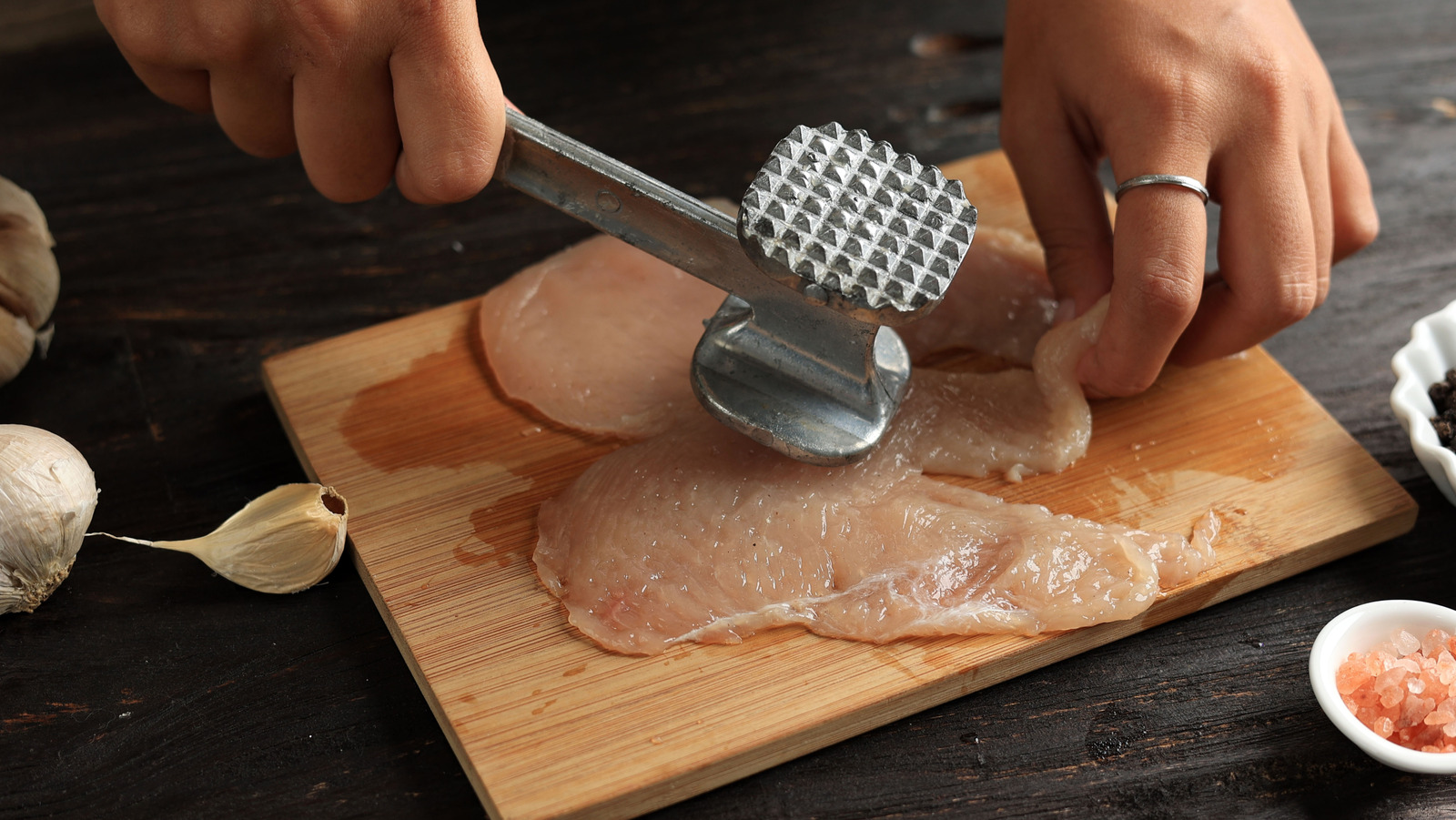
- Meat mallet: flat side is ideal. If you do not have one, use a small heavy skillet or a rolling pin.
- Paper towels: for drying the chicken, which helps browning later.
Step-by-step: evenly pound chicken breasts for cutlets
- Trim and dry. Pat the chicken breast dry. If there is a tenderloin attached, remove it and save it for stir-fries or quick sautés.
- Slice for a head start (recommended). For classic cutlets, slice the breast horizontally into 2 thinner pieces. This reduces how much pounding you need and helps the cutlet stay intact.
- Cover it. Place one piece of chicken between two sheets of plastic wrap, or inside a zip-top bag. If you use a bag, leave it slightly open so air can escape, and fold the top over so juices do not creep out while you pound.
- Start at the thickest part. Pound with gentle, controlled taps where the chicken is thickest, then work outward toward the edges. Think: even leveling, not hammering.
- Flip once or twice. Turn the chicken over while you work. This helps keep the surface even and reduces the chance of a thin edge tearing.
- Check thickness with your fingers. Slide your fingertips over the cutlet. If you feel a ridge or mound, tap just that spot a few times.
- Stop before it gets fragile. Once it is even, stop. A steady rhythm and light taps do the work, and overpounding is what leads to holes.
How to tenderize without turning chicken mushy
Pounding is both a shaping step and a bit of tenderizing, but with chicken breast the biggest win is even thickness so you do not overcook one part while waiting on another.
- Use light taps. Many small taps beat a few hard whacks.
- Use the flat side, not the spiky side. The textured side can shred the surface and create weak spots.
- Pound cold chicken. Slightly chilled chicken is firmer and easier to shape cleanly.
- Do not overwork it. Stop when thickness is even. More pounding after that only risks tears.
Preventing tears and holes
If chicken cutlets keep ripping, usually one of these is the culprit.
- The thin end got hit too much. Start at the thickest part and work outward.
- No slicing step. If a breast is very thick, butterflying or slicing into cutlets first makes a huge difference.
- Not enough covering. Plastic wrap or a bag reduces friction and keeps the mallet from grabbing the meat.
- Too much force. Use a steady rhythm and let the tool do the work.
Food safety and cleanup, the easy way
Raw chicken is slippery and can spread juices around the kitchen. A few small habits make cleanup quick.
- Contain splatter. Always cover chicken while pounding.
- Use a washable board. Afterward, wash the board, mallet, and hands with hot soapy water.
- Sanitize if needed. A diluted bleach solution can be used on nonporous surfaces, following label directions.
- Do not rinse raw chicken. Rinsing can spread bacteria through splashing. Pat dry instead.
After pounding: what to do next
Once the cutlets are even, they are ready for quick cooking methods. Just remember that thin chicken moves fast, so stay close to the stove. For safety, chicken should reach 165°F/74°C in the thickest part if you check with an instant-read thermometer.
- For crisp breaded cutlets: season, then dredge in flour, dip in egg, and coat with breadcrumbs. Cook in a shallow layer of oil until golden.
- For sautés: season and sear quickly in a hot pan. Even thickness prevents overcooking while you chase browning.
- For baking: even cutlets finish at the same time, so you do not get dry edges.
If soup is on the menu, even cutlets also help when you want quick, tender chicken to slice and add at the end. This timing idea is handy in Chicken Noodle Soup: Noodles and Timing.
Quick troubleshooting
The cutlet is thick in the middle even after pounding
Slice the breast horizontally first, then pound gently. Thick breasts can be stubborn if left whole.
The cutlet is uneven and lopsided
Rotate the chicken as you pound and aim taps at the highest spots only, like leveling a little hill.
It is getting watery on the surface
That can happen if the chicken is overhandled or pounded too aggressively, but it can also be perfectly normal moisture, especially if the chicken was previously frozen or is releasing a little natural purge. Pat it dry, then focus on gentle taps on thicker spots only and move on to seasoning and cooking.