 e-rcps.com
Pasta Plus and home cooking, since 2000

Lentil soup is one of the coziest pots you can put on the stove, but the lentils you choose decide everything: how long you simmer, whether the soup stays brothy or turns thick, and how well those little lentils hold their shape.
This guide focuses on two pantry favorites, brown and green lentils, and gives typical simmer-time ranges plus the small, practical choices that keep the soup hearty instead of mushy.
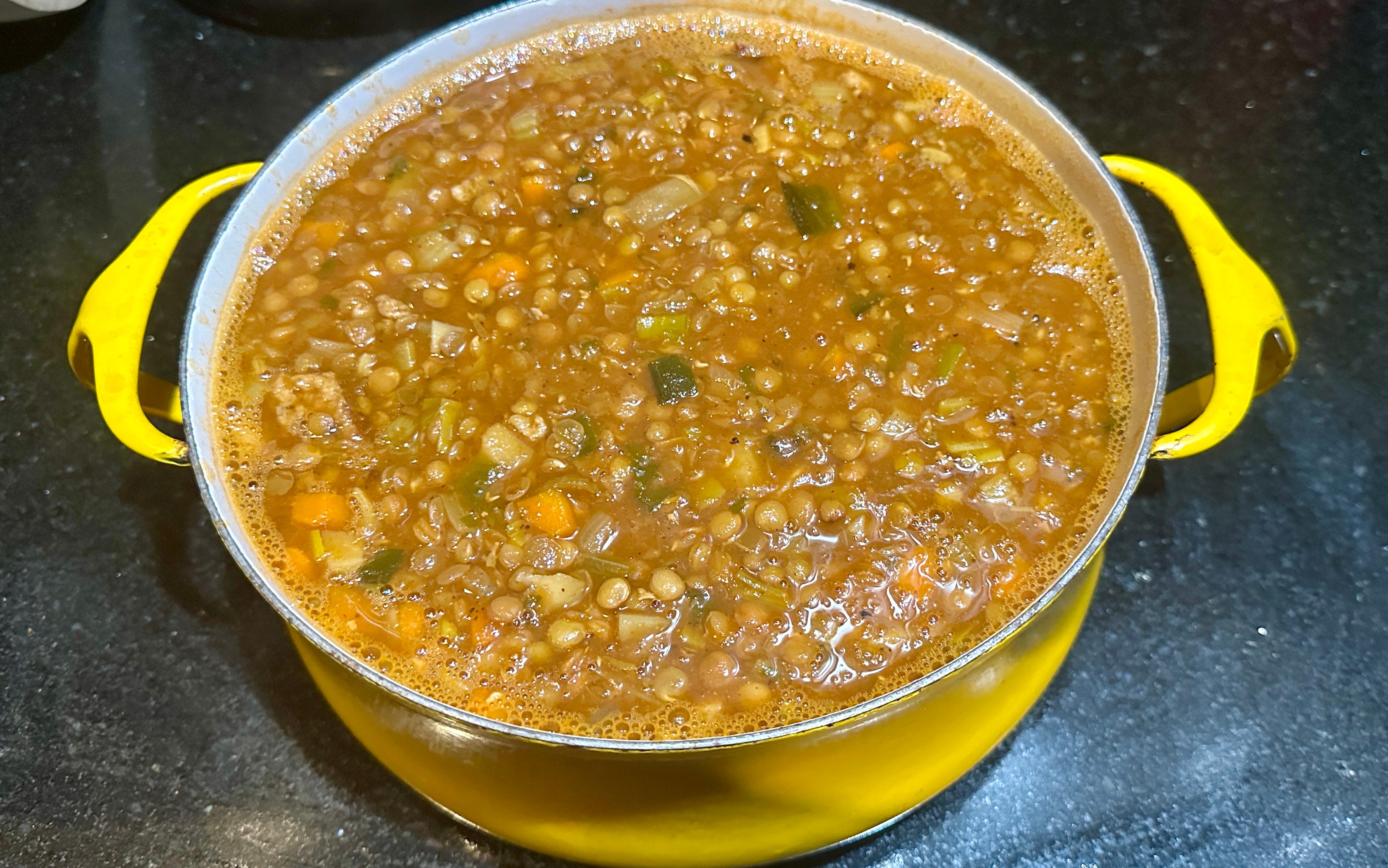
Brown vs. green lentils
Brown lentils and green lentils are both sturdy, whole lentils, but they behave a little differently once they hit simmering broth.
- Brown lentils: Mild, earthy flavor. They soften a bit faster and are more likely to break down if simmered too long or stirred aggressively. Great for a thicker, more blended style of soup.
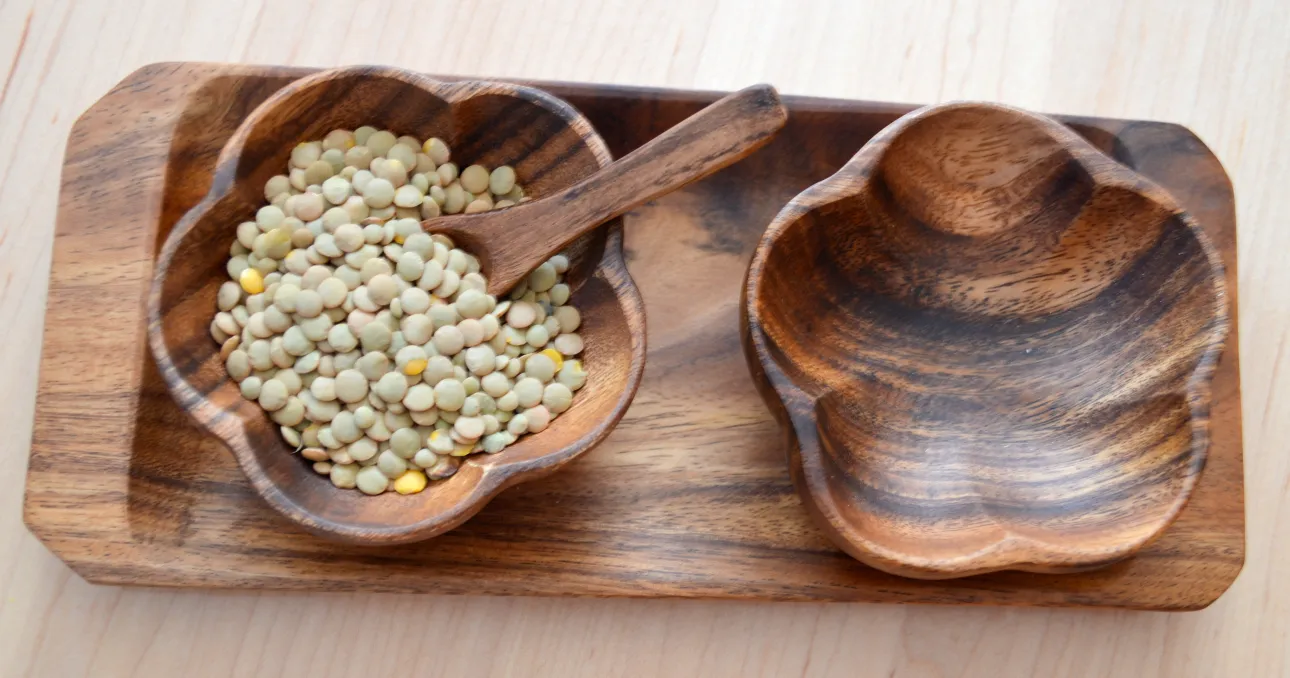
- Green lentils: Slightly peppery, a touch firmer. They generally hold their shape better and take longer to become tender. Great for a soup that stays distinctly chunky.
A quick note on “green”: Some bags are labeled French green (Puy-style). Those are usually extra firm and can take a little longer than standard green lentils, so use the doneness checks below and do not be surprised if they push past the high end of the range.
Both work beautifully in a classic vegetable-based lentil soup. The key is matching your simmer time to the variety so the lentils become tender without losing their structure.
Typical simmer times
Times vary by brand, age of the lentils, how vigorously the pot simmers, and even your kitchen setup (pot size, evaporation rate, and yes, altitude). Still, these ranges are a reliable starting point for most kitchens when the soup is held at a steady, gentle simmer.
| Lentil type | Simmer time in soup (gentle simmer) | Best texture target | Stop cooking when |
|---|---|---|---|
| Brown lentils | 22 to 30 minutes | Tender with some shape | Most lentils are creamy inside, but not splitting all over the pot |
| Green lentils | 28 to 38 minutes | Tender, noticeably firm | A lentil bitten in half is cooked through with a slight bite, not chalky |
Two doneness checks
- Split test: Fish out 3 lentils, cool briefly, and split one with a spoon. If the center looks dry or pale, keep simmering.
- Stir test: Stir the pot once. Some thickening and a little smearing is normal as lentils get tender. The warning sign is a lot of lentils breaking down quickly, making the broth look starchy and muddy in just a few stirs. If that happens, turn the heat down and plan to stop soon.
Why a gentle simmer matters
A rolling boil creates extra agitation, which encourages lentils to split and releases more starch into the broth. For a hearty soup that holds its shape, keep the pot at a low, lazy simmer with small bubbles.
Classic lentil soup base
This is a flexible, classic pot of lentil soup that stays savory and balanced. The only thing you truly change is the lentil type and the simmer time.
Ingredients (about 6 bowls)
- 2 tbsp olive oil
- 1 large onion, diced
- 2 medium carrots, diced
- 2 celery ribs, diced
- 3 cloves garlic, minced
- 1 tsp kosher salt, plus more to taste
- 1/2 tsp black pepper
- 1 to 1 1/2 tsp dried thyme leaves (or 1 tsp dried Italian seasoning)
- 1 (14.5 oz) can diced tomatoes, with juices
- 1 1/2 cups brown or green lentils, rinsed and picked over
- 7 cups low-sodium broth (vegetable or chicken) or water
- 1 bay leaf
- 1 to 2 tbsp lemon juice or 1 to 2 tsp red wine vinegar, to finish
Method
- Sweat the vegetables: Warm the olive oil in a large pot over medium heat. Add onion, carrots, and celery. Cook 8 to 10 minutes, stirring occasionally, until softened and glossy.
- Add garlic and seasonings: Stir in garlic, salt, pepper, and thyme. Cook 30 seconds until fragrant.
- Build the broth: Add tomatoes, lentils, broth, and bay leaf. Bring just to a boil, then immediately reduce to a gentle simmer.
- Simmer with the right timing: Simmer uncovered until lentils are tender. Start checking a few minutes early. If the soup reduces more than you like, add a splash of hot broth or water to keep it comfortably soupy.
- Finish for brightness: Remove bay leaf. Stir in lemon juice or vinegar a little at a time until the soup tastes lively, not sour.
- Adjust thickness: For a thicker soup, mash a small scoop of lentils against the side of the pot and stir back in. For a brothy soup, add a splash of hot broth or water.
When to add extras
- Leafy greens (spinach, kale): Add in the last 3 to 5 minutes.
- Cooked sausage or shredded chicken: Add in the last 5 to 10 minutes, just to warm through.
- Potatoes: Add with the broth. Dice small so they finish near the same time as the lentils.
How to prevent mush
1) Salt is fine at the beginning
For whole lentils, a normally seasoned pot is not a problem. Starting with salt helps the soup taste like something all the way through. (If your broth is very salty, it can slow softening a little, so keep the heavy salting for the end.)
2) Add acid at the end
Lemon juice and vinegar brighten lentils, but acid can slow softening. Add acidic ingredients after the lentils are tender.
3) Watch the stir
Stir enough to prevent sticking, but do not whisk the pot. Vigorous stirring breaks tender lentils, especially brown.
4) Older lentils take longer
Lentils stored for a long time can take noticeably longer to soften. If your pot is simmering well and they are still firm after the time range, simply keep going and add a bit more broth as needed.
Quick swaps
- Want a chunky, tidy soup: Choose green lentils and simmer until just tender.
- Want a thicker, creamier bowl without dairy: Choose brown lentils, simmer until tender, then mash a small portion.
- Want very fast cooking: Whole brown and green lentils are not the fastest option. (Red lentils cook quickly but break down, which is a different style of soup.)
Serving ideas
Lentil soup loves something warm alongside it. A hunk of bread is classic, and a simple salad makes the bowl feel extra complete.
- Soup night lineup: Lentil soup, crusty bread, and a crisp salad from our salads collection.
- In a bigger soup spread: Pair with another cozy pot like Classic Italian Minestrone for a soup tasting dinner.
- Want more soup technique help: Browse all soup guides for timing and texture tips.
Common questions
Do I need to soak brown or green lentils?
No soak is needed. Rinse and pick them over for small stones or debris, then cook directly in the soup.
My lentils are tender but the broth tastes flat. What fixes it?
Try one or more of these, in small steps: a pinch more salt, a squeeze of lemon, a splash of vinegar, or a little extra black pepper. Lentils love a bright finish.
How do I store and reheat lentil soup without it turning to paste?
Lentils keep absorbing liquid as they sit. Store with a little extra broth if possible, or reheat with a splash of water or broth to loosen. Reheat gently, not at a hard boil.
Can I freeze it?
Yes. Freeze in containers with a little headspace. Thaw overnight in the refrigerator when possible, then warm slowly and add a splash of broth to bring back the original texture.