 e-rcps.com
Pasta Plus and home cooking, since 2000

When a cake rises tall, when biscuits puff into flaky layers, when cookies spread just enough, two tiny pantry helpers are usually doing the heavy lifting: baking soda and baking powder. They look similar, but they behave very differently. Using the wrong one, or using an expired one, can turn a cozy baking day into a flat, bitter, or dense surprise.

The big difference
Baking soda needs an acid to work. Baking powder carries its own acid.
Both create bubbles of carbon dioxide gas, which expand in the oven and lift batter or dough. The difference is how the reaction gets started and how long it lasts.
Baking soda
Baking soda is sodium bicarbonate, a base. On its own, it does not reliably create lift. It needs an acidic ingredient in the recipe to react and produce carbon dioxide.
Ingredients that activate baking soda
- Buttermilk, yogurt, sour cream
- Lemon juice, lime juice
- Vinegar
- Molasses
- Natural cocoa powder (often acidic, but it varies by brand and process)
- Cream of tartar
- Brown sugar and honey (can contribute a little acidity, but are usually not enough on their own)
Flavor and browning
Baking soda is powerful and fast. When it is properly balanced with enough acid, it can:
- Boost browning and encourage a deeper golden color
- Make cookies spread a bit more and brown more readily
- Tenderize certain baked goods
But if there is not enough acid to neutralize it, baking soda can leave a soapy, bitter, or metallic taste and a yellowish crumb.
Baking powder
Baking powder is a blend of:
- A base: baking soda
- One or more dry acids: commonly monocalcium phosphate, sodium aluminum sulfate, sodium acid pyrophosphate, or cream of tartar (in some brands)
- A starch: usually cornstarch, to keep everything dry and prevent premature reaction
Because baking powder includes its own acid, it can leaven recipes that do not have an obvious acidic ingredient, like many vanilla cakes and muffins.
Single-acting vs double-acting
Most baking powder sold today is double-acting:
- First rise: starts when it gets wet during mixing
- Second rise: kicks in with oven heat
This is why many recipes say, “Bake right away,” but still tolerate a short rest better than baking-soda-based batters. You get a second chance in the oven.
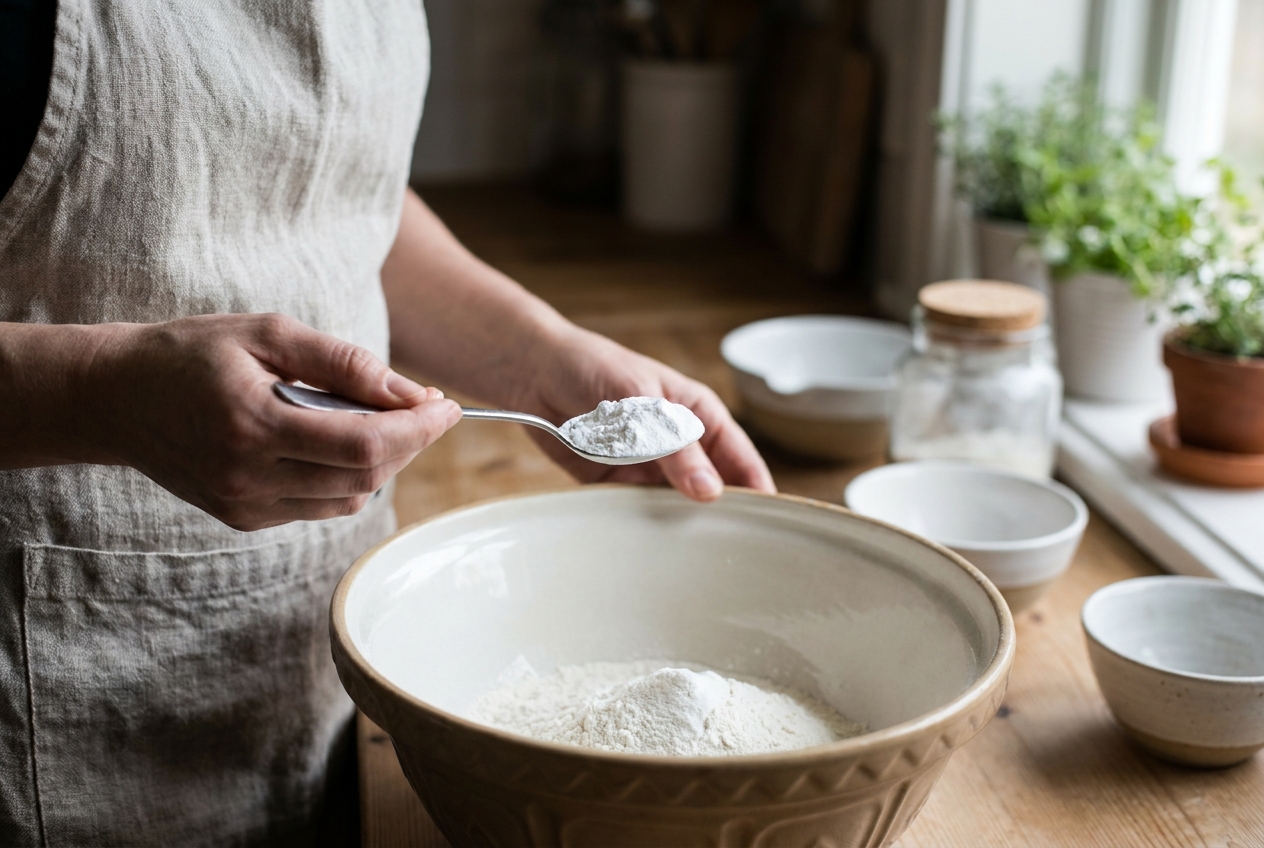
Do not swap casually
It is tempting to treat these as interchangeable. In classic home baking, they are more like two different keys for two different locks.
Use baking soda when:
- The recipe includes a clear acid (buttermilk, yogurt, lemon juice, vinegar, natural cocoa, molasses)
- You want stronger browning or a slightly crisper edge in cookies
- The recipe is designed around quick chemical lift without extra starch
Use baking powder when:
- The recipe does not include enough acid to activate baking soda
- You want a more neutral flavor profile
- You need lift spread across mixing and baking (especially with double-acting powder)
Test for freshness
Both leaveners lose strength over time, especially if they have been stored in a humid spot or repeatedly exposed to steam near the stove. The good news is that both can be tested in about a minute.
Test baking soda
What you need: baking soda plus vinegar or lemon juice
- Put 1/2 teaspoon baking soda in a small bowl or cup.
- Add 1 tablespoon vinegar (or lemon juice).
- Watch immediately.
What you should see: A lively, rapid fizzing and bubbling right away. If it barely bubbles or reacts slowly, it is time to replace it.
Test baking powder
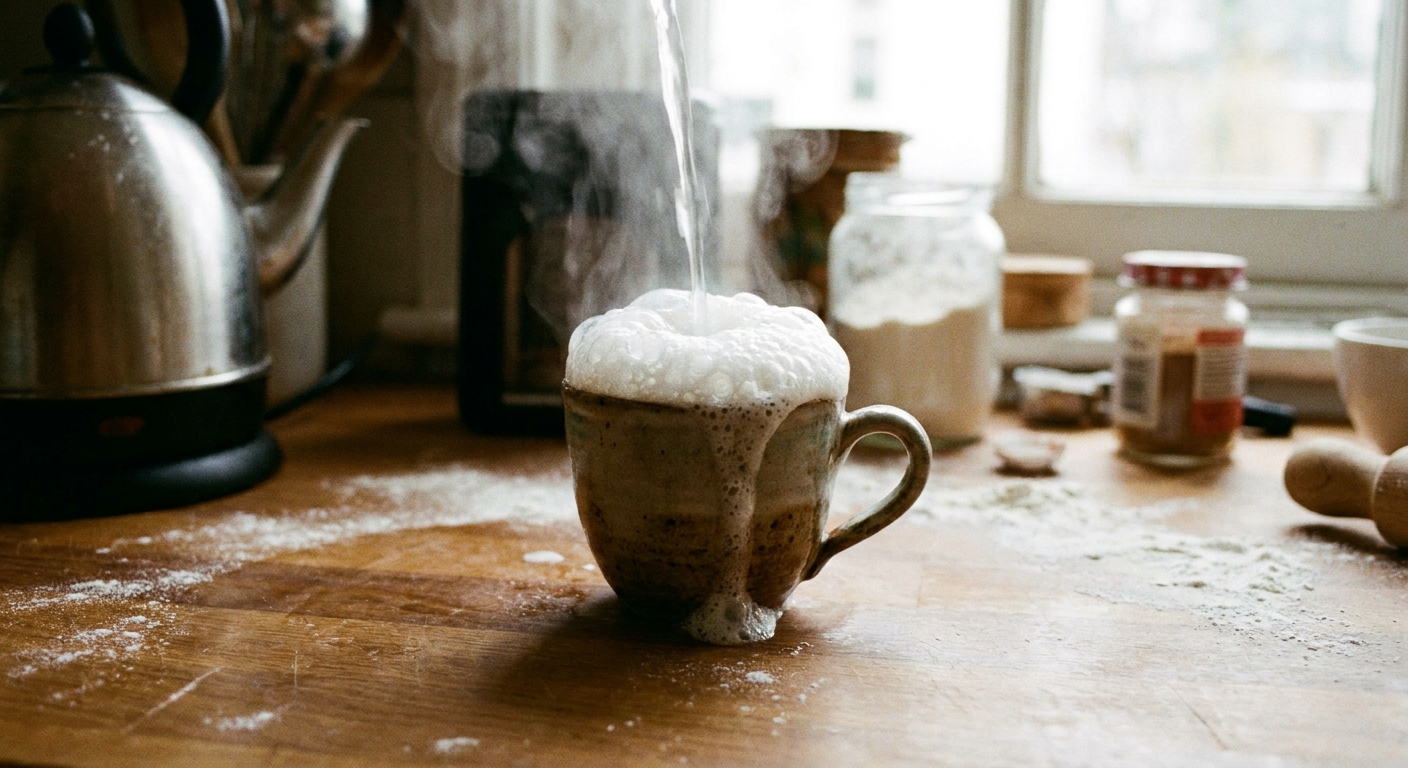
What you need: baking powder plus very hot water
- Put 1/2 teaspoon baking powder in a small bowl or cup.
- Add 1/4 cup very hot water to help trigger the heat-activated part.
- Watch immediately.
What you should see: A strong fizzing reaction that starts right away. If the bubbles are weak, it will not reliably lift your baked goods.
Common problems
- Soapy or metallic taste: often too much baking soda, or not enough acid in the batter.
- Bitter, chemical edge: can happen with too much baking powder, especially in delicate cakes.
- Dense, low rise: often old leavener, not enough leavener, or batter that sat too long after mixing.
Signs it is past its best
- Flat results: pancakes stay dense, muffins dome poorly, cakes bake up low
- Odd flavor: a bitter or soapy note in quick breads and cookies (often an imbalance, sometimes from overcompensating with extra leavener)
- Old container habits: kept open, stored above the dishwasher, or used over steaming pots
- Clumping: a sign moisture got in, especially for baking powder
Date labels help, but testing is more reliable than guessing.
Storage tips
- Keep them dry: close lids tightly right after measuring
- Move them away from heat and steam: a cool pantry shelf beats a cabinet right above the stove
- Use clean, dry spoons: moisture introduced into the container shortens life
- Protect from odors: baking soda can absorb strong smells if the box is left open
Substitutions
Sometimes a bake is already underway and the pantry surprises you. Substitutions can work, but only when the chemistry still makes sense.
If you are out of baking powder
You can make a quick substitute if your recipe can be baked immediately.
Rule of thumb: For every 1 teaspoon baking powder, use:
- 1/4 teaspoon baking soda plus 1/2 teaspoon cream of tartar
This homemade blend is essentially single-acting, so once it gets wet, it starts working right away. Mix and bake promptly so you do not lose your lift in the bowl.
If you do not have cream of tartar, another edible acid can sometimes stand in, but that changes liquids and flavor. For delicate cakes, it is often better to wait and bake another day.
If you are out of baking soda
You can sometimes use baking powder, but you may need more of it.
Rule of thumb: For every 1/4 teaspoon baking soda, use about 1 teaspoon baking powder.
Watch out: baking powder adds extra starch and salts. In some recipes, tripling the amount can affect taste and texture. When baking soda is in a recipe for a specific reason, like balancing tangy buttermilk or reacting with natural cocoa, swapping can leave the flavor off.
Where they show up
Cookies
- Baking soda: more spread, deeper browning, crisp edges
- Baking powder: more puff, slightly cakier texture
Muffins and quick breads
- Baking soda: common when there is yogurt, buttermilk, sour cream, or molasses
- Baking powder: common for neutral batters that still need lift
Cakes
- Baking powder: frequent choice for steady rise and neutral flavor
- Baking soda: used when the cake includes acidic ingredients, or cocoa that is not Dutch processed
Quick FAQ
Is baking soda stronger than baking powder?
Yes. Baking soda is more concentrated. That is why recipes use much smaller amounts of baking soda than baking powder, and why it must be balanced with acid.
Why do some recipes use both?
Because the recipe needs acid neutralization (baking soda) and also wants extra lift (baking powder). This is common in buttermilk pancakes, some chocolate cakes, and certain muffins.
Can expired baking powder or baking soda make you sick?
Usually the issue is performance, not safety. Replace them if they have been contaminated by moisture (clumps, dampness), stored open near strong odors, or if they fail the quick fizz tests.
What about self-rising flour?
Self-rising flour already contains baking powder (and salt). If you use it in place of all-purpose flour, adding the full leavener from the recipe can overdo it and lead to a strange taste or a fragile, over-puffed crumb.
A helpful next step
If a batter or soup ever comes out thinner than planned, a gentle thickening strategy can save dinner and dessert alike. This guide pairs nicely with How to Thicken Any Soup, since the same “small adjustments, measured carefully” mindset works beautifully in baking too.