 e-rcps.com
Pasta Plus and home cooking, since 2000
This classic slow cooker beef stew is made for cozy bowls and that familiar Sunday-supper comfort. The beef turns fork-tender, and the potatoes, carrots, and parsnips are cut in hearty chunks so they hold up well through a long, gentle cook.
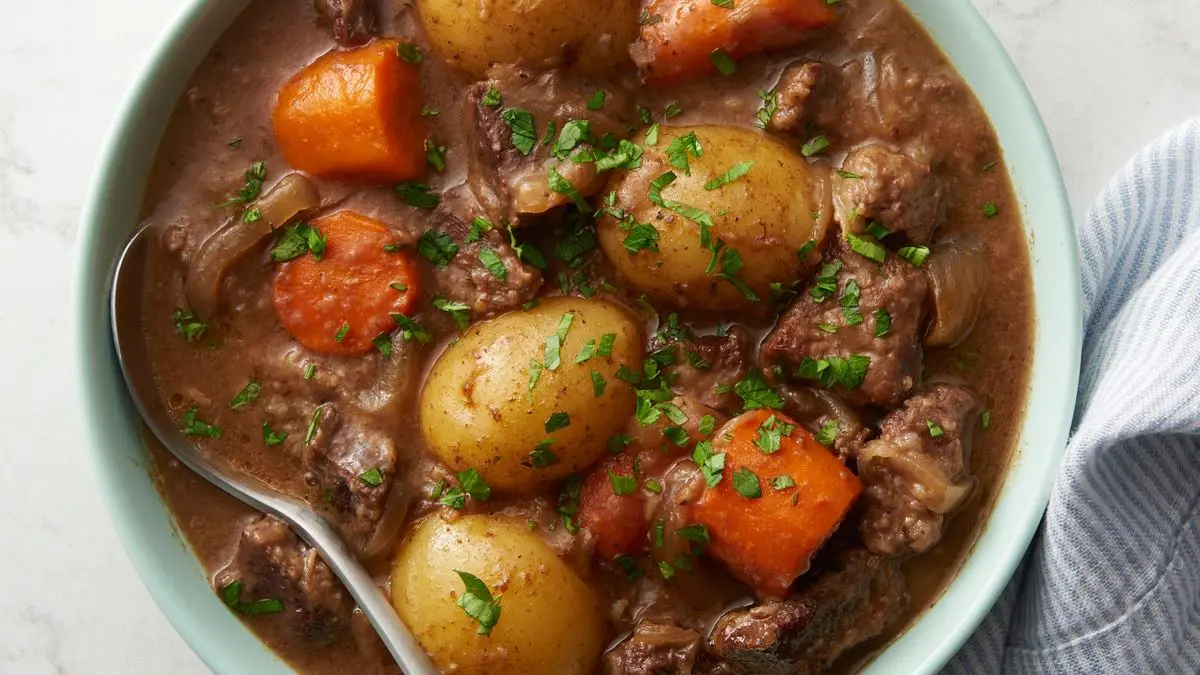
What makes this version feel truly classic is the straightforward lineup: chuck roast with onion and garlic, plus tomato paste and Worcestershire for deep, savory flavor. If you have a bottle open, a splash of dry red wine adds a little extra richness. And if you like your stew more spoon-coating than brothy, there is an easy thickening option at the end.
Up next is the full recipe, with a clear LOW vs. HIGH timing guide so you can cook it to the texture you like.
For more cozy classics, peek at Comfort Food Classics.
Why this stew works
- Collagen-friendly cut: Chuck roast has connective tissue that melts into silky tenderness over slow heat.
- Flour plus a quick sear: A light flour coating helps browning, and it also gives the broth a head start on body.
- Tomato paste and Worcestershire: Small amounts deepen savoriness without making the stew taste like tomato soup.
- Root vegetables cut to match the cook: Bigger chunks hold their shape through a long LOW cook.
- Finish-thickening is optional but controlled: A cornstarch slurry at the end lets you choose brothy or spoon-coating.
Ingredient notes
- Beef chuck roast: Look for good marbling. Trim only large, hard pieces of fat.
- Potatoes: Yukon Golds hold up well and get creamy. Russets can break down more, which can be nice if you like a thicker stew.
- Carrots and parsnips: This duo makes the stew taste naturally sweet and rounded. If skipping parsnip, add an extra carrot.
- Onion and garlic: These build the base. If you are sensitive to stronger garlic, reduce to 2 cloves.
- Beef broth: Use low-sodium if possible so you can season at the end.
- Tomato paste: Adds depth and color. Do not replace with ketchup.
- Frozen peas (optional): Stir in at the end so they stay bright and sweet.
Equipment
- Slow cooker, 5 to 7 quart
- Large skillet for browning (recommended)
- Cutting board and sharp knife
- Measuring cups and spoons
- Wooden spoon or spatula
- Small bowl for cornstarch slurry (if using)
Pro tips for tender beef and perfect vegetables
- Cut beef into 1 1/2-inch cubes: Smaller can dry out, larger can take longer than your vegetables can handle.
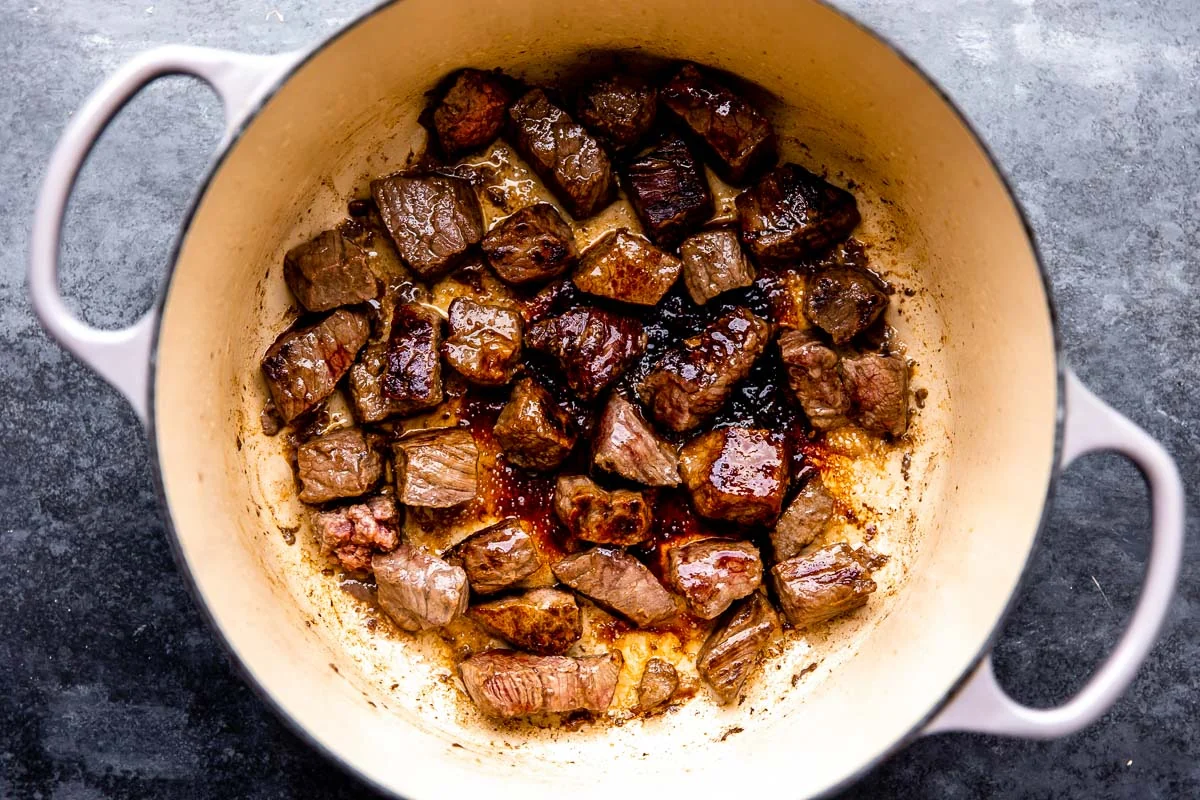
- Brown in batches: Overcrowding steams the beef, and you lose the roasty flavor that makes stew taste classic.
- Layer smart: Put potatoes and root vegetables on the bottom where the heat is strongest, beef on top.
- Keep the lid on: Each peek can drop the temperature and stretch the cook time.
- Add peas at the end: They need only 5 to 10 minutes to warm through.
- Season at the end: Broth reduces and concentrates. A final salt and pepper check makes a big difference.
Substitutes
- No parsnips: Use extra carrots, or add 1 cup diced rutabaga.
- No red wine: Replace with more beef broth. Add 1 teaspoon balsamic vinegar at the end for a little lift.
- No Worcestershire: Use 1 teaspoon soy sauce plus 1/2 teaspoon apple cider vinegar.
- Gluten-free: Skip flour and brown the beef plain. Thicken at the end with cornstarch slurry.
Variations
- Herb-forward: Add 1 teaspoon dried rosemary (or 1 sprig fresh) plus an extra bay leaf.
- Mushroom boost: Add 8 oz sliced cremini mushrooms with the onions.
- Smoky: Add 1/2 teaspoon smoked paprika with the thyme.
- Spicy: Add 1/4 to 1/2 teaspoon crushed red pepper flakes.
Serving ideas
- Ladle into warm bowls and top with chopped parsley.
- Serve with crusty bread, biscuits, or buttery noodles.
- For a brighter bowl, add a squeeze of lemon right before serving.
- Pair with a simple side salad from our Salads section.
Storage and reheating
- Refrigerate: Cool, then store in an airtight container for up to 4 days.
- Freeze: Freeze up to 3 months. Potatoes can soften after freezing, but the stew is still delicious.
- Reheat: Warm gently on the stovetop over medium-low heat, stirring occasionally, until steaming hot. Add a splash of broth or water if it has thickened too much.
Common mistakes to avoid
- Using lean beef: Round steak can turn dry and chewy in a slow cooker.
- Cutting vegetables too small: Small pieces can go soft long before the beef is tender.
- Adding dairy too early: Milk or cream can split after hours of heat. If you want a creamy finish, stir it in at the end off heat.
- Over-thickening: Add slurry gradually. You can always thicken more, but thinning a gluey stew is harder.
FAQ
Do I have to brown the beef first?
No, the stew will still cook through safely in the slow cooker. Browning is for flavor and a more classic, roasty depth. If time is tight, skip it and lean on the tomato paste, herbs, and a careful final seasoning.
When should I add the vegetables if I do not want them soft?
For this recipe, the vegetables are sized to handle a full cook on LOW. If you prefer firmer vegetables, cut them larger, or add carrots and parsnips during the last 2 to 3 hours on LOW (or last 60 to 90 minutes on HIGH). Potatoes generally need longer than carrots, so keep potatoes in from the start when possible.
Can I cook it on HIGH the whole time?
Yes. Use the HIGH timing in the recipe card, and keep the vegetable pieces on the larger side so they do not break down.
Why is my stew watery?
Slow cookers trap moisture, so stew often finishes looser than stovetop versions. Remove the lid for the last 20 to 30 minutes to let a little steam escape, or use the cornstarch slurry for a reliable thickening.
Is it better to add flour at the start or thicken at the end?
Either works. A little flour early builds body, while an end-of-cook slurry gives you precise control over thickness.