 e-rcps.com
Pasta Plus and home cooking, since 2000
Hard-boiled eggs look simple, but the difference between creamy and chalky is just a few minutes and one chilly ice bath.
Before you start
The goal is gentle, predictable heat and a fast cool-down. That combination sets the whites neatly and keeps yolks tender, without the gray-green ring.
A quick reality check: these times are a dependable starting point for large eggs lowered into boiling water, but tiny differences (altitude, how cold your eggs are, pot size, and burner strength) can shift the finish by about 1 to 2 minutes. If you love your yolks a certain way, take notes and dial it in once.
What you need
- Large pot with a lid
- Eggs (any size works, but times below assume large eggs)
- Timer
- Slotted spoon
- Large bowl of ice water (lots of ice)
Egg size and starting temp
If eggs are extra-large or jumbo, add about 30 to 60 seconds to the cook time. If eggs are medium or smaller, subtract about 30 seconds.
Cold eggs straight from the fridge are fine. Just expect to land toward the upper end of any timing range.
Altitude note
If you live at higher elevation, water boils at a lower temperature, so eggs can take a bit longer to reach the same doneness. Again, the upper end of the range is your friend.
The method
This is the most reliable home-kitchen approach: start in hot water, then time a gentle simmer, then chill hard.
- Bring water to a boil. Fill a pot with enough water to cover the eggs by about 1 inch. Bring it to a full boil.
- Lower eggs into the water. Reduce heat slightly so the boil is not violently rolling. Use a slotted spoon to lower eggs in gently.
- Return to a gentle boil, then reduce to a steady simmer and start timing. Keep the eggs fully submerged.
- Cook for your desired yolk. Use the minute-by-minute guide below.
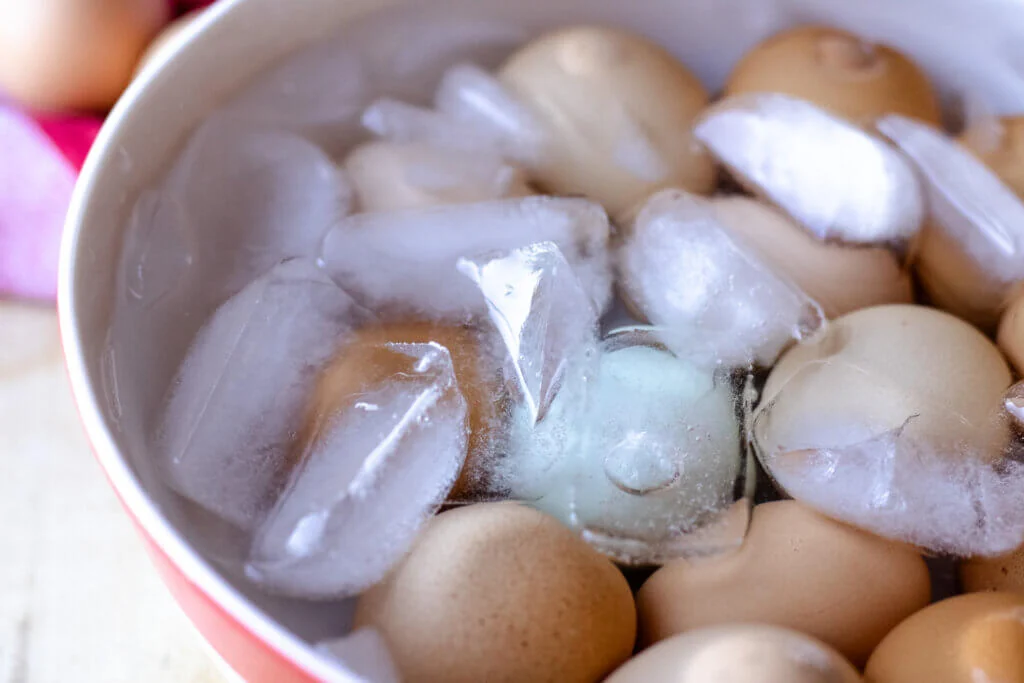
- Ice bath immediately. Transfer eggs straight into a big bowl of ice water.
- Chill fully. Keep them in the ice bath for the recommended time before peeling.
Why the ice bath matters: it stops the cooking as fast as possible, reduces green rings, and helps the egg pull away from the shell for easier peeling.
One small pot-size tip: if you are cooking a lot of eggs, use a roomy pot with plenty of water so the temperature bounces back quickly after the eggs go in.
Timing guide
Start timing once the pot has returned to a gentle boil after adding eggs, then keep it at a steady simmer.
| Result | Simmer time | Ice bath time | Best for |
|---|---|---|---|
| Soft (runny center) | 6 minutes | 3 minutes | Toast, ramen, dipping |
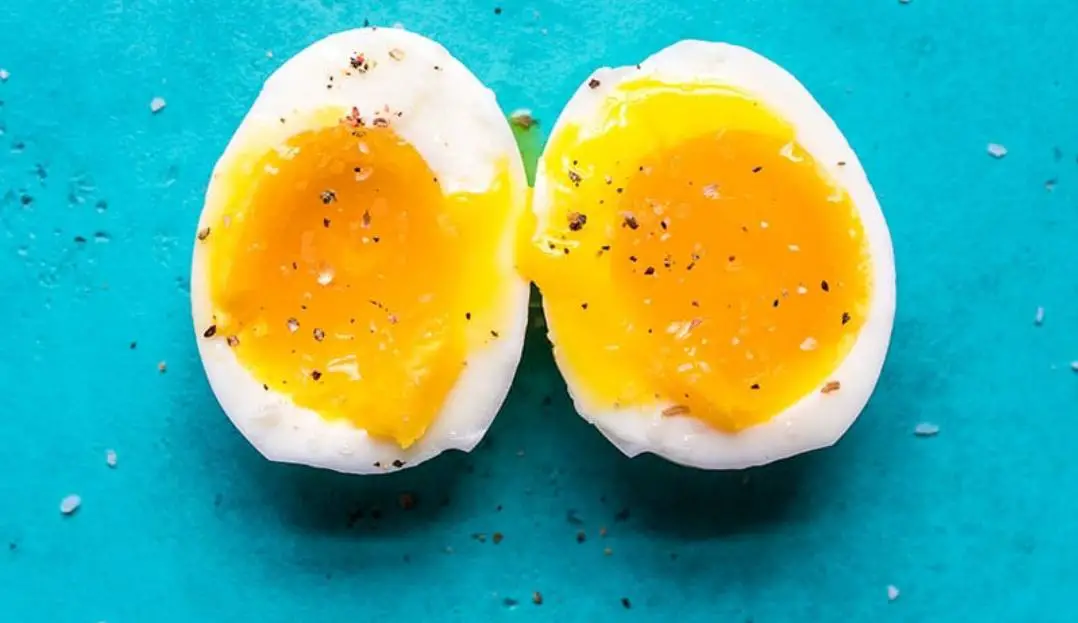
| Jammy (custardy, orange center) | 7 to 8 minutes | 5 minutes | Salads, grain bowls, snacking |
| Medium (set edges, slightly creamy center) | 9 minutes | 8 minutes | Balanced texture, lunchboxes |
| Hard-boiled (fully set, not chalky) | 10 to 11 minutes | 10 minutes | Deviled eggs, egg salad |
| Very firm (fully set, drier yolk) | 12 to 13 minutes | 10 minutes | Dyeing eggs, extra-sturdy halves |
For a chalk-free center: aim for 10 to 11 minutes, then do not skip the full ice bath.
How to peel
A clean peel is mostly about cooling, plus a little technique.
Peeling steps
- Crack the shell all over on the counter, starting at the wider end (there is often an air pocket there).
- Roll the egg gently under your palm to loosen the shell.
- Peel under a thin stream of cool water, or peel with the egg partially submerged in a bowl of water.
Extra peeling tips
- Chill first, peel second. Warm eggs are more likely to tear.
- Use enough ice. Lukewarm ice bath water does not cool eggs quickly enough.
- Know the freshness factor. Very fresh eggs tend to cling to the shell. Eggs that are about 7 to 10 days old often peel more easily, even with the same method.
- For easy peeling later: store eggs unpeeled in the refrigerator and peel right before using.
Troubleshooting
Green or gray ring
This is usually overcooking or slow cooling. Reduce simmer time slightly and move eggs to an ice bath immediately.
Chalky or crumbly yolk
Cook time is too long, or the simmer is too aggressive. Keep the water at a steady simmer, not a hard rolling boil, and use the 10 to 11 minute window for classic hard-boiled eggs.
Rubbery whites
Heat was too high. Turn down the burner once the pot returns to a boil.
Eggs crack in the pot
The water may be boiling too hard, or the eggs were dropped in. Lower them in gently and keep the boil calmer.
Hard to peel
Try a longer ice bath, then peel under water. Also, keep in mind that very fresh eggs can be stubborn no matter what. If you can plan ahead for egg salad or deviled eggs, buying eggs a week in advance often helps.
Storage
- Unpeeled: refrigerate and use within 1 week.
- Peeled: refrigerate in a tightly covered container with a slightly damp paper towel to prevent drying, and use within a few days.
- Do not leave at room temperature: eggs should not sit out for more than 2 hours.
For more calm, step-by-step basics like this, the Kitchen Basics collection is always ready to help.