 e-rcps.com
Pasta Plus and home cooking, since 2000
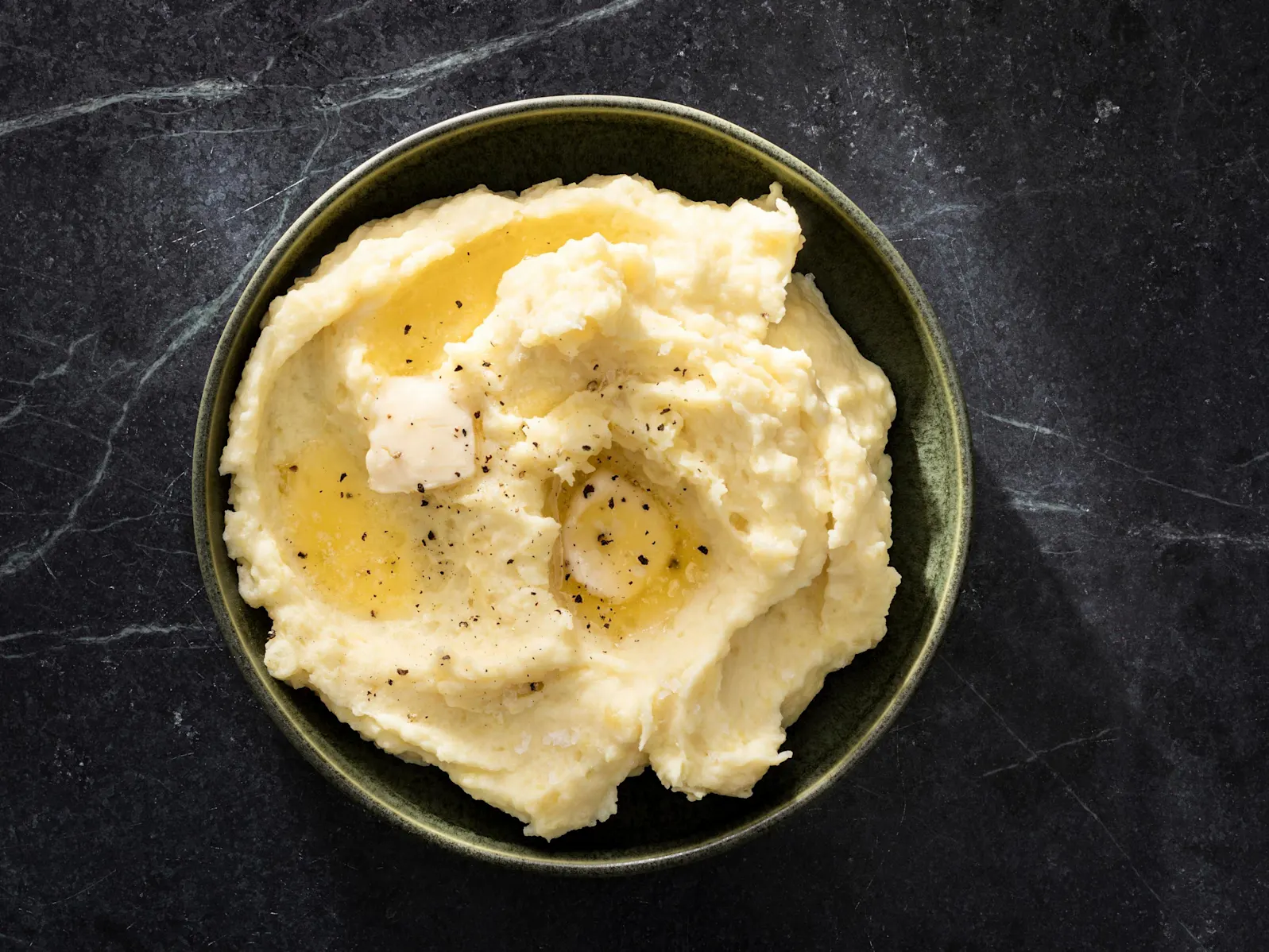
Perfect mashed potatoes are pure comfort: fluffy, rich, and smooth enough to make gravy feel right at home. The tricky part is that mashed potatoes can turn lumpy, watery, gluey, or bland with just a few small missteps.
This guide walks through the three big choices that decide your bowl of mash: which potatoes to buy, which tool to mash with, and how much dairy to add for the texture you want. You will also find fixes for common problems and a recipe card that stays creamy and lump-free.
The 3 decisions that control texture
1) Potato variety
Potatoes are mostly water and starch. The type you choose changes how they break down when cooked and mashed.
- Russet (starchy): Fluffy and light, great for classic mashed potatoes. They absorb butter and cream easily, but can become dry if under-dairied.
- Yukon Gold (waxy-starchy): Naturally buttery and creamy, with a slightly denser mash. Very forgiving and excellent for lump-free results.
- Red potatoes (waxy): Hold their shape, so they are more likely to stay chunky. Best for rustic mash with skins, not ultra-smooth.
My cozy recommendation for “perfectly creamy”: Yukon Gold, or a 50-50 blend of Yukon Gold and Russet.
2) The mashing tool
The goal is to break potatoes apart without overworking the starch. Overworked potatoes can turn pasty or gluey.
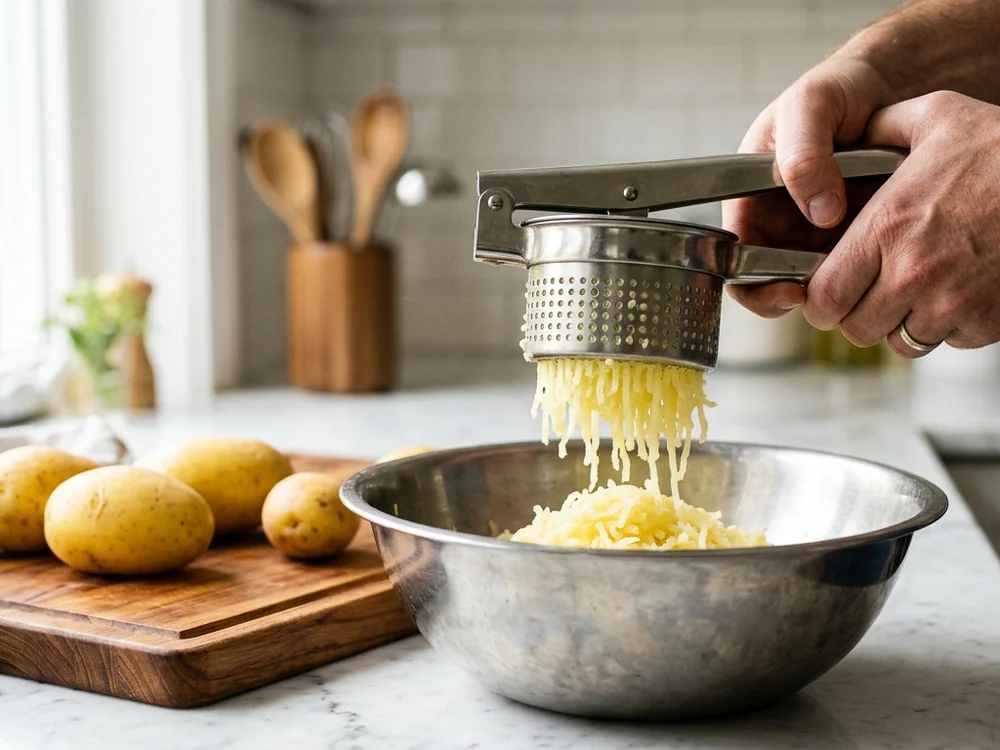
- Potato ricer: The smoothest, most reliable way to avoid lumps. It presses potatoes into fine strands without heavy mixing.
- Food mill: Similar to a ricer, very smooth, especially good for big batches.
- Hand masher: Great for home-style mash. It can be lump-free, but you must cook evenly and mash thoroughly while hot.
- Hand mixer or stand mixer: Risky. It can make potatoes gluey fast. If used, keep it on low and stop early.
- Blender or food processor: Not recommended for mashed potatoes. It almost always turns them gummy.
3) Dairy ratios
Mashed potatoes should taste like potatoes first, then butter and cream. The right dairy amount depends on your potato choice and the texture you want.
A dependable starting ratio
For 2 pounds (900 g) potatoes, start with:
- 4 tablespoons (56 g) butter
- 1/2 cup (120 ml) warm milk, plus more as needed
From there:
- For extra rich and silky: swap some milk for warm half-and-half or cream.
- For lighter and fluffy: stick to warm milk, and use more butter for flavor.
- For very thick “scoopable” mash: reduce the milk and add butter first.
Why warm dairy matters
Cold milk or cold butter can cool the potatoes and make them stiff and harder to smooth out. Warm dairy blends in faster, helping you reach creamy texture with less stirring.
Salt, starch, and steam
Start in cold water, then simmer
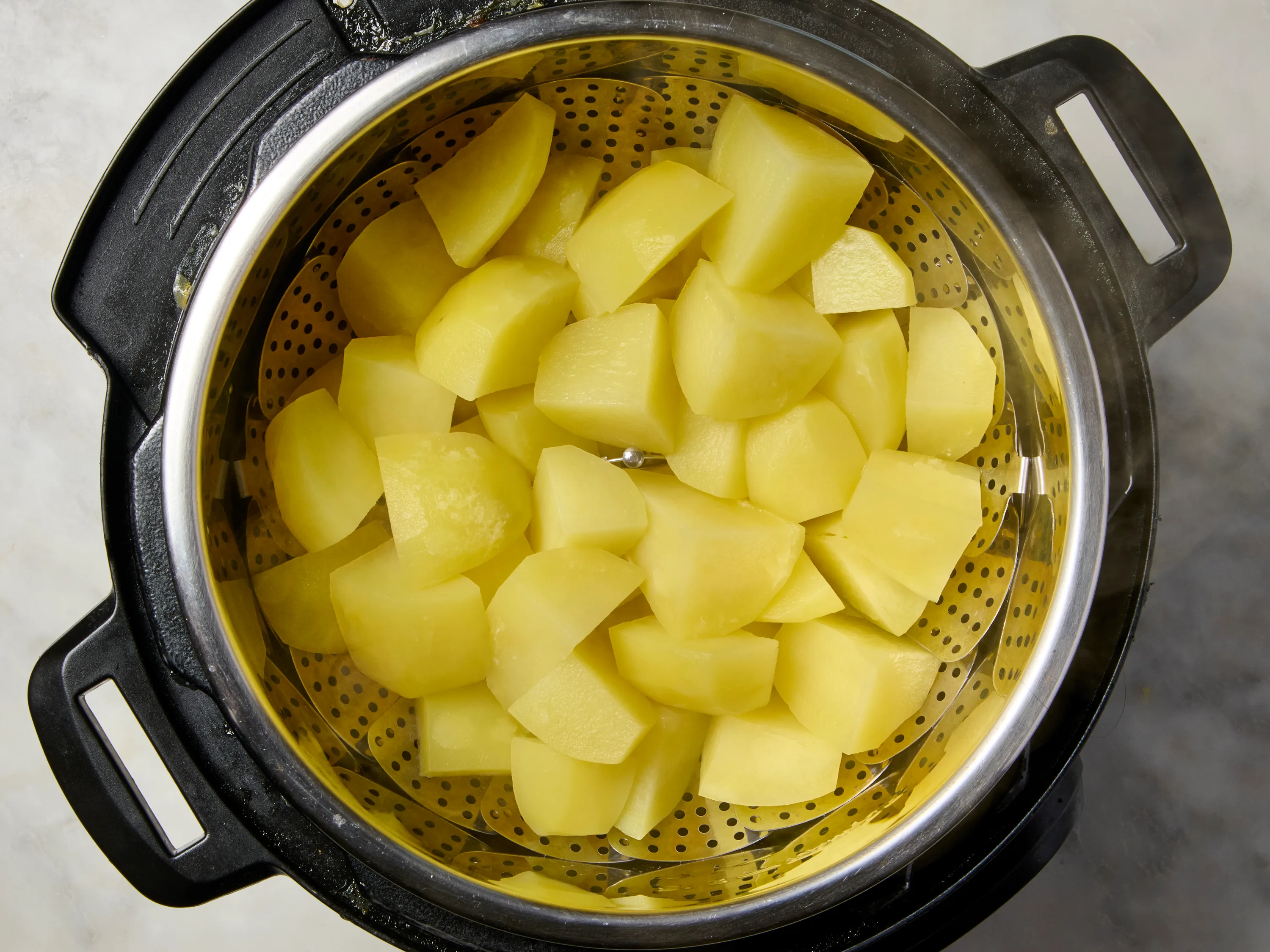
Put cut potatoes in cold, salted water, then bring to a gentle simmer. Starting cold helps the pieces cook evenly, so the outside does not turn to mush while the centers stay firm and lumpy.
Salt the water like pasta water
Potatoes absorb seasoning from the water. If the water is bland, the potatoes will be bland all the way through and require lots of salt later.
Drain well, then dry the potatoes
After draining, return potatoes to the hot pot for a minute to steam off extra water. Drier potatoes absorb butter and milk better, giving creaminess without turning watery.
Troubleshooting
Lumpy mashed potatoes
- Why it happens: uneven potato pieces or undercooked centers.
- How to fix it: If the potatoes are still hot and not heavily mixed, press them through a ricer or food mill. If they are already mixed with dairy, keep it gentle: mash visible lumps against the side of the pot with a spoon or masher, then fold until the texture evens out.
Gluey or gummy potatoes
- Why it happens: overmixing, especially with a hand mixer, stand mixer, blender, or food processor.
- How to fix it: Stop mixing immediately. Fold in a small splash of warm milk or cream just to loosen, then serve. You cannot fully “un-glue” potatoes, but you can keep them from getting worse and make them taste good.
Watery potatoes
- Why it happens: not drying after draining, or adding too much milk too fast.
- How to fix it: Put the pot back over low heat and stir gently for a minute or two to let steam cook off excess moisture. Add butter for body. If you truly need an emergency save, a pinch of instant potato flakes can help, but add very slowly.
Dry potatoes
- Why it happens: not enough dairy or butter, or Russets that needed more moisture.
- How to fix it: Add warm milk a splash at a time and fold gently. Finish with butter for flavor and a smoother mouthfeel.
Bland potatoes
- Why it happens: under-salted cooking water and not enough final seasoning.
- How to fix it: Add salt gradually, plus black pepper. A spoonful of sour cream or cream cheese can also wake up the flavor without making the potatoes taste “different.”
Why this method works
- Even cooking prevents hidden hard centers, the #1 cause of stubborn lumps.
- Drying the potatoes removes excess surface moisture so the mash stays fluffy, not loose or watery.
- Warm dairy adds creaminess with less mixing, which helps avoid gluey texture.
- Adding butter first coats starch granules and encourages a smooth, rich mouthfeel.
Ingredient notes
Potatoes
Yukon Gold gives naturally creamy mash. Russet gives lighter, fluffier mash. Either works, and a blend is wonderful.
Butter
Use unsalted if possible so the salt level is easier to control. If using salted butter, go lighter on the salt in the pot and adjust at the end.
Milk, half-and-half, or cream
Milk keeps mash classic and fluffy. Half-and-half adds richness without going heavy. Cream makes it extra decadent. Always warm it before adding.
Sour cream or cream cheese (optional)
Either can add tang and body. Keep the amount modest so the potatoes still taste like potatoes.
Salt and pepper
Salt the cooking water, then season again at the end. Freshly ground black pepper is the classic finish.
Equipment
- Large pot
- Colander
- Potato masher, potato ricer, or food mill
- Small saucepan (or microwave-safe cup) to warm dairy
- Rubber spatula or wooden spoon for gentle folding
Pro tips for truly lump-free mash
- Cut potatoes to the same size, about 1 1/2 inches, so they cook evenly.
- Simmer, do not boil hard. A hard boil can break pieces apart and make waterlogged edges.
- Check doneness the right way: a knife should slide in with no resistance, and the potato should look evenly tender all the way through.
- Mash while hot. Potatoes get harder to smooth as they cool.
- Butter first, dairy second. Butter coats and enriches, dairy fine-tunes the texture.
- Add dairy in small pours. You can always add more, but you cannot easily take it out.
- Finish gently. Once smooth, fold rather than beat.
Substitutes
- Dairy-free: use unsweetened oat milk or almond milk warmed, plus olive oil or a dairy-free butter alternative. Add slowly and season a bit more.
- No milk: use warm chicken broth or vegetable broth for a savory, lighter mash.
- No butter: olive oil works, especially with Yukon Golds. Add a little extra salt to make the flavor pop.
- Garlic: swap plain potatoes for a gentle garlic mash by simmering a few peeled cloves with the potatoes, then mashing together.
Variations
- Skin-on rustic mash: use red potatoes or Yukon Golds, scrub well, and mash with a hand masher.
- Ultra-smooth restaurant style: use a ricer or food mill, then fold in warm cream and plenty of butter.
- Herb mashed potatoes: stir in chopped chives, parsley, or thyme at the end.
- Cheesy mash: fold in grated Parmesan or sharp cheddar off the heat so it melts smoothly.
Serving ideas
Mashed potatoes love anything saucy, braised, or roasted. Pile them into a warm bowl, make a little butter well, then let gravy do the rest.
- Serve with roast chicken, meatloaf, pot roast, or turkey and gravy.
- Top with caramelized onions or sautéed mushrooms.
- Use as a base for a shepherd’s pie style casserole.
- Round out the plate with a simple vegetable side from Vegetables.
Storage and reheating
Refrigerator
Store in an airtight container for up to 4 days.
Reheating (best texture)
- Stovetop: reheat gently over low heat, stirring often. Add a splash of warm milk or a small pat of butter as needed.
- Microwave: heat in short bursts, stirring between. Add warm milk if it looks stiff.
- Oven: spread in a covered baking dish at about 350°F until hot, then stir and add butter if needed.
Freezing
Mashed potatoes can be frozen, but texture may change slightly. Extra butter and cream helps them reheat smoother.
Common mistakes (and how to fix them)
Lumpy mashed potatoes
- Cause: uneven potato pieces or undercooked centers.
- Fix: if the potatoes are still hot, press through a ricer or food mill. If already mixed with dairy, a ricer is harder to use, so instead keep stirring gently with a spoon and mash any visible lumps against the pot sides.
Gluey, gummy potatoes
- Cause: overmixing, especially with a mixer, blender, or food processor.
- Fix: stop mixing immediately. Fold in a little warm dairy to loosen, then serve as is. It will not become fluffy again, but it can still taste cozy.
Watery potatoes
- Cause: not drying after draining, or adding too much milk too fast.
- Fix: warm the pot over low heat and stir gently to evaporate a bit of moisture. Add butter to improve body. In a pinch, a small spoon of instant potato flakes can help, but add very slowly.
Dry potatoes
- Cause: not enough dairy or butter, or russets that needed more moisture.
- Fix: add warm milk a splash at a time and fold gently. Finish with butter for flavor.
Bland potatoes
- Cause: unsalted cooking water and not enough final seasoning.
- Fix: add salt a little at a time, plus black pepper. A small spoon of sour cream can also wake up the flavor.
FAQ
Should potatoes be peeled for lump-free mashed potatoes?
Peeled potatoes are easiest for perfectly smooth mash. Skins can be delicious, but they create a rustic texture.
Why do my mashed potatoes get gluey?
Too much mixing releases starch. Use a ricer, food mill, or hand masher and stop as soon as smooth.
Can I make mashed potatoes ahead of time?
Yes. Store chilled, then reheat gently with a splash of warm milk and a little butter. Keep stirring gentle to preserve texture.
Is it better to add butter or milk first?
Butter first is a helpful habit for creamy mash. Then add warm milk or cream gradually until the texture is just right.
How do I keep mashed potatoes warm for a meal?
Keep them covered in a warm pot over very low heat, stirring occasionally, or hold them in a heat-safe bowl set over barely simmering water.