 e-rcps.com
Pasta Plus and home cooking, since 2000
Old-fashioned baked macaroni and cheese is cozy comfort at its most dependable: tender elbow macaroni wrapped in a creamy homemade cheese sauce, then baked until the top turns golden and crisp. This version keeps things classic and no-fuss, with specific oven temperature and timing in the recipe, plus a simple roux to help the sauce stay silky and coating.
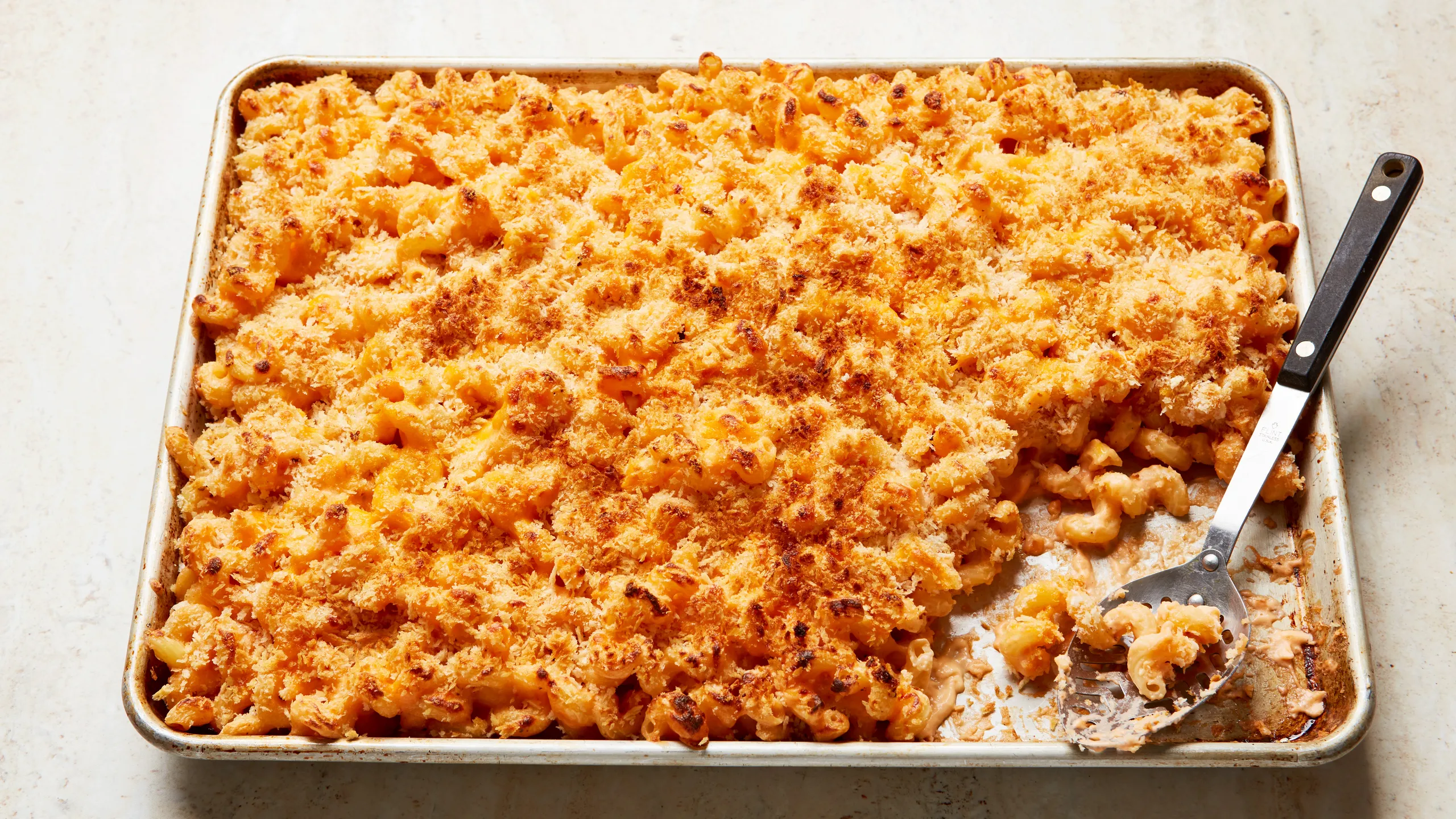
Expect sharp cheddar for that familiar punch, Monterey Jack for an easy melt, Parmesan for a savory finish, and a buttery breadcrumb topping that crackles lightly under the fork. For more cozy dinner ideas, visit Comfort Food Classics.
Why it works
- Roux first, then dairy builds a stable base that thickens gently, helping prevent grainy or broken cheese sauce.
- Cheese blend balances meltability (for creaminess) with sharper aged flavor (so it tastes like real mac and cheese, not just cheese sauce).
- Undercooked pasta finishes in the oven instead of turning soft and bloated.
- Buttered breadcrumbs on top toast into a crisp crust without drying out the pasta underneath.
Ingredient notes
Pasta
Elbow macaroni is the classic choice, but any short shape with ridges or curves holds sauce well. Cook it just to very firm al dente since it bakes again.
Butter and flour (the roux)
This is the sauce backbone. Keep the heat moderate and whisk steadily so the flour cooks without browning too much.
Milk plus a little cream
Milk keeps the sauce smooth and pourable; a small amount of heavy cream adds richness and helps the mac stay creamy after baking.
Cheese blend
- Cheddar is the main flavor. Use sharp for the most classic punch.
- Monterey Jack (or young provolone) boosts melt and keeps the sauce silky.
- Parmesan adds nutty depth and helps the topping brown.
Tip: Grate cheese from a block if possible. Pre-shredded cheese often contains anti-caking agents that can make sauces less smooth.
Breadcrumbs
Plain breadcrumbs make a tidy, old-school crust. Panko makes a more airy crunch. Either works.
Seasoning
Mustard powder and a tiny pinch of cayenne are optional, but they make the cheese taste “cheesier” without turning the dish spicy.
Equipment
- Large pot for boiling pasta
- Colander
- Medium to large saucepan for the cheese sauce
- Whisk (very helpful for a smooth roux sauce)
- 9 x 13-inch baking dish (or a similar 3-quart casserole)
- Box grater
- Measuring cups and spoons
Pro tips for creamy mac and a crisp top
- Warm the milk if you have a moment. Even just lukewarm milk helps the roux turn into a smooth sauce faster.
- Add cheese off the heat once the sauce is thickened. High heat can make cheese tighten and turn grainy.
- Hold back some cheese for the top layer under the breadcrumbs. It helps the crust adhere and brown beautifully.
- Rest 10 minutes after baking. The sauce settles and thickens slightly so servings lift neatly.
Substitutes
- No Monterey Jack: Use low-moisture mozzarella, mild provolone, or fontina for melt.
- No heavy cream: Use more whole milk. The result will be a bit lighter, still delicious.
- Gluten-free: Use gluten-free pasta and a 1:1 gluten-free flour blend for the roux (results vary by brand, but it can work well).
- No breadcrumbs: Crushed buttery crackers make a very classic topping. Use the same amount by volume as breadcrumbs and mix with butter.
Variations
- Stovetop style, then broiled: Skip baking and briefly broil just the buttered crumbs on top. Watch closely.
- Extra-crispy crust: Toast the buttered breadcrumbs in a skillet for 3 to 5 minutes until lightly golden, then sprinkle over the mac before baking.
- Sunday mac: Stir in diced ham or cooked bacon before baking.
- Veggie add-in: Fold in steamed broccoli florets or sautéed mushrooms. Keep additions dry so the sauce does not thin.
Serving ideas
- Pair with a crisp green salad for contrast. Browse simple sides in Salads.
- Add a bright vegetable on the side, like green beans or roasted vegetables. Start at Vegetables.
- For a cozy spread, add a warm bowl from Soups and let the mac be the star.
Storage and reheating
Refrigerator
Cool completely, cover, and refrigerate for up to 4 days.
Freezer
Freeze tightly wrapped portions for up to 2 months. Thaw overnight in the refrigerator for best texture.
Reheating
- Oven: Cover with foil and warm at 350 F until hot in the center. For a crisp top, uncover for the last few minutes.
- Microwave: Heat gently in short bursts. A splash of milk stirred in can bring back creaminess.
Common mistakes to avoid
- Overcooking the pasta: It will finish cooking in the oven. Keep it firm after boiling.
- Boiling the cheese sauce: Once cheese goes in, gentle heat only. If it bubbles hard, the sauce can turn gritty.
- Using only extra-sharp aged cheese: Very aged cheeses can separate more easily. A meltier partner cheese helps.
- Skipping seasoning: Cheese needs salt and a little gentle sharpness. Taste the sauce before combining with pasta.
FAQ
Why did my sauce turn grainy?
Most often, the heat was too high after adding cheese, or the cheese was added while the sauce was boiling. Remove from the heat, let it cool for a minute, then add cheese gradually while whisking.
How do I keep baked mac and cheese creamy?
Do not overbake. Bake just until bubbly at the edges and the topping is golden. Also, slightly undercook the pasta and use a cheese blend that melts smoothly.
Can this be made ahead?
Yes. Assemble the casserole (hold the breadcrumb topping), cover, and refrigerate. Add breadcrumbs just before baking. If baking straight from the fridge, expect a little extra time in the oven.
What is the best cheese for mac and cheese?
Cheddar for flavor plus a good melter like Monterey Jack is a reliable combination. Parmesan is excellent as a supporting cheese for depth and browning.