 e-rcps.com
Pasta Plus and home cooking, since 2000
“My suet cake turns to greasy soup,” is one of those backyard-feeder problems that can make a kind cook feel stuck. You want to help wild birds, not attract ants, spoil in the sun, or offer something unsafe.
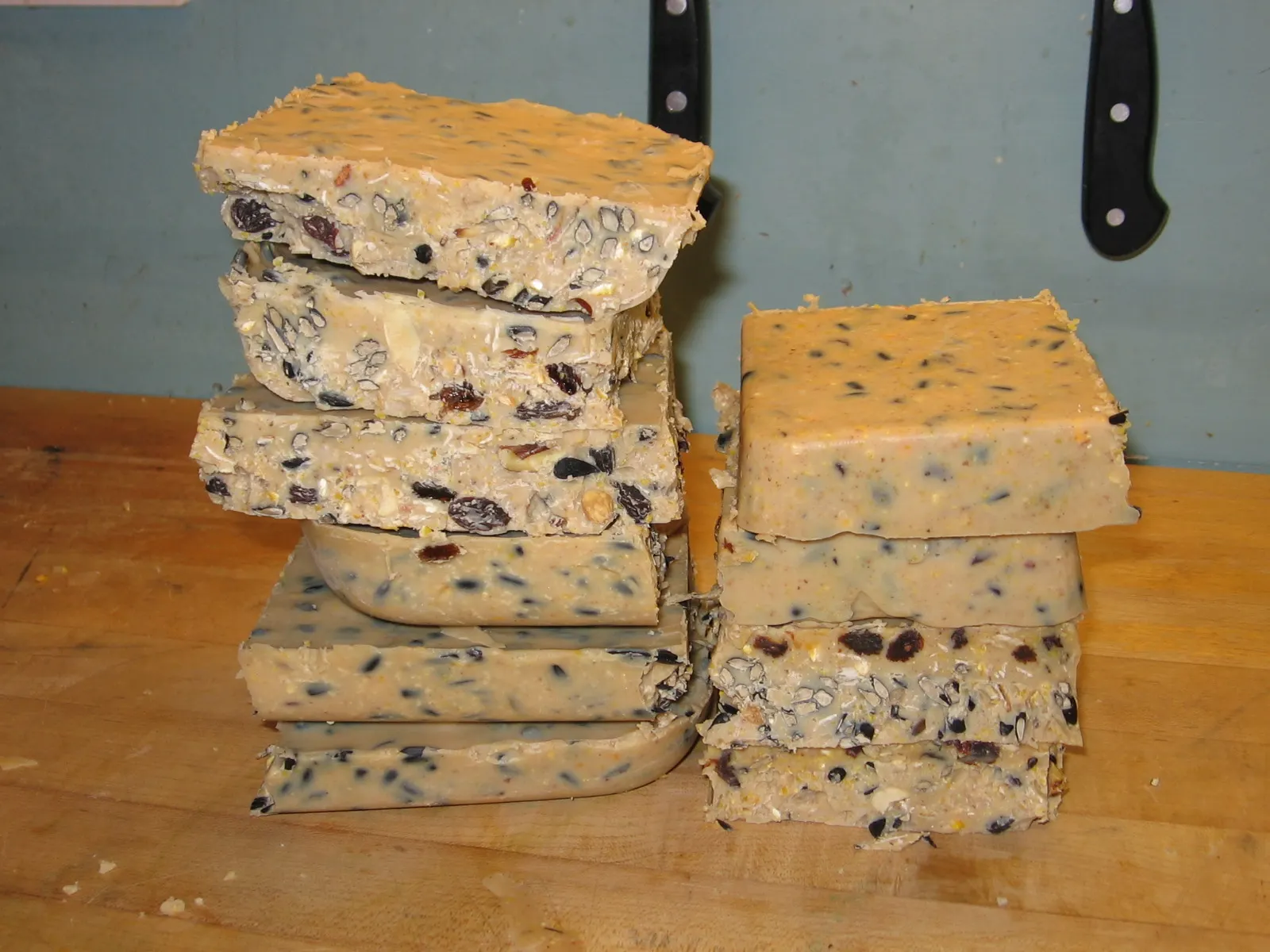
The reassuring answer is: you can make a firm, safe suet cake at home with rendered beef suet (or shelf-stable lard), peanut butter, and dry binders like cornmeal and oats. Skip salty drippings, bread, sweeteners, and chocolate, and you can put out a cake that holds together well and is easy to store and freeze.
At a glance
- Safe base ratio: About 2 parts fat to 1 part dry binders by volume, then seeds mixed in until thick like cookie dough.
- Best fats: Rendered beef suet (most traditional) or plain lard. Avoid bacon grease and any seasoned drippings.
- No-melt trick: Use enough dry binders plus “hard” ingredients (cornmeal, oats, peanuts) and chill or freeze before hanging.
- How long it lasts: Typically 3 to 7 days in a feeder depending on temperature, rain, and how many birds visit.
- When to remove: Take it down if it smells rancid, looks moldy, turns slimy, or softens so much that it coats feathers.
What is going on
Why suet cakes sometimes fail
Suet cakes are basically a bird-friendly “energy bar”: fat for calories plus dry ingredients for texture, and seeds or nuts for nutrients and interest. When a cake turns greasy or crumbles apart, the mix is usually out of balance.
- Too soft and oily: Too much fat, not enough dry binders, or the feeder is in direct sun.
- Too crumbly: Not enough fat to hold it together, or too many large seeds without enough fine binder.
- Spoils quickly: Old fat, warm and humid weather, or a cake left up too long.
What makes a “safe” suet cake
A safe suet cake is built from plain, fresh ingredients that do not add harmful seasonings and do not encourage fast spoilage.
- Plain fats only: Rendered beef suet or plain lard, plus optional peanut butter.
- Dry binders: Cornmeal and oats help firm the cake and reduce greasiness.
- Bird feed ingredients: Seeds, chopped nuts, and a little dried fruit (optional) are typical.
- No salt, no sugar, no chocolate: These are common kitchen items but not good choices for wild birds.
The common causes
Using the wrong fat
This is the biggest safety issue. Kitchen grease is not automatically the same thing as suet.
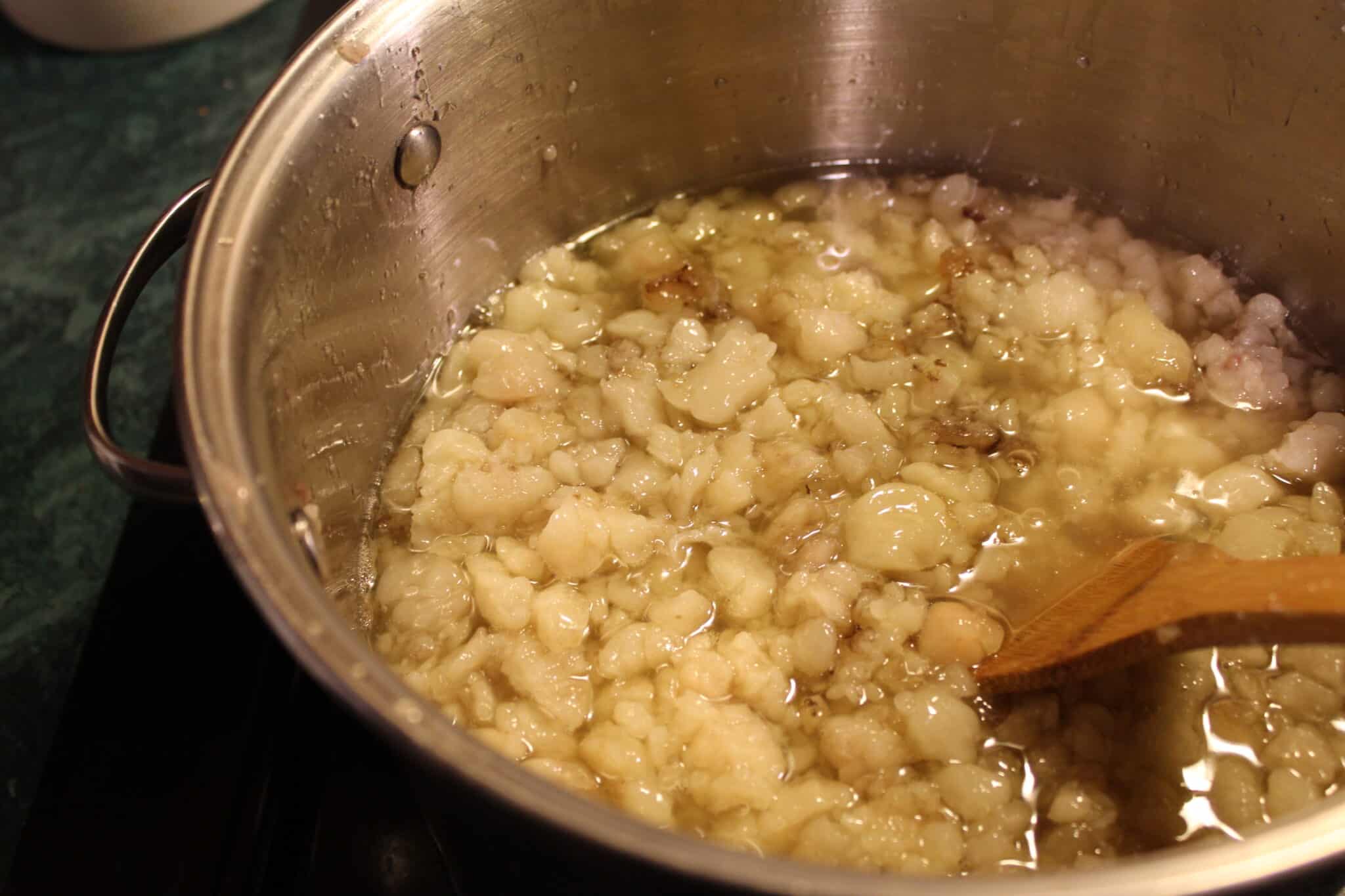
- Best choice: Rendered beef suet (the hard fat from around the kidneys). It firms well and stays stable compared with many drippings.
- OK choice: Plain, unseasoned lard.
- Avoid: Bacon grease, sausage drippings, pan drippings with salt or spices, butter substitutes with additives, and anything that smells “cooked” or seasoned.
Too much peanut butter (or the wrong kind)
Peanut butter is useful because it helps bind and adds protein, but it is softer than rendered suet at warm temperatures.
- Use natural or regular: Either is fine as long as it is plain.
- Avoid: Sweetened peanut butter spreads, flavored nut butters, or anything with chocolate.
- Practical limit: Keep peanut butter to about 25 percent of the fat portion for a firmer cake.
Wet or perishable add-ins
Moist ingredients can mold and spoil quickly in a feeder.
- Avoid: Fresh fruit, leftover bread, cooked grains, and anything damp.
- Use instead: Dry rolled oats, cornmeal, seeds, and very small amounts of chopped dried fruit if desired.
Warm weather and direct sun
Even a well-made cake can soften in strong sun. A feeder hung in shade lasts longer, and smaller cakes help because birds finish them quickly.
How to tell this problem from the ones it gets confused with
“My suet cake melted” vs. “My suet cake went rancid”
- Melted: Looks glossy, slumps or drips, and may leave grease on the feeder. Smell is usually neutral.
- Rancid: Smells sharp, sour, paint-like, or stale. Color can darken. Birds may stop visiting.
“Crumbly cake” vs. “Birds are just picky”
- Crumbly cake: Breaks apart in the feeder and falls to the ground in chunks. Often too many large seeds and not enough fine binder.
- Picky birds: Cake holds together but disappears slowly. Try changing seed blend, adding chopped peanuts, or moving the feeder to a calmer spot.
“Ants everywhere” vs. “The recipe is wrong”
Ants are often a feeder-placement issue, not a recipe failure. If your cake is firm and dry on the surface, add an ant baffle to the hanging system and keep the feeder away from overhanging branches.
The fixes or steps
Step 1: Pick the right fat and keep it plain
Best option: rendered beef suet. If you buy raw suet, render it gently so it becomes clean, liquid fat and any bits are strained out. You can also use plain lard.
- Rendering shortcut: Chop suet into small pieces, warm it on very low heat until melted, then strain through a fine mesh strainer.
- Food safety note: Suet is not a cooked meat dish, so there is no “safe internal temperature” target here. The goal is simply to melt and clarify the fat without burning it.
Step 2: Use a no-melt ratio that sets firm
For a cake that holds up better in mild warmth, start with a simple structure:
- Base structure: 2 parts rendered suet or lard + 1 part dry binders (cornmeal and oats combined).
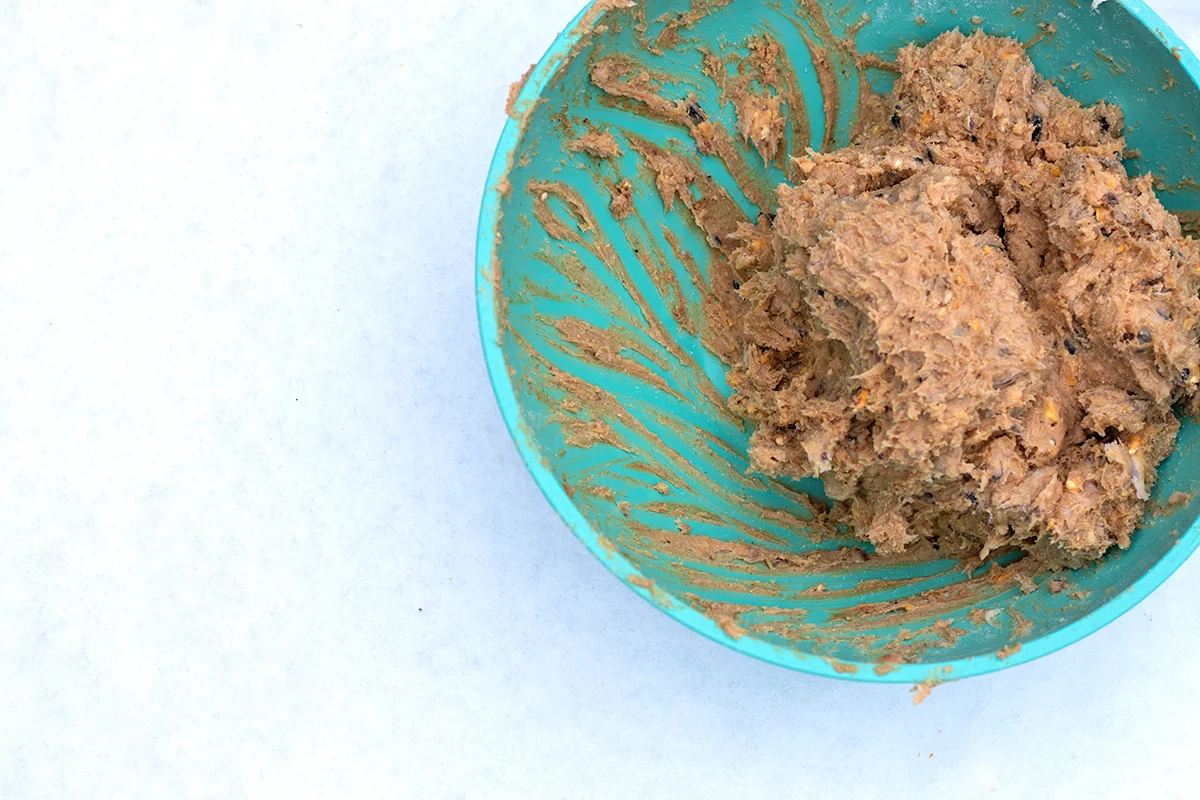
- Then add seeds: Stir in seeds until the mixture becomes thick and packable, like cookie dough.
In the recipe card below, that looks like 1 cup (240 ml) fat + 1/2 cup (120 ml) peanut butter, plus 1 1/2 cups (about 150 g) dry binders, then 2 cups (about 280 g) seeds and nuts.
Step 3: Choose safe add-ins (and skip unsafe ones)
Think “plain bird food,” not “kitchen scraps.”
Safe add-ins:
- Black oil sunflower seeds
- Safflower seed
- White millet (small amount)
- Chopped unsalted peanuts or other unsalted nuts
- Unsweetened shredded coconut (small amount)
- Mealworms (dry, not live)
- Very small amount of chopped unsweetened dried fruit
Do not add:
- Bacon grease or seasoned drippings (salt and seasonings, plus spoilage risk)
- Salt of any kind
- Bread, cake, or pastries (poor nutrition, can get soggy and moldy)
- Sweeteners such as honey, molasses, syrups, or sugar
- Chocolate (unsafe for many animals and not needed here)
- Anything moldy, damp, or old
Step 4: Mold it tightly so it does not crumble
Pack the mixture firmly, then chill until fully set. Good molding options:
- 8 x 8-inch pan: Line with parchment for easy lifting and clean edges.
- Muffin tin: Makes smaller “pucks” you can hang in a cage-style feeder.
- Disposable containers: Small deli cups work well. Lightly oil the inside for easy release.
Press hard with the back of a spoon. Air gaps are where cakes crack.
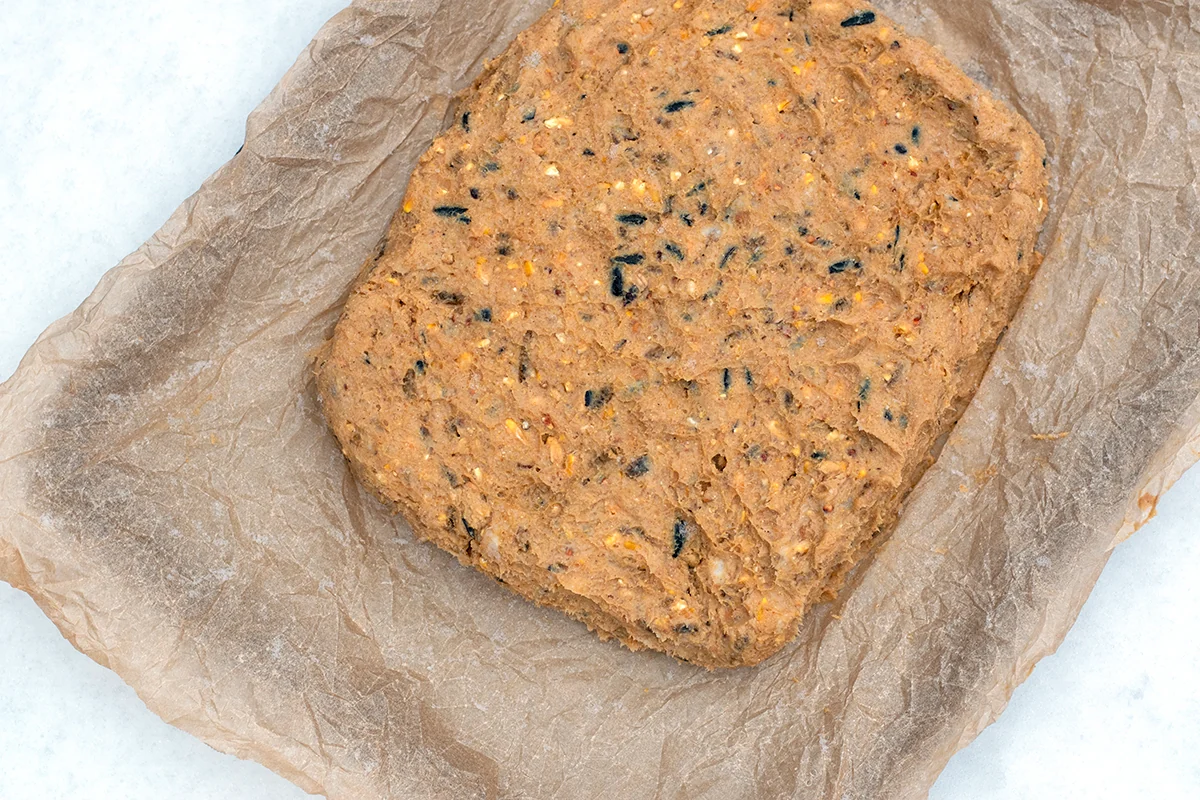
Step 5: Chill, freeze, and hang smart
Time is your best helper for firmness.
- Chill: Refrigerate at least 2 hours so it sets through.
- Freeze (best for warm days): Freeze squares in a single layer, then store in a freezer bag. Hang straight from frozen for maximum firmness.
- Placement: Hang in shade when possible and out of afternoon sun.
Step 6: Know how long it lasts and when to take it down
How long a cake lasts in a feeder depends on weather and traffic. Use your eyes and nose.
- Cool weather: Often 5 to 7 days is reasonable if it stays clean and firm.
- Warm weather: Plan on smaller cakes and faster turnover, often 2 to 4 days.
- Rain or high humidity: Replace sooner if it gets wet or tacky.
Take it down immediately if:
- It smells rancid, sour, or “off.”
- You see fuzzy mold.
- It turns slimy or very soft.
- It is melting enough to coat the feeder or potentially smear onto feathers.
What not to do
- Do not pour hot fat into plastic that is not heat-safe.
- Do not “improve” the mix with salt, bread, or syrup to make it stickier.
- Do not hang large cakes in hot weather where they linger too long.
- Do not reuse rancid or strongly scented fat.
- Do not put suet where pets can reach it.
Quick decision guide
If your suet cake is soft and dripping, then do this
Move the feeder into shade and switch to smaller cakes. Next batch, increase dry binders (cornmeal and oats) and reduce peanut butter a little. Freeze cakes before hanging.
If your suet cake is crumbly and falls apart, then do this
Pack it harder and chill longer. Next batch, add a little more fat (a few tablespoons at a time) or include finer ingredients like cornmeal to fill gaps around large seeds.
If your suet cake smells bad, then do this
Take it down and discard it right away. Clean the feeder with hot soapy water, rinse well, and let it dry completely before refilling. For the next batch, use fresh rendered suet or plain lard and store extra cakes in the freezer.
FAQ
Can I use bacon grease for suet cakes?
It is best to avoid bacon grease and any drippings from cooked meats. They often contain salt and seasonings, and the mix can spoil faster. Stick with rendered beef suet or plain lard for a safer, firmer cake.
What temperature is “too hot” to put out suet?
There is no single perfect cutoff because sun exposure matters as much as air temperature. If cakes soften quickly, look greasy, or smear onto the feeder, switch to smaller frozen cakes and hang them in deep shade. When it cannot stay firm and clean, it is time to pause until cooler weather.
Is peanut butter safe for wild birds?
Plain peanut butter is commonly used in bird feeding when it is mixed into a firm cake. Use it as part of the fat portion, not the whole base, and avoid sweetened or chocolate-flavored products.
How do I store homemade suet cakes?
Refrigerate for up to 1 week in an airtight container, or freeze for several months for best freshness. Freeze in single layers first so the cakes do not stick together. Always check smell and texture before hanging one outdoors.
The bottom line
Homemade suet cakes can be simple, sturdy, and bird-safe when you use plain rendered suet or lard, add dry binders like cornmeal and oats, and skip salty drippings, bread, sweeteners, and chocolate. Make smaller cakes for warm weather, hang them in shade, and take them down the moment they turn soft, moldy, or rancid. Let’s open the recipe box and help the backyard birds the safe way.
Cheat sheet
- Best ratio: Use about 2 parts fat to 1 part dry binders, then add seeds until thick and packable.
- Use these fats: Rendered beef suet or plain lard plus some peanut butter for binding.
- Skip these: No bacon grease, no salt, no bread, no sweeteners, no chocolate.
- Make it firm: Add cornmeal and oats, pack tightly, chill at least 2 hours, freeze for warm days.
- Hang smart: Shade is better than sun, and smaller cakes reduce spoilage.
- Replace fast: Remove if rancid smell, mold, slimy texture, or if it softens enough to smear.
Why this works
- Rendered suet or plain lard: A clean, neutral fat base that sets firm when chilled.
- Peanut butter for grip: Helps bind seeds and gives the cake a cohesive bite without needing sugar.
- Cornmeal plus oats: Dry binders soak up excess fat and make a sturdier, less greasy cake.
- Seeds and nuts added last: You can adjust thickness so the mix packs tight instead of crumbling.
- Chill and freeze options: Firming time is the easiest “no-melt” tool for home batches.
Ingredient notes
Rendered beef suet
This is the classic choice for suet cakes because it is hard when cool and provides dense calories. Render gently and strain well so the finished fat is clean and less likely to spoil.
Lard
Plain lard is a good substitute when you cannot get suet. Choose unseasoned lard with a neutral smell.
Peanut butter
Use plain peanut butter. Keep it to a portion of the fat so the cake stays firm. Avoid sweetened spreads and any chocolate-flavored products.
Cornmeal and rolled oats
These dry ingredients are the “no-melt helpers.” Cornmeal fills gaps and firms the texture. Rolled oats add structure.
Seeds and nuts
Use a bird seed blend you trust, plus optional chopped unsalted peanuts. Large whole nuts should be chopped so cakes pack tightly.
Equipment
- Small saucepan (if rendering suet)
- Fine mesh strainer
- Large mixing bowl
- Rubber spatula or sturdy spoon
- 8 x 8-inch baking pan or muffin tin
- Parchment paper
- Knife and cutting board (for portioning)
- Airtight container or freezer bags for storage
Pro tips
- Pack it hard: Press firmly into the pan so there are no air pockets. Air gaps cause cracking and crumbling.
- Freeze before hanging: In mild warm weather, hanging cakes straight from the freezer buys you extra time before softening.
- Go smaller when it is warm: Smaller cakes get eaten faster, which helps with freshness and reduces mess.
- Shade matters more than the forecast: A shaded spot can keep a cake firm even on a warm day.
- Keep it dry: If heavy rain is expected, consider taking suet down temporarily or use a feeder under cover.
Substitutes
- Rendered suet: Substitute plain lard 1:1 by volume.
- Peanut butter: Substitute sunflower seed butter 1:1 if you need a peanut-free option, as long as it is plain and unsweetened.
- Cornmeal: Substitute additional rolled oats or wheat germ. The cake may be slightly softer.
- Seed mix: Use black oil sunflower seeds as the main seed if you want a simple, widely liked option.
Variations
- High-protein: Stir in 1/4 cup (about 25 g) dried mealworms for each batch.
- Nut-forward: Replace 1/2 cup seed mix with 1/2 cup chopped unsalted peanuts for a chunkier cake.
- Extra-firm winter style: Use all rendered suet for the fat portion and reduce peanut butter slightly for a harder set.
- Small-batch muffin pucks: Press into a standard muffin tin for single-serving cakes.
Serving ideas
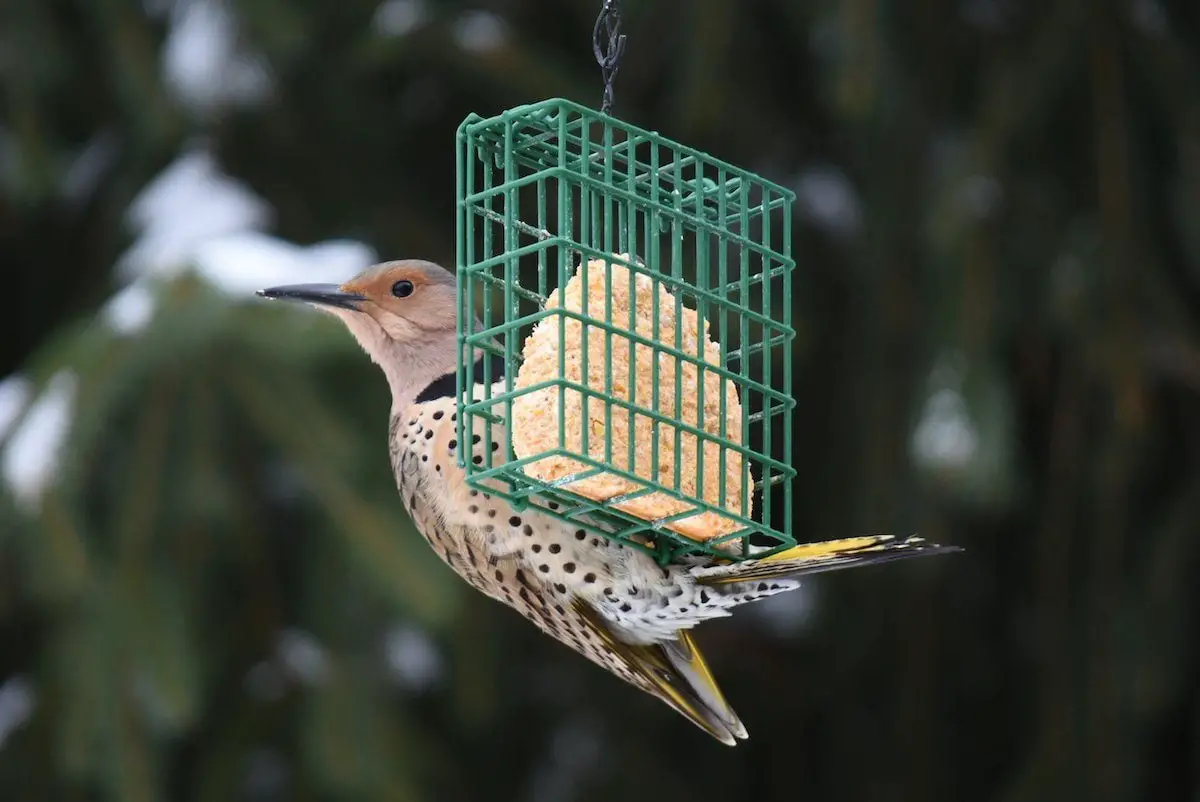
- Use a cage-style suet feeder so birds can cling and peck safely.
- Hang near cover (shrubs or trees) but not so close that squirrels can jump easily.
- Offer suet alongside water and a standard seed feeder for a balanced feeding station.
- In warm spells, put out one small cake at a time and keep the rest frozen.
Storage
Refrigerator
Store in an airtight container for up to 1 week. Keep away from strong odors.
Freezer
Freeze for best freshness for several months. Freeze pieces on a sheet pan first, then transfer to a freezer bag so they do not stick together.
Make-ahead
These are ideal for make-ahead. Portion, freeze, and hang as needed, especially when the weather is unpredictable.
Common mistakes
- Using bacon grease or seasoned drippings: Salt and seasonings are not a good choice for wild birds, and the fat can spoil faster.
- Not enough dry binders: Skipping or shorting the cornmeal and oats often leads to a soft, greasy cake.
- Hanging a huge block in warm weather: Big cakes linger and can turn rancid or messy before they are finished.
- Placing the feeder in direct sun: Sun exposure melts even firm cakes faster than you expect.
- Ignoring smell and texture: If it smells off or turns slimy or moldy, it needs to come down right away.
More questions
Should I bake suet cakes to make them firmer?
Baking is not necessary for firmness and can add scorched flavors. A better approach is using the correct binder ratio, packing tightly, and chilling or freezing before hanging.
Can I add flour to suet cakes?
Small amounts of flour can act as a binder, but cornmeal and oats are more typical and hold texture well. If you do use flour, keep it dry and use only a small portion so the cake does not turn pasty when damp.