 e-rcps.com
Pasta Plus and home cooking, since 2000
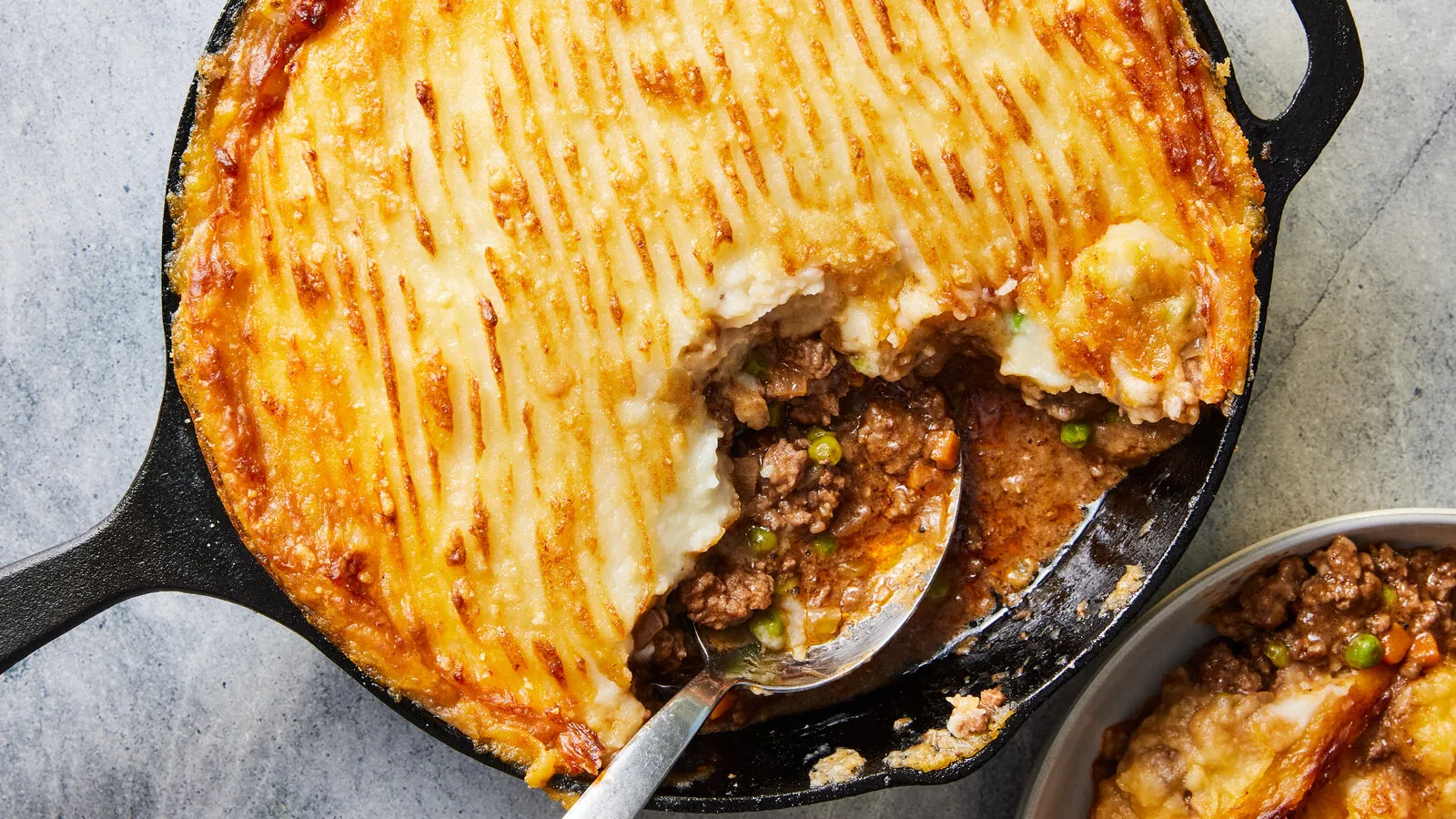
Cottage pie and shepherd’s pie look like twins at first glance: savory meat filling, a cozy blanket of mashed potatoes, and a golden baked top. The key difference is simple, and the best results come down to a few small things that make a big difference: a gravy-thick (not soupy) filling, letting it cool a bit before topping, and mashed potatoes that are fluffy and steam-dry.
The one-sentence difference
Shepherd’s pie is made with lamb (or mutton). Cottage pie is made with beef. That’s the traditional naming rule most cooks follow.
Everything else, including peas, carrots, gravy thickness, or whether you add cheese to the potatoes, is a family-by-family decision. But the meat is what gives each pie its classic identity.
How they taste different
- Lamb (shepherd’s pie): richer, more distinctive, slightly earthy. It stands up well to rosemary, thyme, and a little tomato paste.
- Beef (cottage pie): milder, more familiar “roast beef” comfort. It pairs beautifully with onions, Worcestershire, and a beefy gravy.
If you are cooking for a mixed crowd, cottage pie is often the safer starting point. If you want that traditional, unmistakable depth, shepherd’s pie brings it.
Classic building blocks
1) The filling
- Meat: ground beef for cottage pie, ground lamb for shepherd’s pie
- Aromatics: onion (and often garlic)
- Vegetables: carrots and peas are the most classic; celery is also common
- Gravy: stock plus thickener (flour) and a splash of something savory (Worcestershire is classic with beef)
- Grease control tip: if your meat is very fatty (or the lamb renders a lot), spoon off excess fat after browning so the filling tastes savory, not oily
2) The potato topping
- Potatoes: starchy potatoes make the fluffiest topping (think Russet or Maris Piper)
- Fat: butter is traditional
- Dairy: milk or cream for smoothness
- Seasoning: salt and pepper; a little egg yolk is optional for structure
Baking time and temp
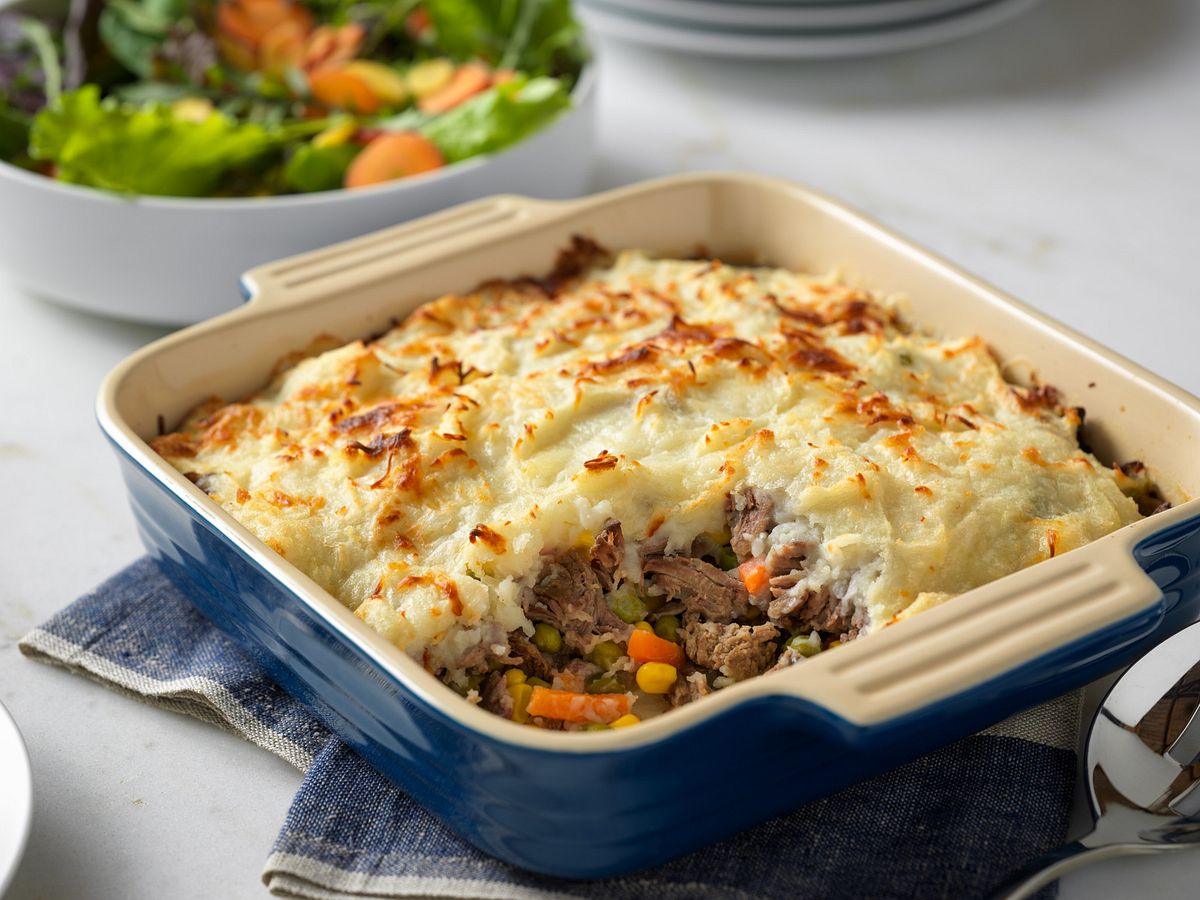
These pies are usually cooked in two stages: the filling is simmered on the stove, then the whole dish is baked to heat through and brown the potatoes. Times vary a lot based on pan depth, whether the filling is hot or cooled, and the material of the dish, so use the numbers below as a solid starting point.
Typical oven bake
- Temperature: 400°F (205°C)
- Time: often 20 to 30 minutes, until the edges are bubbling and the center is piping hot
How to tell it is done
- Visual cue: steady bubbling around the rim is a good sign, but also check the center
- Center check: slide a knife into the middle for a few seconds, then touch the blade carefully. It should feel hot
- If you want a number: 165°F (74°C) in the center is a reliable target
For extra browning
- Broil/grill: 1 to 4 minutes at the end
- Tip: stay close and watch constantly because potato ridges can go from golden to scorched quickly
From chilled
- Temperature: 375°F (190°C)
- Time: usually 35 to 50 minutes (very deep dishes can take longer)
Doneness cue: you want bubbling edges and a hot, steaming center. A pale top can still be done, but the middle has to be fully hot.
Stop the potato crust sinking
A “sinking” topping happens when the filling is too loose or too hot, or when the potatoes are too soft and heavy. Here are the fixes that matter most.
1) Thicken the filling
- After browning the meat and cooking the vegetables, sprinkle in flour and cook it for about 1 minute.
- Gradually add stock, then simmer until it looks like a thick gravy, not a soup.
- When you drag a spoon through the pan, it should briefly leave a trail.
2) Cool the filling first
- Let the filling sit 10 to 20 minutes before spreading on potatoes.
- Hot, steamy filling encourages the potato layer to slide and sink.
3) Make fluffy, steam-dry potatoes
- Drain potatoes well, then return them to the hot pot for 1 to 2 minutes to steam off excess moisture.
- Mash while hot, then add butter first, then milk or cream gradually.
4) Spread gently and seal the edges
- Spoon potatoes over the surface in mounds, then connect them without pressing hard.
- Seal the potatoes to the dish edges to keep filling from bubbling up through weak spots.
5) Make ridges for browning
- Rake a fork over the top to make peaks and grooves.
- Those ridges brown faster than a smooth surface.
Two time-tested formulas
These are classic, forgiving proportions that land you in the comfort zone. Choose beef for cottage pie or lamb for shepherd’s pie. Each formula comfortably fills a 9 x 13-inch baking dish or a similar 3-quart casserole, and serves about 6 (or 4 very happily).
Cottage pie formula (beef)
- Meat: 1 1/2 lb ground beef (80/20 is great, just spoon off excess fat after browning if needed)
- Vegetables: 1 cup diced carrots, 1/2 cup diced celery (optional), 1 cup peas
- Onion: 1 medium, diced
- Thickener: 3 tbsp flour
- Liquid: 1 1/4 cups beef stock
- Seasoning boosters: 1 tbsp Worcestershire, 1 tbsp tomato paste (optional), thyme
- Potato topping: 2 1/2 lb potatoes, 4 tbsp butter, 1/2 to 3/4 cup milk, salt and pepper
Shepherd’s pie formula (lamb)
- Meat: 1 1/2 lb ground lamb (lamb can render generously, so spoon off excess fat if the pan looks oily)
- Vegetables: 1 cup diced carrots, 1 cup peas
- Onion: 1 medium, diced
- Thickener: 3 tbsp flour
- Liquid: 1 1/4 cups stock (lamb stock if you have it, otherwise beef or chicken)
- Herbs: rosemary or thyme
- Potato topping: 2 1/2 lb potatoes, 4 tbsp butter, 1/2 to 3/4 cup milk, salt and pepper
Bake: start at 400°F (205°C) for 20 to 30 minutes, then broil briefly if you want a deeper golden top. If your pie went into the oven chilled, plan on the longer 375°F (190°C) bake.
Common questions
Can you call it shepherd’s pie if it uses beef?
Traditionally, no. If it is beef, it is cottage pie. Many menus mix the names, but the classic usage is lamb (or mutton) for shepherd’s.
What if the filling bubbles up through the potatoes?
That usually means the filling was a little thin or the potato layer was not sealed to the edges. Next time, simmer the gravy thicker, let it cool briefly, and press the potato layer snugly against the rim of the dish.
Should you add cheese to the potato topping?
It is not required, but a small handful of sharp cheddar on top browns nicely. If adding cheese, keep the potatoes a little stiffer so the crust stays defined.
Make-ahead and storage?
Yes. Assemble, cover, and refrigerate up to 2 days. You can also freeze it well wrapped for up to 2 months. Bake from chilled at 375°F (190°C) until the center is piping hot, usually 35 to 50 minutes, and longer for deep dishes. If the top browns too quickly, cover loosely with foil and finish baking.
More cozy cooking
If you are building a comfort-food week, take a peek around Comfort Food Classics for more warm, hearty favorites.