 e-rcps.com
Pasta Plus and home cooking, since 2000

New England clam chowder is all about comfort: tender potatoes, briny clams, and a broth that feels silky and rich without turning heavy or grainy. The trick is not “more cream.” It is controlled thickening: a small, properly cooked roux, gentle simmering to set the starch, and then adding dairy at the right moment so it stays smooth.
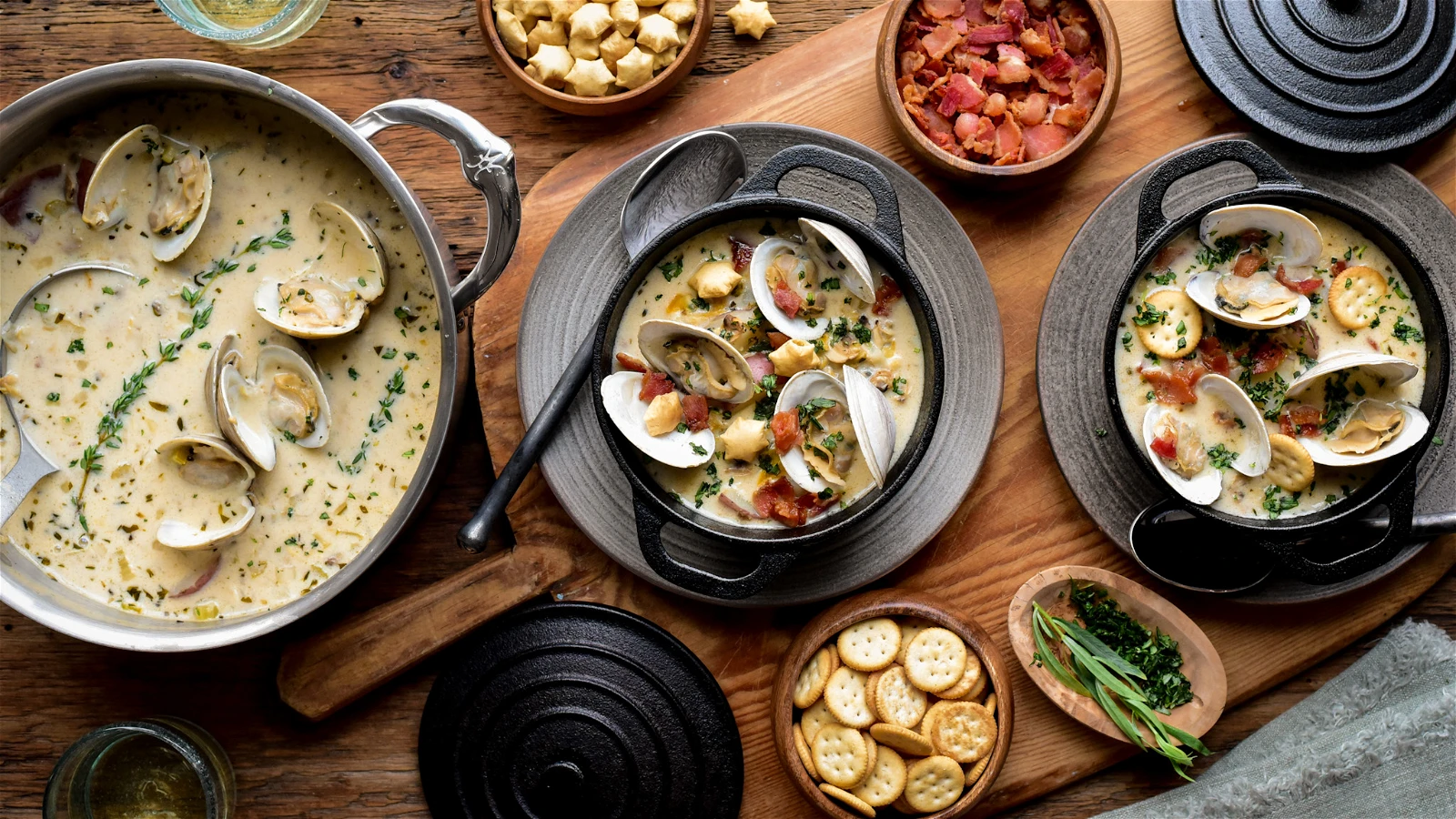
You will get a precise, dependable method, especially on the details that decide consistency: the flour to fat ratio, how long to cook the roux, and when to simmer and when to take it off the boil. If creamy chowder has ever come out thin, pasty, or a little broken after getting too hot once the dairy goes in, this will get you back on course, especially if you are using milk or half-and-half.
And it is not just about thickness. You will also see exactly when to add the clams so they stay tender, plus a practical approach to seasoning, since bacon and clam products bring plenty of salt on their own. The potatoes do their part here too, adding a little natural body as they simmer.
For more cozy bowls, peek at our Soups collection, or wander through Comfort Food Classics when you want that warm kitchen feeling.
Why this works
- Roux ratio you can trust: this chowder uses a classic thickening base of 2 tablespoons butter to 2 tablespoons flour. That 1:1 by volume roux is enough to lightly thicken a typical chowder pot without turning it into gravy.
- Roux is cooked, not rushed: cooking the flour in butter for 2 minutes removes raw flour taste but keeps maximum thickening power.
- Starch is set with a gentle simmer: after the liquid goes in, the chowder simmers 10 minutes so the flour fully hydrates and thickens evenly, while the potatoes contribute a little extra body.
- Dairy is protected: milk and cream are added after thickening, then kept at a low heat with no hard boil to reduce the risk of curdling or breaking, especially with lower-fat dairy.
- Clams stay tender: clams are stirred in at the end and warmed for just a few minutes, so they do not turn chewy.
Ingredient notes
Clams and clam juice
For a weeknight classic, canned chopped clams work beautifully. Use the clam juice from the cans as part of the liquid, and add bottled clam juice as needed to reach the amount in the recipe card. If using fresh clams, the goal is the same: save and strain the cooking liquid to use as your clam base.
Flour and butter (the roux)
The thickener here is a small roux: 2 tbsp butter + 2 tbsp all-purpose flour. It should look like a smooth paste before liquid is added. If it looks dry and crumbly, the heat is too high or the flour was packed.
Potatoes
Yukon Golds hold their shape while still feeling creamy. Russets soften more and can help thicken, but they break down faster. Either works, but keep the dice uniform so they cook evenly.
Dairy
Use whole milk for body. Heavy cream adds richness and helps the chowder feel plush, but it is still important to keep the pot below a boil once dairy is in.
Salt
Clam products and bacon both bring salt. Season gradually, and taste near the end when the flavors are concentrated.
Equipment
- Heavy-bottomed pot or Dutch oven (4 to 6 quarts): helps prevent scorching and hot spots that can stress dairy.
- Wooden spoon or heatproof spatula: best for working the roux into a smooth base.
- Whisk (helpful, optional): useful for smoothing the roux when the first liquid goes in.
- Small bowl: for holding clams and their juices until the end.
- Knife and cutting board: for tidy, even potato and onion dice.
Pro tips for perfect creamy consistency
Roux timing matters
Cook the butter and flour together for 2 minutes, stirring the whole time. Less time can taste floury. Much longer reduces thickening strength.
Add liquid in stages to avoid lumps
After the roux is ready, pour in about 1 cup of clam juice or stock first and whisk until smooth. Then add the remaining liquid. This simple step prevents floury pockets.
Simmer to thicken, then stop boiling
Let the chowder simmer (small bubbles) for the thickening phase. Once you add milk and cream, keep it hot but not boiling. A gentle heat is your chowder’s best friend.
Use potatoes as a “backup thickener” only if needed
If you want slightly thicker chowder without adding more roux, mash a few potato cubes against the side of the pot near the end. This thickens naturally and keeps the flavor classic.
Want a thicker chowder?
Increase the roux carefully: for a noticeably thicker pot, use 3 tbsp butter + 3 tbsp flour. Keep the cook time the same, and make sure you still simmer long enough for the starch to hydrate.
Substitutes
- No bacon: use 2 tablespoons butter to start the vegetables, plus a pinch of smoked paprika for a gentle smoky note.
- No heavy cream: use more whole milk. The chowder will be a little lighter, but still creamy if you keep the simmer gentle.
- Gluten-free thickening: skip the roux and thicken with a slurry of 1 tablespoon cornstarch mixed with 2 tablespoons cold water. Stir it in while the broth is simmering (before dairy), then simmer 2 minutes to set.
- Fresh clams instead of canned: steam clams, chop, and use strained clam liquor as your chowder base. Add clams at the end just to warm through.
Variations
- Extra peppery: finish with plenty of cracked black pepper. Traditional chowder loves pepper.
- Herb hint: add a small sprig of thyme during the potato simmer, then remove before adding dairy.
- More celery-forward: add 1 stalk celery, finely diced, with the onion.
- Chunky versus smooth: for a slightly smoother body, mash a small portion of potatoes, but keep most pieces intact for that classic spoonful.
Serving ideas
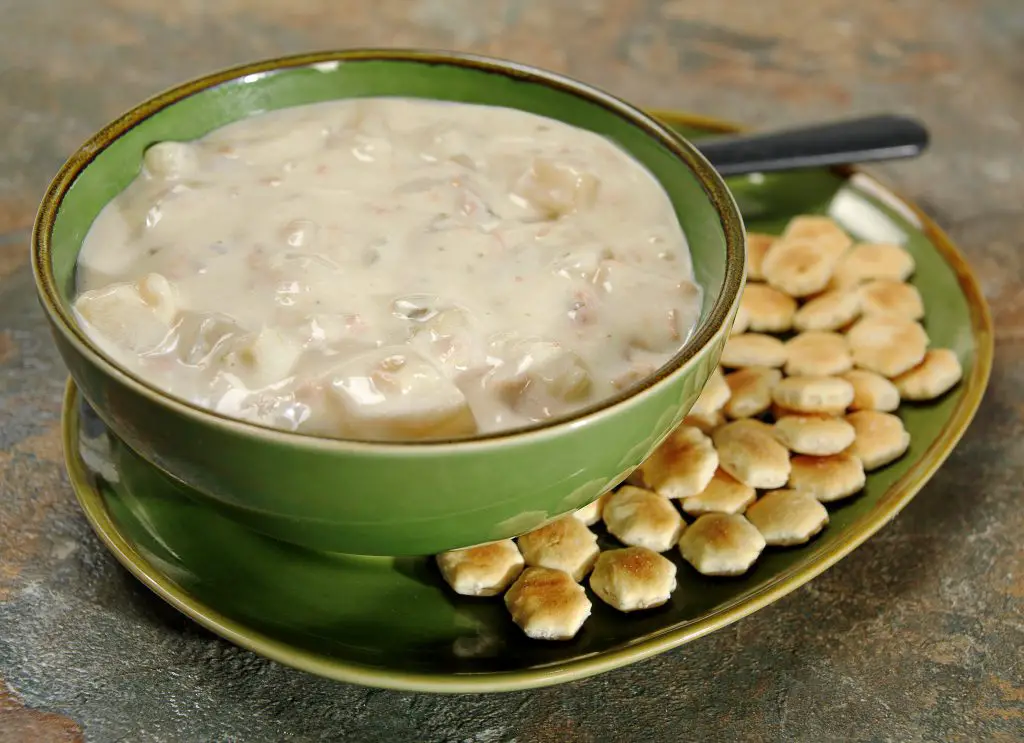
- Classic: oyster crackers or saltines.
- Cozy bread moment: thick slices of toasted bread for dunking.
- Simple side: a crisp green salad for contrast. Browse our Salads for easy pairings.
- Soup night spread: start with chowder, then keep dessert easy and homey from Desserts.
Storage and reheating
Refrigeration
Cool and refrigerate in a covered container. For best texture, enjoy within 3 days.
Reheating without splitting
Reheat gently over low to medium-low heat, stirring often. Avoid boiling. If it looks very thick after chilling, loosen with a splash of milk or clam juice while warming.
Freezing
Cream-based chowders can separate when frozen and thawed. If freezing is needed, expect a change in texture and reheat gently while stirring well.
Common mistakes (and how to fix them)
“My chowder is thin.”
Most often, it needed more simmer time for the roux to hydrate. Let it simmer 5 to 10 minutes longer before adding dairy. If it is already creamy-dairy finished, keep it hot (not boiling) and simmer gently, stirring often.
“It tastes like flour.”
The roux likely was not cooked long enough. Next time, cook the butter and flour for a full 2 minutes before adding any liquid.
“It turned grainy or split.”
This usually comes from boiling after adding milk, half-and-half, or cream. Fix is limited, but sometimes whisking in 1 to 2 tablespoons of cold cream off heat can help smooth it. Prevention is best: no hard boil once dairy is in.
“There are lumps.”
Liquid probably went into the roux too quickly. Next time, add the first cup slowly while whisking until smooth, then pour in the rest.
“The clams are chewy.”
They cooked too long. Add clams at the end and warm for just 2 to 3 minutes.
FAQ
What is the best flour-to-fat roux ratio for chowder?
A dependable baseline is equal parts butter and flour by volume. This recipe uses 2 tablespoons butter to 2 tablespoons flour to thicken the pot while keeping the chowder spoonable, not gluey.
How long should chowder simmer to thicken?
After the liquid is added to the roux, simmer about 10 minutes to fully hydrate the flour and stabilize the thickness before adding dairy.
Can I use half-and-half instead of milk and cream?
Yes. Replace the milk and cream with an equal total amount of half-and-half. Keep the heat gentle and do not boil.
Should clam chowder be boiled?
Before dairy, a simmer is perfect. After dairy is added, keep it below a boil to reduce the risk of curdling or breaking, especially with milk or half-and-half.
Can I make it thicker without more flour?
Yes. Mash a small portion of the cooked potatoes into the broth. It thickens naturally and keeps the flavor traditional.